
Last Tuesday (25), Embraer presented the fighter F-39E Gripen at the company’s aerodrome in Gavião Peixoto, in the interior of São Paulo, in Brazil.
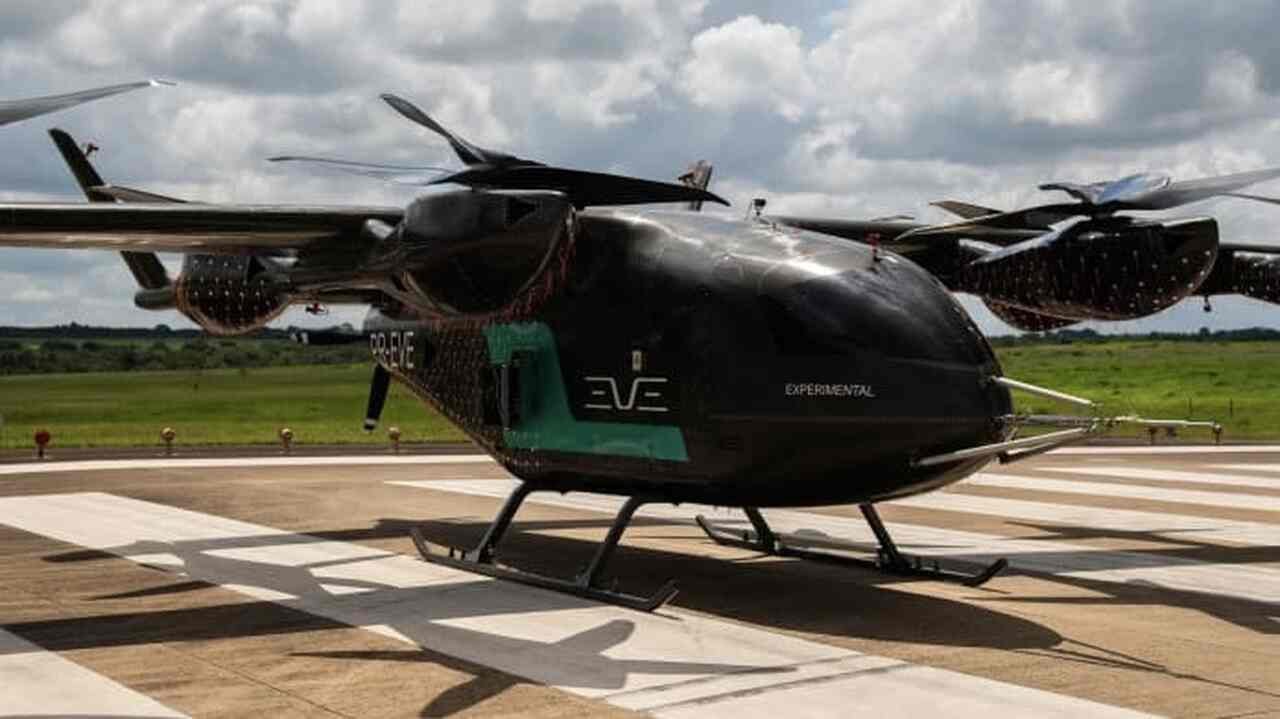
During the event, the company took the opportunity to test a prototype of an electric vertical takeoff and landing (eVTOL) aircraft, the company’s “flying car”. Eve Air Mobilitysubsidiary of Embraer focused on urban air mobility.
The demonstration flight was successfully completed and represented yet another advance in the model’s testing campaign, which is still under development and depends on certification from the National Civil Aviation Agency (ANAC) to enter into operation.
For now, tests have been restricted to speeds of up to around 28 km/h, focusing on control validation, rotor efficiency, thermal behavior and propulsion system. In the coming days, the company should expand the flight envelope, with tests that can reach approximately 56 km/h.
The company also carried out tests on the ground, such as calibrating aerodynamic load sensors, complementing in-flight activities. The actions are part of the expansion of the flight envelope and the progress towards the certification stages, subject to approval by regulatory bodies.
+ Delivery robots destroy bus stops and hit pedestrians in the USA
“We are advancing with discipline and consistency in our test campaign, reducing risks and consolidating the bases for future flights towards certification,” he stated Johann BordaisCEO yes Eve Air Mobility.
“The results obtained in these first months of the campaign after the first flight, in December 2025, reinforce our confidence in the aircraft’s architecture and in its ability to deliver a safe, efficient and scalable solution for the urban air mobility market.”

With capacity for five occupants, including four passengers and a pilot, the model offers autonomy of up to 100 kilometers, enabling short-distance urban journeys, such as connections between cities and commercial areas.
According to Evedeliveries and the start of commercial operations should occur in 2027. The company calculates that, by 2045, the global fleet of eVTOLs could reach 30 thousand aircraft, moving more than three billion passengers and generating around US$280 billion in revenue.
“We believe in the great potential of the global urban air mobility market and see Eve positioned to be one of the leaders in this industry,” he added Francisco Gomes Netopresident and CEO since Embraer.
Photos: Eve Air Mobility. This content was created with the help of AI and reviewed by the editorial team.
