
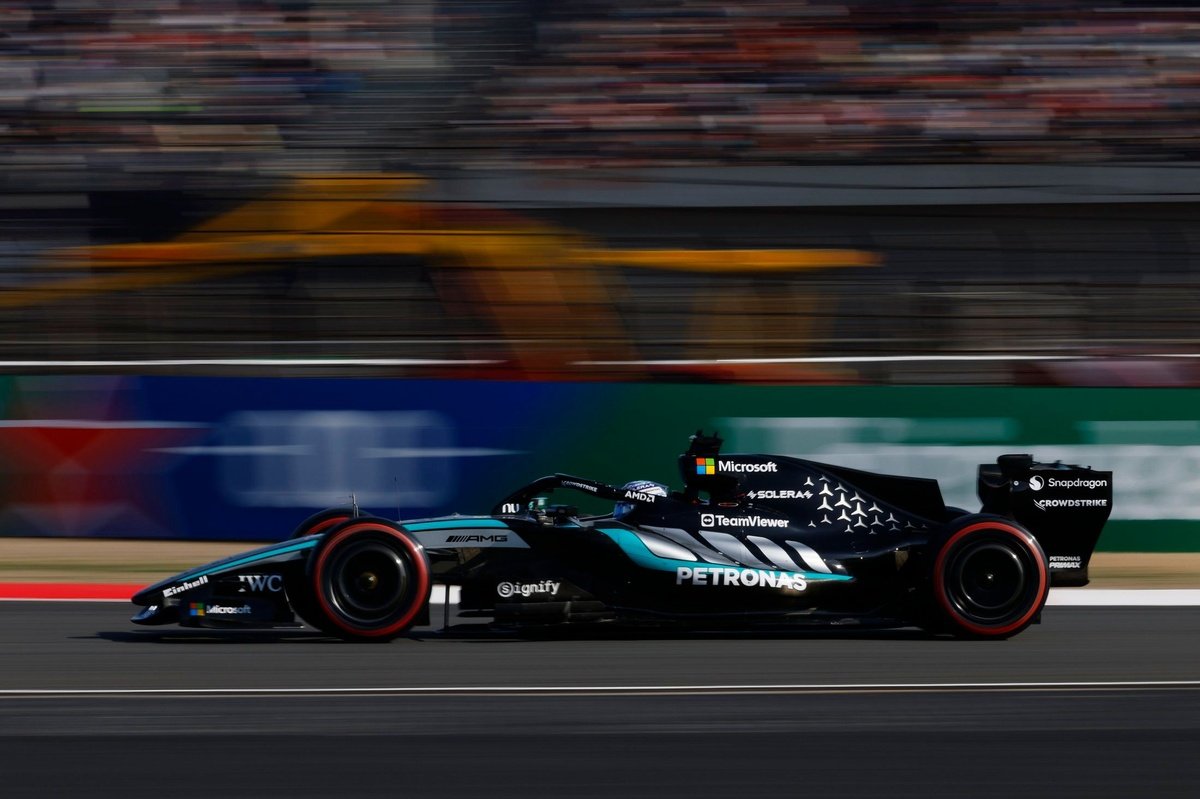
During Formula 1 qualifying at the iconic Suzuka Circuit, drivers will now only be allowed to harvest eight megajoules of energy, whereas that limit had initially been set at nine megajoules. The FIA has cut the rate of harvesting in an attempt to reduce the amount of super clipping at a track that, like Melbourne, is described as ‘harvesting poor’ in the paddock.
In Albert Park, that led to painful onboard footage heading into Turns 9 and 10, even on George Russell’spole lap. Drivers were super clipping well ahead of the braking zone, a state in which they can recharge energy while remaining flat out. This made the speed profiles unnatural and took away part of the challenge for drivers. Even in Shanghai, Charles Leclerc and Oscar Piastri, among others, said they were effectively being penalised the more risks they tried to take.
In a meeting after the Chinese Grand Prix, the consensus among F1 teams was that the races themselves are entertaining and do not require a ‘knee-jerk reaction’, but that qualifying is an area that could be improved. Qualifying, after all, should remain a challenge for drivers, meaning lift-and-coast and super clipping over a flying lap should be reduced.
The initial outcome of the meeting was that nothing would change for Japan and that qualifying would only be revisited ahead of the Miami Grand Prix. However, the FIA has now gone back on that position with a statement issued on Thursday – the media day in Suzuka.
“Following discussions between the FIA, F1 teams and power unit manufacturers, a minor adjustment to the energy management parameters for qualifying at the Japanese GP has been agreed with the unanimous support of all power unit manufacturers,” the governing body said.
“To ensure that the intended balance between energy deployment and driver performance is maintained, the maximum permitted energy recharge for qualifying this weekend has been reduced from 9.0 MJ to 8.0 MJ. This adjustment reflects feedback from drivers and teams, who have emphasised the importance of maintaining qualifying as a performance challenge.”
Normally, the FIA is required to inform teams four weeks in advance of such a change, but this situation is different. Following the post-China discussions, the FIA’s technical department looked at the simulations for Suzuka one more time. Those showed that teams would have to rely more on super clipping than initially expected, making an earlier intervention desirable.
The Suzuka Circuit is said to be ‘harvesting poor’
Teams and power unit manufacturers were informed on Tuesday about the FIA’s idea to reduce the energy recharge during qualifying in Suzuka, with the governing body stressing that it would only implement such a change if all teams and manufacturers agreed.
Nothing changes for the race on Sunday, with the FIA once again stressing that it considers the overall product to be in a relatively good place for now.
“The FIA notes that the first events under the 2026 regulations have been operationally successful, and this targeted refinement is part of the normal process of optimisation as the new regulatory framework is further validated in real-world conditions.
“The FIA, together with F1 teams and power unit manufacturers, continues to embrace evolutions to energy management, with further discussions scheduled in the coming weeks.”
We want to hear from you!
Let us know what you would like to see from us in the future.
– The Autosport.com Team
