
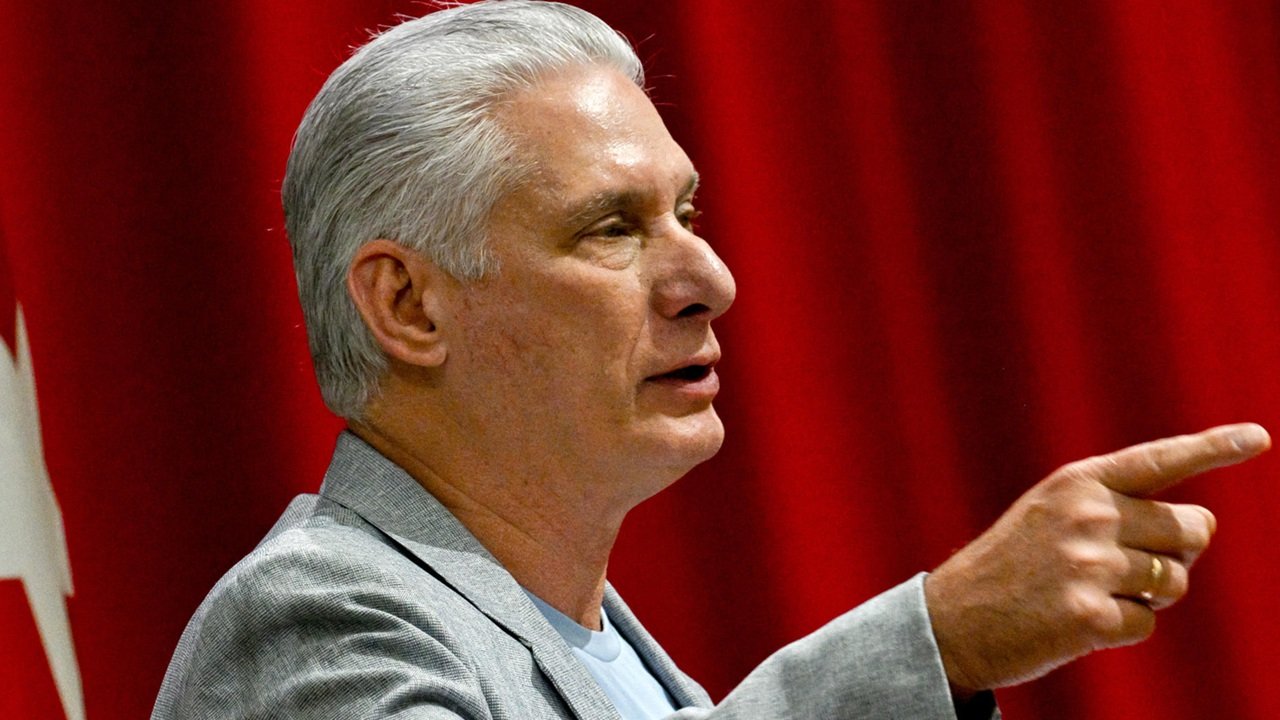
The Cuban dictatorship criticized this Tuesday (24) what it called “strong pressure” and “blackmail” exerted by the United States on countries in Latin America and the Caribbean to allegedly force them to terminate their medical mission agreements with Havana.
This wave began at the end of January, when the recently inaugurated president of Honduras, Nasry Asfura (an ally of American President Donald Trump), announced the opening of an investigation into alleged irregularities in the program. Soon after, the partnership ended and the Cuban doctors left Honduras.
Since then, Guatemala, Jamaica and Guyana have also canceled these agreements, called “forced labor” by Washington.
“With strong pressure and blackmail, the US government is acting in Latin America and the Caribbean to ensure that Cuban medical brigades leave all countries in the region where they are currently stationed,” said Cuban Foreign Minister Bruno Rodríguez on social media.
He argued that Washington seeks to “continue cutting off Cuba’s sources of income”, at a time when the island is experiencing a deepening energy crisis (with daily blackouts) due to Trump’s threat to surcharge countries that export oil to Cubans.
According to various estimates, the export of professional services has been one of Cuba’s three main sources of foreign exchange for years, along with tourism and remittances from relatives living abroad.
“They are punishing the most disadvantaged cities and communities in the region, which have received Cuban medical assistance for decades. In return, they promise resources that we know will never reach or benefit these populations”, declared the Minister of Foreign Affairs.
In addition to the countries mentioned, Antigua and Barbuda, Bahamas, Grenada and Trinidad and Tobago have also suspended agreements in the area with Cuba or revised their terms in recent months.
SEE ALSO:
- Cuba says its armed forces are preparing for possible “military aggression” from the US
- Cuba experiences second national blackout in a week
In August last year, the American Secretary of State, Marco Rubio, announced that the Trump administration revoked visas of public officials from Cuba and other countries, including former members of the Ministry of Health of former Brazilian president Dilma Rousseff (2011-2016), due to the sending of Cuban doctors to work in other nations.
A few days later, the United States Consulate in São Paulo informed the wife and daughter of the Minister of Health, Alexandre Padilha, that they had their American visas revoked. The reason would be Padilha’s participation in Mais Médicos, implemented when he held the same portfolio during Dilma’s administration.
The minister himself did not have his visa canceled, because his document had expired since 2024. To participate in the UN General Assembly in New York, in September, he received a visa with movement restrictions.
Since 2018, a lawsuit against the Pan American Health Organization (PAHO), filed by four Cuban doctors who worked in Brazil at Mais Médicos, has been pending in the United States federal court.
“The doctors had no choice but to go to Brazil; their documents were confiscated and their circulation was limited in Brazil; they were forced to indoctrinate the local population; their family members were held hostage in Cuba; they were monitored 24 hours a day, seven days a week by Cuban intelligence agents employed by PAHO; and Cuba and PAHO confiscated 80% to 90% of the amount paid by Brazil for their services,” the Foundation for Human Rights in Cuba said in a statement.
According to the NGO, between 2013 and 2018, Brazil paid PAHO US$2.58 billion for the work of more than 10,000 Cuban professionals within Mais Médicos.
At the time of the visa cancellation, Agência Brasil cited data from the Ministry of Health that indicated that Cubans, who until 2018 represented the majority of doctors in the program, made up just 10% of the approximately 26 thousand professionals who work at Mais Médicos.
