
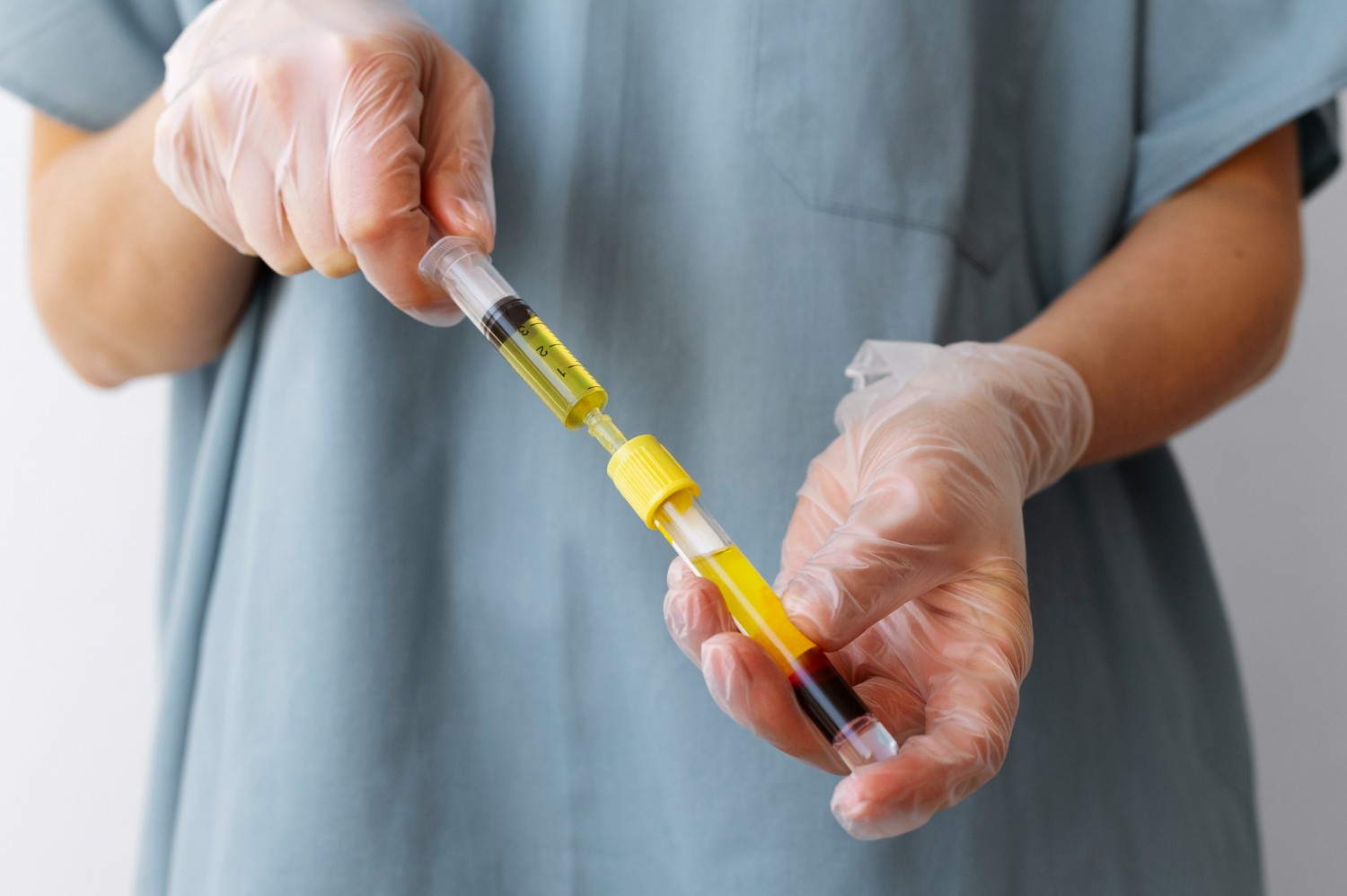
Common practice in the USA allows payment for plasma Freepik Extra income that comes from the body itself: selling blood plasma has become an increasingly common alternative among Americans — including the middle class. The practice, which mixes financial need with global medical demand, generates billions of dollars and has already become routine for many people in the United States. 💉 Plasma is the liquid part of the blood, yellowish in color, and is essential for the production of medicines used in the treatment of serious diseases. These include therapies for immunodeficiencies, liver disease and clotting disorders. According to a report by The New York Times, around 215,000 people sell plasma every day in the country. Although the most commonly used term is “donation”, in practice, participants receive payment — on average, between US$60 (R$314) and US$70 (R$366) per session. 🗒️ Do you have any reporting suggestions? Send it to g1 As it is allowed to donate up to twice a week, many earn up to US$600 (R$3,100) per month. In some cases, there are bonuses for new donors or incentives for those who maintain their frequency. For many people, this money has a specific destination: gasoline, supermarkets, medical bills or even a house payment. See the videos that are trending on g1 High demand According to the New York Times, the United States accounts for around 70% of all plasma collected in the world. One of the main reasons is that the country allows payments to donors, a practice discouraged by the World Health Organization. The result is a highly profitable sector: in 2024 alone, the US exported US$6.2 billion in plasma. For large pharmaceutical companies, the material is an essential raw material. In 2025, American donors produced 62.5 million liters of plasma — the largest volume ever recorded, according to data cited by the newspaper. Who are the people who are selling plasma The image that only people in extreme situations resort to this type of income no longer reflects reality. The New York Times report found queues with different profiles: technology professionals trying to save up to buy a house teachers looking to cover healthcare costs nurses dealing with daycare expenses retirees supplementing their income Many consider themselves middle class — and say that, until recently, they didn’t imagine doing so. One of the cases cited is that of Joseph Briseño, 59 years old. He works as a supervisor at a waste company and earns around US$50,000 a year. Even so, he started selling plasma twice a week to reinforce his budget. He describes the activity as a “second job”. “This could be money for gas, grocery stores or to save for emergencies,” he told the New York Times. At another point, he admitted: “It would be great not to have to do this for extra money.” Another sign of change appears in the location of these centers. Historically, collection units were concentrated in poorer areas — and were often the target of criticism for possible economic exploitation. But this has been changing. A study cited by the New York Times, conducted by researchers at Washington University and the University of Colorado, shows that new centers are increasingly being opened in middle-class neighborhoods and even in wealthier regions. Since 2021, more than 100 units have opened in these locations, including in suburbs. In Webster, Texas, for example, centers have opened near gyms, artificial lakes and financial offices — a setting far from the traditional image associated with the practice. How it works and how much you earn The process follows standardized steps: Screening questionnaire (with health history and habits) Quick check of vital signs Small blood collection for testing Session of about an hour to remove plasma During the procedure, about a liter can be collected. In the end, payment is usually made using prepaid cards. There are also programs with bonuses for loyalty or referral of new donors. Although it is considered a safe practice, the New York Times highlights that there are still few studies on long-term effects. Even with the expansion, the topic still carries stigma. According to the New York Times, many donors avoid saying that they sell plasma, out of embarrassment or discomfort. Some spoke to the newspaper only anonymously. Others see the practice positively — especially because it contributes to medical treatments. Still, experts are categorical: the main motivation is financial. A study cited by the New York Times points out that, when a plasma center is installed in a region, the demand for short-term, high-interest loans (such as payday loans) drops by almost 20% among young people in the first three years. This suggests that the sale of plasma works, in practice, as an emergency income alternative. For some experts, these centers end up acting as a kind of “parallel safety net” — alongside odd jobs, applications and informal work. What explains the phenomenon The advance in plasma sales cannot be analyzed in isolation. According to the New York Times, it is directly linked to a larger problem: the mismatch between the cost of living and wage growth. Even employed people with a stable income are feeling the pressure. Expenses such as housing, food and healthcare increased — while wages remained stagnant. This is the case of many interviewees, who reported turning to plasma to avoid debt, cover emergencies or simply maintain their standard of living. In some cases, even pensions and social benefits prove to be insufficient. And there is demand for that amount of supply. The New York Times points out that some companies have already closed less productive centers and are considering gradually reducing payments to donors. At the same time, they invest in technology to collect more plasma per session.
Source link
Up to R$3,100 per month: how Americans turn their own blood into extra income
19

previous post