
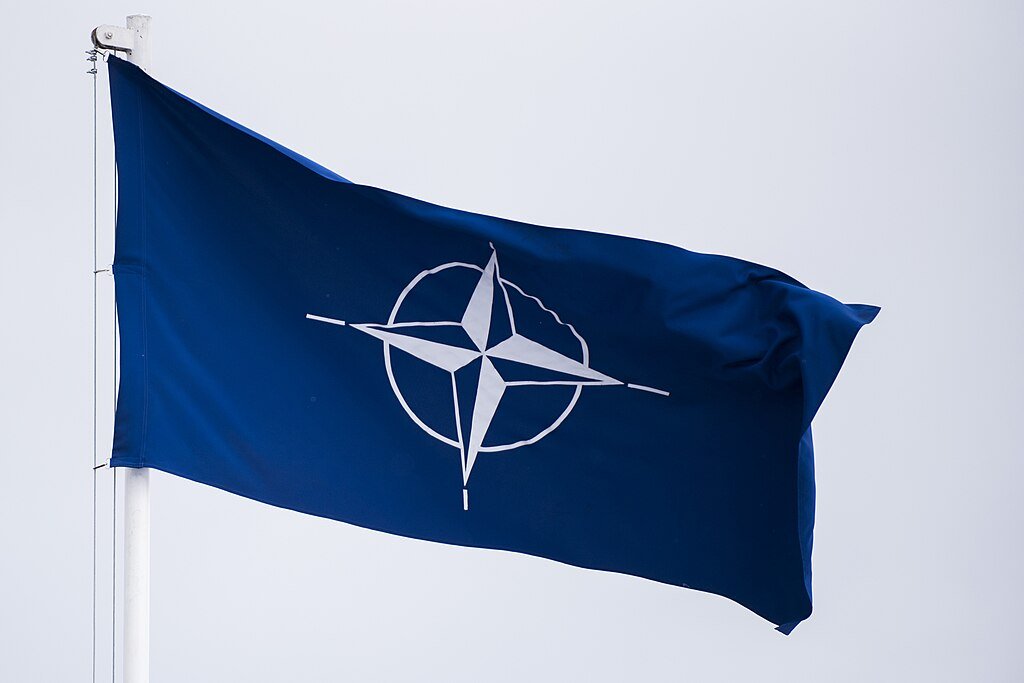
The President of the United States, Donald Trumpcriticized this Friday (20) the refusal of allies from the North Atlantic Treaty Organization (I’ll take it) in supporting the military operation against Iran. Member countries have avoided military involvement, claiming that the conflict does not activate the alliance’s defense mechanisms. However, they are being increasingly pressured to act.
“Without the US, NATO is a paper tiger”wrote the Republican on his social network. For Trump, the organization’s countries, in addition to not wanting to join the fight to “prevent a nuclear-capable Iran”, do not want to help reopen the Strait of Hormuz, the main oil route in the Middle East, blocked by Iran since the first days of the war.
The American president also said that the military maneuver to reopen the strait would be simple and that it would resolve the spike in oil prices – triggered by the war in the region. “It’s so easy for them to do this, with so little risk. COWARDS, and we WILL REMEMBER!”, he stated.
On Tuesday (17), Trump had already complained about NATO’s stance, after the organization’s European members refused to join Trump’s coalition to prevent Iran from blocking the Strait of Hormuz. Governments such as Germany, France and the United Kingdom have said they do not intend to participate with offensive military force in the war in the Middle East.
Despite the refusal to join the war, NATO Secretary General Mark Rutte stated this Wednesday (18) that the alliance countries are currently discussing “the best way” to reopen the Strait of Hormuz. According to him, there is a consensus among members of the alliance that the route needs to be reestablished, and the allies work “collectively” to find a solution.
In a joint statement released this Thursday (19), the governments of the United Kingdom, France, Germany, Italy, the Netherlands and Canada – which are part of NATO – and Japan, a strategic partner of the alliance and a close ally of the USA, condemned “in the strongest terms” Iran’s attacks on commercial vessels in the Gulf and the “de facto closure” of the Strait of Hormuz by forces of the Islamic regime.
The governments declared that they were “ready to contribute to appropriate efforts to ensure safe passage through the Strait”, however, the statement did not clarify whether this contribution would involve a military presence. Neither direct offensive action nor formal commitment to send forces to Hormuz was announced.
For Adriano Gianturco, coordinator of the International Relations course at Ibmec in Belo Horizonte and columnist for People’s Gazettethe main members of NATO, especially European countries, do not consider that the war against Iran is, at this moment, a case of collective defense. Therefore, they do not see a legal basis for formally activating the alliance. As it is a defensive alliance, NATO is only formally activated when there is a direct attack against one of its members.
The analyst highlights that, in addition, there is a strategic calculation underway within NATO. For Europeans, direct entry into the war could increase political, military and economic risks and costs. “Countries are assessing that it would be more risky, less advantageous in terms of cost-benefit, to intervene rather than not,” he stated.
A sign that they would not enter the conflict was observed after Cyprus, a country in the European Union, was the target of incursions by Iranian drones. Days later, Turkey, a member of NATO, also had its airspace violated in the context of the regional escalation, but, even so, the members of the alliance chose not to transform the episode into justification for a collective entry into the war.
International strategist Cezar Roedel states that NATO’s European allies avoid entering the conflict in the Strait of Hormuz because they believe that an intervention could turn into a long maritime war, difficult to control and with high economic and military costs. According to Roedel, the fact that President Trump did not previously consult NATO members about the offensive against Iran also weighs heavily on the decision of European allies.
NATO has already been called upon by the US in previous conflicts
Although today part of NATO’s European allies resist entering the war against Iran, they have already been mobilized in direct defense of the United States in a historic episode.
After the terrorist attacks of September 11, 2001, when hijacked planes hit the Twin Towers in New York and the Pentagon in Washington, NATO activated Article 5 of the treaty for the first time in its history – the collective defense clause that establishes that an attack against one member is considered an attack against all.
The decision was taken moments after the attacks. With this, the allies officially recognized that the United States had been the target of external aggression and committed to acting together.
The measure paved the way for NATO’s participation in the war in Afghanistan, also marking the alliance’s first military operation outside the traditional Euro-Atlantic area. European countries and Canada sent troops to support the offensive against Al-Qaeda and the Taliban regime.
