
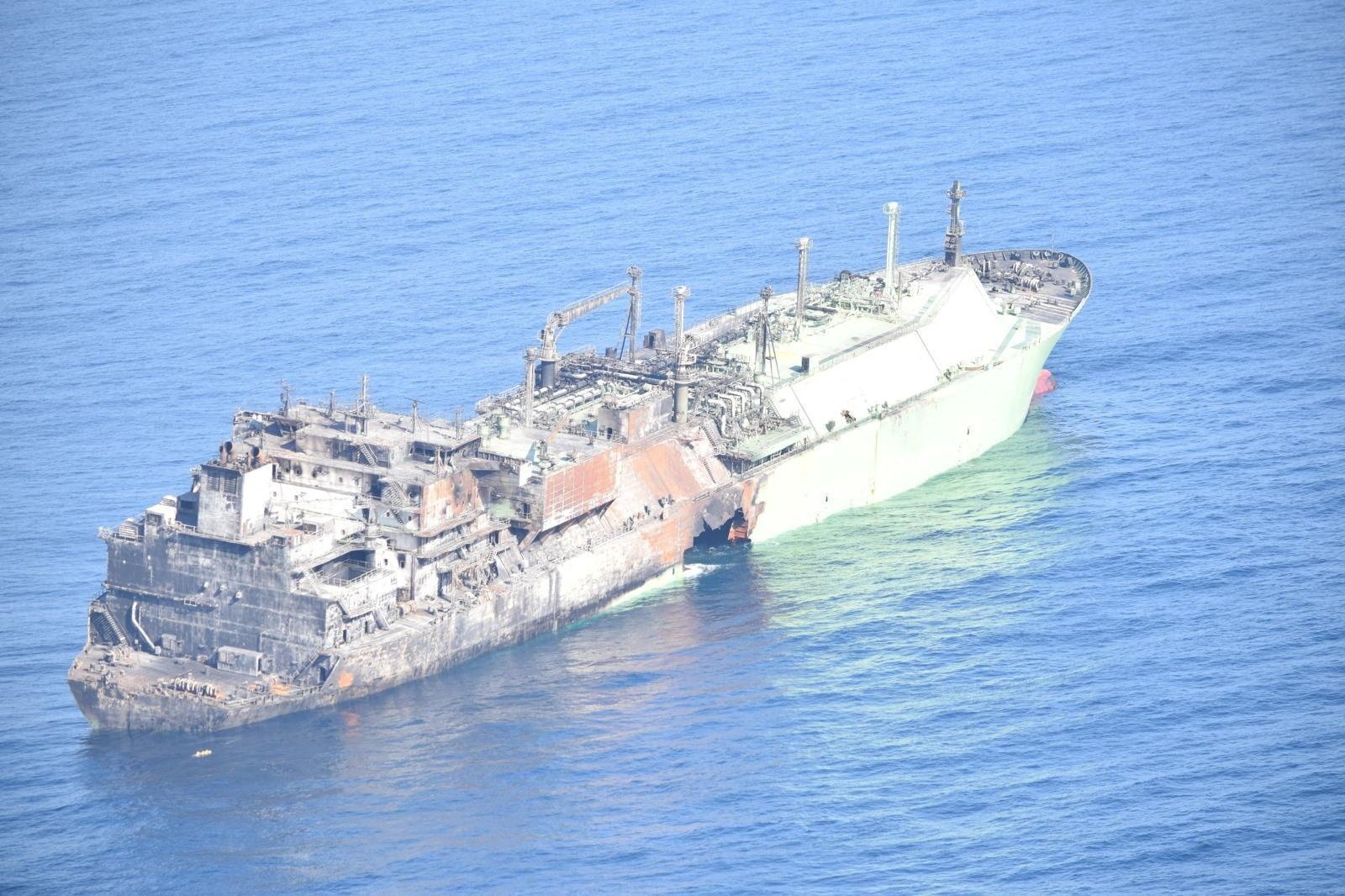
A Russian LNG tanker, the Arctic Metagaz, damaged earlier this month and currently adrift without a crew, floats in international waters in the Mediterranean Sea, between Malta and the Italian islands of Lampedusa and Linosa, in this image released on March 13, 2026. Marina Militare/Disclosure via Reuters After more than two weeks adrift in international waters in the Mediterranean, an abandoned Russian oil tanker severely damaged by explosions is now being dragged by sea currents towards Libya. The ship’s advance increases the risk that its fate will trigger an “irreversible” environmental disaster, according to conservation organizations. According to Italian authorities, the ship is an “environmental bomb” that could explode at any time, hampering the ability to rescue its contents. So far, however, no country has announced concrete measures to prevent its highly explosive cargo from leaking into the ocean. Surveillance of the Arctic Metagaz vessel was taken over by Italy on March 3, when the Russian Ministry of Transport accused Ukraine of targeting the ship with maritime drones as it sailed near Malta and the island of Lampedusa. This Wednesday, however, with the tanker heading south, Rome said it could no longer follow it closely. The alleged attack, not recognized by Kiev, damaged the vessel’s hull and forced the evacuation of 30 crew members, leaving its cargo of hundreds of tons of diesel, fuel oil, as well as two tanks of Liquefied Natural Gas (LNG) adrift. See the videos that are trending on g1 “At the time the vessel was abandoned, 450 metric tons of heavy fuel and 250 metric tons of diesel, as well as a significant amount of natural gas, remained in its fuel tanks,” Russian Foreign Ministry spokeswoman Maria Zakharova said in a statement. The 275-metre-long Arctic Metagaz is one of almost 600 EU-sanctioned ships that make up Russia’s “ghost fleet”, banned from accessing ports and providing a wide range of services related to maritime transport. Irreversible environmental risk Any spill could cause “fires, cryogenic clouds lethal to marine fauna and extensive and long-lasting pollution of waters and atmosphere” in the region, one of the richest in biodiversity in the Mediterranean basin, the environmental group WWF said on Friday. “The environmental risk is, therefore, extremely high and potentially irreversible,” he said in a statement. The undersecretary of the Presidency of the Council of Ministers of Italy, Alfredo Mantovano, argued on Italian radio that Malta had imposed a ban on approaching within 7 kilometers of the ship, “because the vessel could explode at any moment”. Climate change is making days longer — and it’s never happened so quickly in 3.6 million years “It’s an environmental time bomb that threatens to cause serious damage across the entire Mediterranean Sea region,” he said. On Friday, when the Arctic Metagaz was in Malta’s search and rescue (SAR) zone, Italy’s Prime Minister Giorgia Meloni chaired an emergency meeting to deal with the case. In a joint letter sent to European Commission President Ursula von der Leyen, the leaders of Italy, Spain, Malta, Greece, Cyprus and four other European countries warned that the ship poses an “imminent and serious risk” of a major ecological disaster and called for the activation of the bloc’s civil protection mechanism. “The precarious condition of the vessel, combined with the nature of its specialized cargo, creates an imminent and serious risk of a major ecological disaster in the heart of the Union’s maritime space,” they wrote. However, with the Arctic Metagaz moving away from European waters, it is unclear whether the bloc will continue to act on the case. So far, Libyan authorities have only stated that ships and oil platforms off its coast should be alert to the movement of the Russian tanker, but have not announced concrete measures. Since last year, Ukraine has launched several attacks against the so-called Russian ghost fleet, which transports oil by circumventing Western sanctions against Russia for the war in Ukraine, with the aim of stopping the financing of the invasion. In this case, however, he did not comment on the incident, classified by Moscow as “a terrorist attack and an act of piracy”.
Source link
Adrift in the Mediterranean, Russian ‘ghost ship’ becomes environmental bomb
20

previous post