
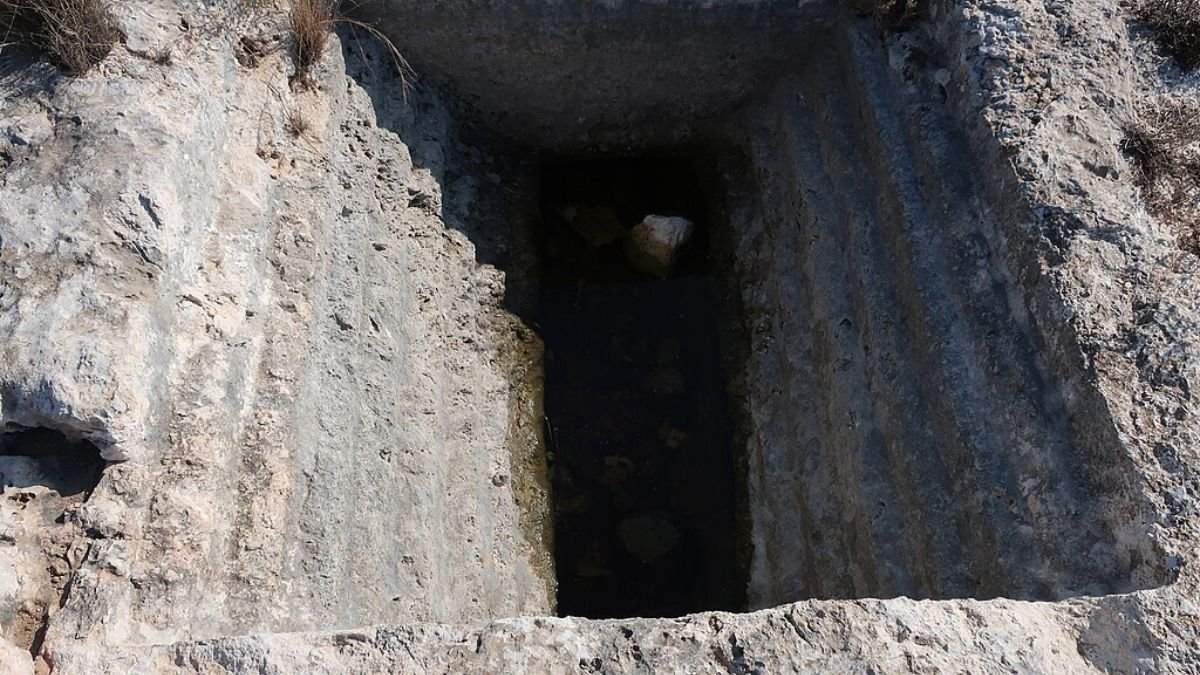
A recent archaeological discovery of a mikveh about 2,000 years ago brought new details about the history of ancient Jerusalem. During excavations carried out under the Western Wall squareone of Judaism’s holiest sites, archaeologists have identified a tank used for the Jewish ritual purification bath, known as a mikveh.
The find helps to shed light on the Second Temple Period and contributes to understanding how religious life worked in the city, which plays a central role in both the Jewish faith and the Christian tradition.
What is a mikveh?
The mikveh is a tank used for an immersion bath in Judaism, designed for spiritual purification. Jewish tradition requires a person to immerse themselves in a mikveh in specific situations. For example, before conversion to Judaism, before marriage and observing the laws of niddah (menstrual purity).
During the Second Temple period (516 BC to 70 AD), such tanks were common in Jerusalem, especially in the vicinity of the Temple, where thousands of pilgrims gathered on holidays.
Where was the 2000 year old mikveh found?
The discovery of the 2,000-year-old mikveh was made during excavations in an underground area near the Western Wall plaza in Jerusalem’s Old City. The region is considered one of the most sensitive and studied archaeological sites in the world.
Specific features of the find, such as stairs carved into the rock and a rainwater collection system, helped to identify it – as these are requirements set out in Jewish law for the ritual bath to be considered valid.
In addition to the structure, researchers found ceramic fragments and architectural evidence typical of the Second Temple era. These elements made it possible to date the find to approximately two thousand years.period immediately preceding the destruction of Jerusalem by the Romans in AD 70
How was the tank, found near the Western Wall, discovered?
The excavations were carried out using modern archeological techniques, including stratigraphic analysis and detailed documentation of soil layers. This is an area where each intervention requires extreme care, both for scientific and religious reasons.
For historians and religious experts, the impact is significant. The discovery contributes to reconstructing aspects of the history of ancient Jerusalem that were often only known from textual sources.
What does the discovery reveal about ancient religious life?
The archaeological discovery of the mikveh so close to the Temple indicates that the observance of ritual laws was not an exception, but part of the routine of those who lived or made pilgrimages to the city. For scholars of biblical archeology, the find offers material evidence that dialogues with historical and religious texts from the period.
The Western Wall is the best-known remnant of the Second Temple’s containment structures, which after the destruction caused by the Roman Empire, became a symbol of faith, resistance and memory for the Jewish people.
Finding a 2,000-year-old mikveh beneath this area expands understanding of Jewish cultural heritage and reinforces the historical density of the space.
By revealing details of ancient religious life, biblical archeology plays an essential role: to present to the world concrete evidence of spiritual practices that have shaped generations – and continue to influence millions of people around the world.
