
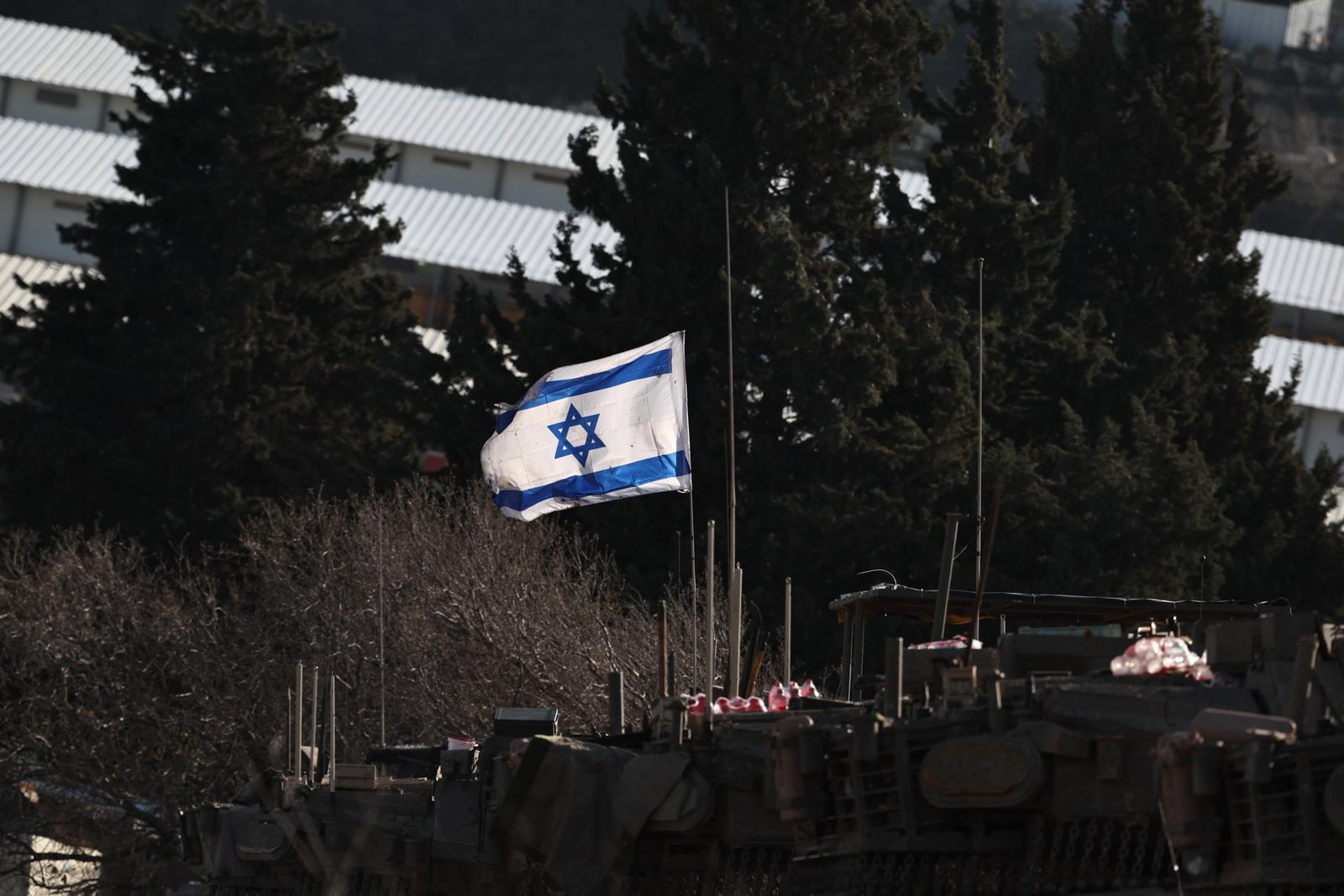
The ongoing war in the Middle East has entered its third week. In Israel, the prevailing feeling is that the country is experiencing a decisive moment in its history.
In an interview with People’s GazetteBrazilian Gabriel Schorr, director of Exodus Israel, specialist in the Middle East and former soldier in the Israeli Defense Forces (IDF), where he served for 23 years, said that the ongoing confrontation against Iran is seen by many Israeli citizens as the central stage of a war that began on October 7, 2023, with the terrorist attacks by Hamas.
“There is now a very clear feeling that everything that has been done over the last two years – the war against Hamas in the Gaza Strip and the West Bank, the confrontation against Hezbollah in Lebanon and the attacks against the Houthis in Yemen – only gains full strategic significance when the source of financing, training and ideological inspiration for these terrorist movements, which is Iran, is directly confronted and contained,” he says.
According to Schorr, many Israelis see the weakening of Iran as a decisive step not only in reducing the existential threat against Israel, but also in paving the way for a new stage in the Middle East. According to him, there is a perception in Israel that a setback imposed on the Iranian regime could allow the country to “turn a page in history” and start seeking a new future in both the Gaza Strip and Lebanon, without the destabilizing influence of Tehran, which finances terrorist groups that operate in these two places: Hezbollah and Hamas, respectively.
Attacks against Israel’s civilian population and the routine of war
Since the Hamas attack in October 2023, the population of Israel has lived under a logic of almost permanent war, with only occasional breaks throughout the period. In this sense, Israeli society was already prepared to deal with the disruption of routine, follow security protocols and react to missile attacks and other threats coming from Iran and terrorist groups allied with the regime.
However, as in every conflict, Schorr reported some profound changes in the population’s routine with the escalation of the war against Iran, which has already closed schools, restricted movement and started to organize civil life around sirens, security alerts and frequent trips to shelters to protect against missiles.
Schools were closed due to the constant risk of ballistic missile attacks and Iran’s use of fragmentation warheads, which spread submunitions in the air and increase the potential to reach civilian areas. The Israeli government has denounced Iran’s frequent drone and missile attacks on civilian areas of Israel.
With schools closed and children at home, the job market in Israel has also been affected. Many parents found it difficult – and, in some cases, even impossible – to maintain a normal work routine. Part of this impact has been mitigated by working from home, adopted by many people based on the experience accumulated since the pandemic and also in the last years of war.
Defense system, US support and civilian discipline
Israel today operates with a three-tiered protection structure. The first involves the Iron Dome, developed to intercept mortars and short-range missiles. Furthermore, Schorr recalls that Israel expanded this protection network with other systems, such as the Hetz, known in English as Arrow, and the David’s Sling, aimed at intercepting ballistic missiles and longer-range threats.
The second layer is the action of the United States alongside Israel in intercepting and neutralizing missiles fired by Iran. The third layer depends exclusively on the discipline of the Israeli population itself and the warning system coordinated by the Home Front Command, the sector of the Israeli Army responsible for civil defense.
“Every time an Iranian missile is fired, an alert sounds on every cell phone in Israel – regardless of whether the person is Jewish, Christian, Muslim, Druze or from any other community – warning that a threat may be on the way,” reports
When the systems are able to better estimate the region of possible impact, the sirens start to ring only in areas at risk and the population has between 10 seconds and around a minute and a half to reach a shelter or safe room, depending on the location.
Trump’s objective in the conflict
In Schorr’s assessment, US President Donald Trump not only seeks to destroy Iran’s military capabilities – as he has been claiming – but also to prevent the advancement of a broader geopolitical articulation led by regimes opposing the West.
“I would even say that the objective [de Trump na guerra em curso] is to avoid a potentially disastrous world order that has been designed by what many call the ‘axis of evil’ – Iran, Russia and China – over the last 10 or 20 years.”
For Schorr, the Iranian regime has a direct role in the dissemination of weapons and military technologies used by different actors in conflicts and violent networks in various parts of the world, including Latin America. In the former soldier’s view, the advance of radical Islamic fundamentalism, combined with China’s growing digital and informational influence, has contributed in recent years to a more unstable international environment marked by disinformation.
“I believe that Donald Trump is aware of this strategic dimension. Therefore, the urgency would not just be to destroy military capabilities [do Irã na guerra em curso]but also open space for the Iranian population to live as a normal society, without fear of speaking out and being brutally repressed, and at the same time preventing the international system from heading in a direction that is much more difficult to contain in the future”, he analyzes.
Regime change may require troops in the field and the population taking to the streets
Schorr said he did not share the assessment of analysts who ruled out the scenario of sending American troops to Iran in a possible attempt at regime change. In his view, an operation of this type could end up requiring a military presence on the ground, either to protect the Strait of Hormuz and guarantee the passage of oil tankers, or to isolate areas around nuclear installations and allow direct inspections and the removal of sensitive materials.
He does not rule out the need for the participation of international forces in an eventual phase of stabilization and support for the political reorganization of Iran. At the same time, he considered that a change of regime in the Persian country would not depend solely on external pressure. The Iranian population itself will play a decisive role in this process, as in recent years it has returned to the streets in large demonstrations against the ayatollahs’ regime.
Iran’s military capacity has been shaken, but war could prolong
The attacks by Israel and the United States significantly affected the military and ballistic capacity of the Iranian regime, especially with regard to its ability to launch massive and immediate offensives against Israel.
“In the early days, Iran launched an average of 40 to 50 ballistic missiles per day against Israeli territory.” In recent days, he analyzes, this number has dropped “to somewhere between three and six per day”, which would indicate a significant weakening of Iran’s offensive capacity.
But, even with significant damage to its military infrastructure, the Islamic regime can still prolong the conflict. According to Schorr, most of the targets hit so far by Israel and the United States are concentrated in western Iran, the region closest to Israel and the Persian Gulf. In his assessment, the eastern portion of Iranian territory can still house military installations and missile launch platforms.
Iran uses Hormuz to pressure the West, and Hezbollah remains a threat
The Iranian regime is using the Strait of Hormuz, a strategic route through which 20% of the world’s oil passes, as a way of putting pressure on the international community. Tehran has threatened ships passing through the area and installed mines beneath the waters.
In Schorr’s assessment, by threatening the Strait of Hormuz, Tehran is trying to increase the economic cost of the war to force an external reaction in favor of a faster end to the conflict.
Regarding the threats posed by Iran’s so-called “axis of resistance” in the Middle East, Schorr stated that Hezbollah remains the main regional risk for Israel at this time.
“Hezbollah is a problem that needs to be faced from the root. Neutralizing this organization is also a necessary step so that Lebanon can return to being a more stable country and to actually eliminate Hezbollah’s capabilities, it is essential to cut the influence that Iran exerts over this armed movement”, he points out.
Region still experiences uncertainty
In Schorr’s assessment, the war against Iran tends to make Israel stronger and more secure in the long term, even if the broader regional impact remains open. The country must end this conflict with a clearer perception of the threats it faces, with important adjustments to the defense system and the way its Armed Forces operate, in addition to reinforcing strategic alliances, especially with the United States.
At the same time, Schorr considers that it is still too early to say that the war will produce more stability in the Middle East as a whole. In his view, there is a real risk that an eventual fall of the Iranian regime will not be followed by an organized transition, opening space for fragmentation, internal disputes and a new focus of regional chaos.
Despite the risks, Schorr says he sees room for important diplomatic rearrangements in the Middle East after this war. Countries like Lebanon, Syria and even the Palestinian territories themselves could seek a different future, with more stability, development and even forms of cooperation with Israel. As an example that this type of rearrangement is possible, he cited the peace agreements with Egypt and Jordan and also the new forms of cooperation that have emerged in recent years with the United Arab Emirates and other Arab countries.
“Israel does not aspire to be a greater country, nor to dominate other peoples”
In a message to the Brazilian public, Schorr stated that, to understand what Israel is facing at this moment, it is necessary to keep in mind that the country is not at war to expand territory or dominate other peoples, but to guarantee its own survival.
“Israel does not aspire to be a bigger country, nor to dominate other peoples. In the same way, the Jewish people do not seek to be more important than anyone else on the international stage. Israel’s central objective is simply to continue existing in security”, he concludes.
