
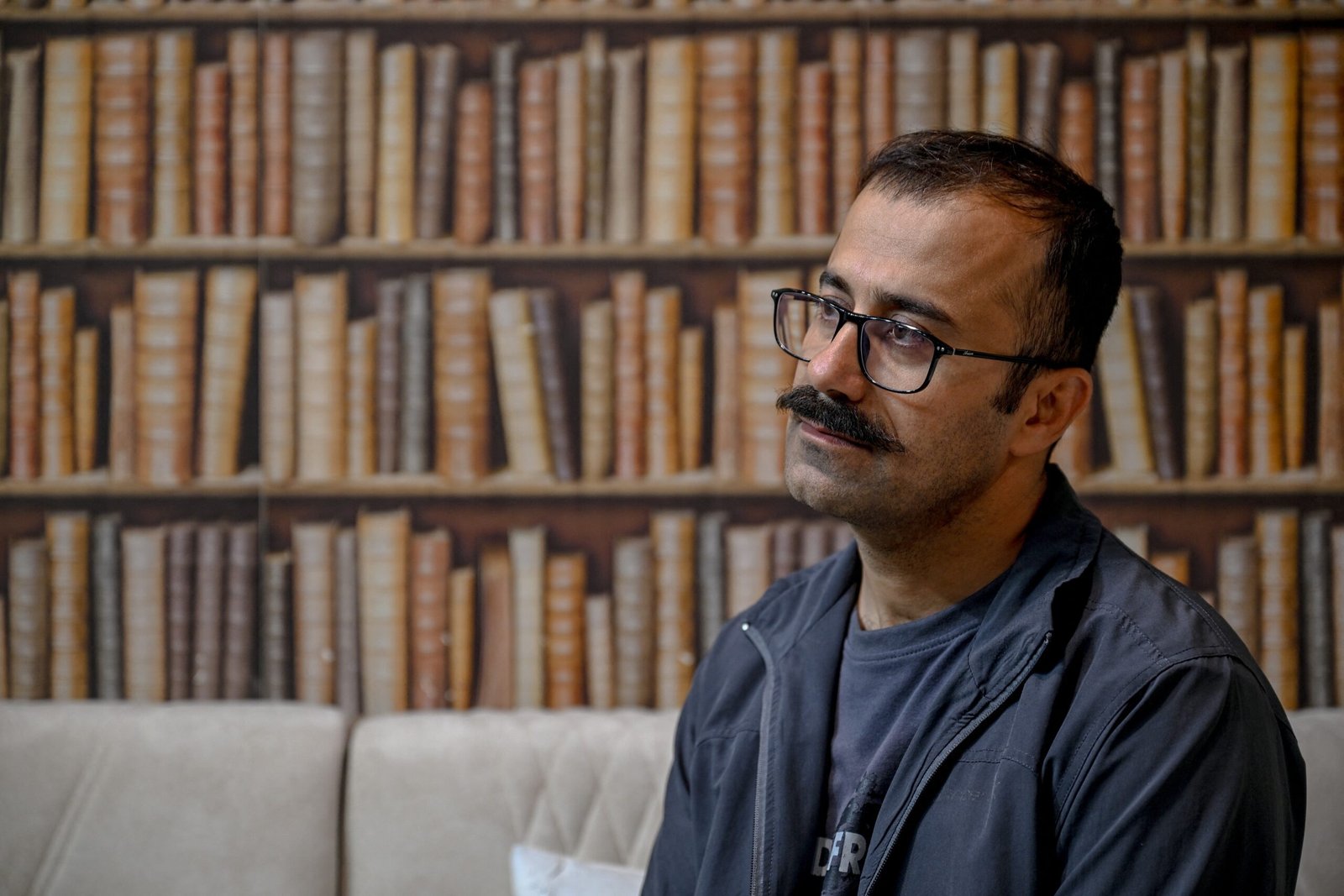
Farhad Sheikhi, an Iranian Kurd who participated in anti-government protests in 2022. OZAN KOSE / AFP Iranian activist Farhad Sheikhi holds back tears as he recalls the sound of the gunshots and the fall of his comrades hit by the bullets. After fleeing to Iraq, he follows the attacks by the United States and Israel against his country from a distance. “I literally saw hell,” says the 34-year-old Iranian Kurd in Suleimaniya, the second largest city in Iraqi Kurdistan, as he shows AFP photos he took during January’s anti-government protests. The images show several people on the ground, next to pools of blood. But his biggest concern now is the safety of his family in Iran. With the Islamic Republic’s cyber blackout, he says he relies on a friend who can occasionally log on to send information. “He calls my father and tells me how they are. It’s the only way to hear from them,” he explains. See the videos that are trending on g1 Returning to Iran is no longer an option for Sheikhi, who dreams of traveling to Germany and completing her law studies. As the war enters its third week, Sheikhi says people are more cautious and face tougher living conditions. He claims not to lose hope that “one day a social revolution will allow me to return, but at the moment the risk is too great.” After authorities’ violent crackdown on January protests in Iran, which human rights organizations say left thousands dead, Sheikhi fled to the autonomous region of Iraqi Kurdistan. Sheikhi says she remembers the sound of gunshots and her fellow protesters falling under a hail of bullets months earlier. OZAN KOSE / AFP The January movement was not the first time he participated in protests against Iranian authorities. In 2022, he joined the thousands of people who took to the streets to protest the death of young Mahsa Amini, who died in custody after being detained for allegedly violating the strict dress code imposed on women. At the time, he was detained three times and subjected to torture that caused hearing loss. Sheikhi was not intimidated: in December and January he took to the streets again to protest against the regime. “The repression against the people, the killing, was massive. I saw it myself,” he said. Aresto Pasbar, an Iranian who fled the country after participating in the 2022 anti-government protests, holds an AK-47 rifle in a house. OZAN KOSE / AFP ‘If I die’ During the 2022 protests, Aresto Pasbar was hit by shotgun bullets that left him blind in his left eye. “I’ve already had five surgeries,” Pasbar, 38, tells AFP in Sulaimaniyah, Iraq. Afraid of being murdered, he fled to Turkey, where he was intercepted while trying to enter Europe illegally by sea. A humanitarian organization based in Munich helped him obtain asylum in Germany in 2023. From Germany, he followed the situation in Iran. He suffered when he saw the repression of protests, to the point where he could no longer take it. When the war began, he left behind the comfort of Germany to join Iranian Kurdish fighters in Iraqi Kurdistan, with the hope of one day crossing the border into Iran taking advantage of the current war. With a firm voice, he says that, in his heart, “I could not remain in that comfort and see my people being oppressed.” Dressed in the traditional gray uniform of the Kurds, rifle in hand, he said he was aware that he might not see his wife and two daughters again. Pasbar says that, before traveling, he told his family: “If I die, please defend your rights.” ‘Revenge’ In 2005, when Amina Kadri’s husband, Ikbal, fled Iran due to political persecution, her family hoped that Iraqi Kurdistan would represent a safe haven. But 15 years later, Ikbal, who was 57 years old and a member of an Iranian Kurdish armed group in exile, was murdered near the Iran-Iraq border. The attackers shot, left the body in a river and fled to Iran on a motorbike, said Kadri, who cited witnesses to the murder. She accuses Iran of being responsible for the crime. Just 53 days later, Kadri’s eldest son, who had remained in Iran, was executed for murder. Kadri believes it was all a setup. “I don’t care what happens to me anymore,” he said. “My life is not more valuable than that of my son or my husband,” said Kadri, 61, speaking by phone from Penjwen, a border town where Kurdish forces prevented an AFP team from entering on security grounds. Kadri now only wants the fall of the Islamic Republic so he can “avenge the blood of all those who were executed.”
Source link
Iranians who fled ‘hell’ follow the war in exile
15
