
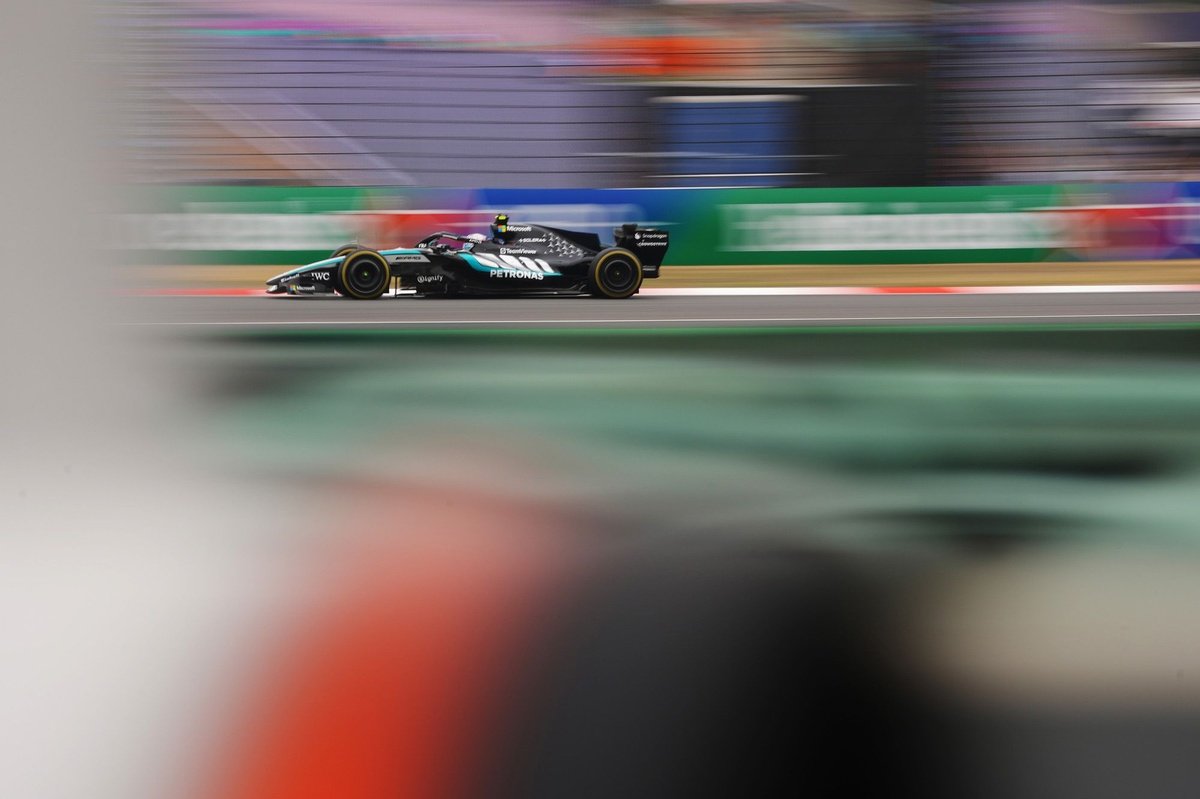
After the first two race weekends under the new technical regulations, opinions in the Formula 1 paddock remain divided. Lewis Hamilton said in Shanghai that he had not enjoyed the racing this much in a long time.
“I think it’s the best racing that I’ve ever experienced in Formula 1,” he said after securing his first Ferrari podium. “It felt like go-karting, back and forth, back and forth, and you could really position your car in a nice way where there was a thin piece of paper between us sometimes.”
Max Verstappen and Fernando Alonso, among others, were more critical. The Aston Martin driver called F1 “a battle of the batteries”, while Verstappen still likens it to Mario Kart.
“It’s terrible. If someone likes this, then you really don’t know what racing is about,” the Red Bull driver said after the race.
Evaluation after China goes ahead, but no ‘knee-jerk reaction’
Ahead of the season, it had already been clear that the FIA planned an evaluation with all teams and stakeholders after the sprint weekend in China. A spokesperson told Autosport that this meeting is part of an “ongoing dialogue” and will still go ahead as planned.
However, the mood in the paddock has shifted somewhat since the season opener in Melbourne. Several teams have warned against a ‘knee-jerk reaction’, as Haas team principal Ayao Komatsu called it, meaning the current consensus is that no significant changes are required ahead of the Japanese Grand Prix.
There are several reasons for that. First of all, the FIA and various teams believe the overall product is not so problematic that immediate intervention is required. Many agree that some aspects – including lift and coast during a qualifying lap – could be improved, but that the entertainment value of the races is reasonably good.
Toto Wolff claims the “vast majority” of fans are enjoying F1’s new era
Photo by: Martin Keep / AFP via Getty Images
Toto Wolff is among those who share that view. “Qualifying flat-out would be nice. But when you look at the fans and the excitement that is there live, the cheering when there are overtakes, and also on social media, the younger fans, the vast majority through all the demographics likes the sport at the moment,” the Mercedes team boss said.
“So, yes, we can always look at how we’re improving it. But at the moment, all the indicators say, and all the data say, that people love it. And that’s why I spoke with Stefano, he says that too. So it is driving the car that, for some, is not most pleasant.”
More logical to use the break after the Japanese GP
In addition, the picture in China proved to be different from the one in Australia. The sprint race in Shanghai still followed a similar pattern to the main race in Melbourne – yo-yo racing at the start until Mercedes managed to break away – but several drivers felt it was less extreme than what had happened Down Under.
That largely has to do with the different layouts. The track in Melbourne was “harvesting poor”, as McLaren team principal Andrea Stella described it, whereas drivers could recover energy more easily at the Shanghai International Circuit and therefore had to use fewer unnatural tactics. However, to form a proper picture the FIA considers it desirable to gather more data from different circuits.
Thirdly, the cancellation of the grands prix in Bahrain and Saudi Arabia makes it logical to use the break for a more thorough evaluation. According to the rulemakers, the product does not require an immediate response, making it preferable to use the time after the race in Japan to assess which aspects could be improved.
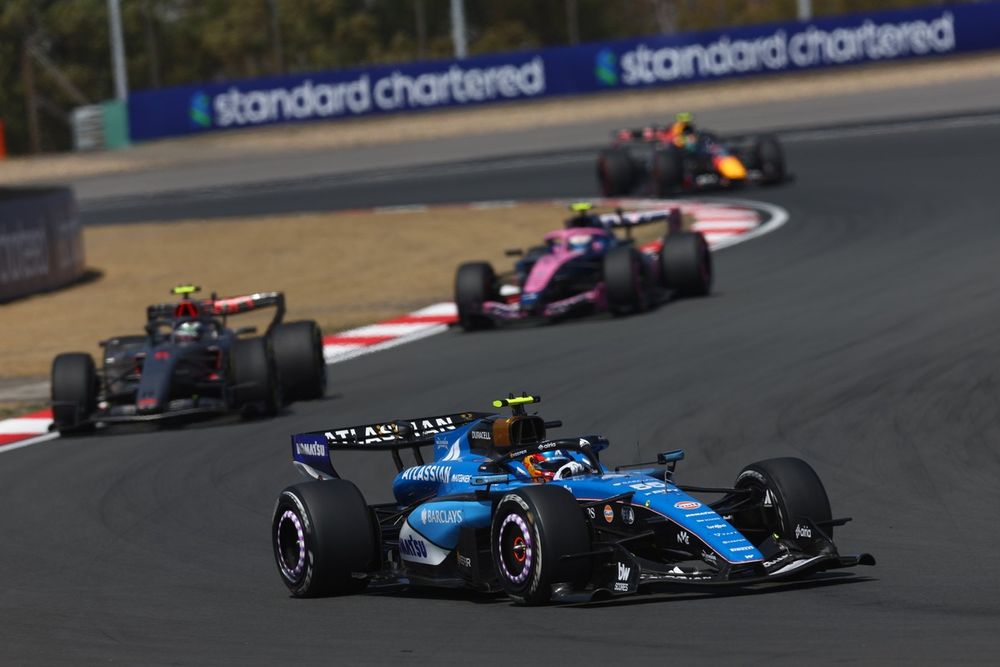
Williams boss James Vowles says F1 has options
Photo by: Andy Hone/ LAT Images via Getty Images
Williams team principal James Vowles has indicated that four or five options are on the table in that regard. The most obvious ones are related to deployment and harvesting. Super clipping could theoretically be increased to the full 350kW, while the share of electric power in, for instance, race trim could be reduced. The latter, however, is seen by some teams as a rather extreme solution.
Wolff emphasises that political motives may also play a role to take away some advantages held by Mercedes. “We have a good car that at that stage is capable of winning. Let’s see what kind of political knives are going to come out in the next few weeks and months. But at the moment, it’s a car that is capable of winning.”
By postponing any potential changes until after the Japanese Grand Prix, there will at least be sufficient time to determine which aspects require refinement – and how exactly – before the F1 season resumes in Miami during the first weekend of May.
We want to hear from you!
Let us know what you would like to see from us in the future.
– The Autosport.com Team
