
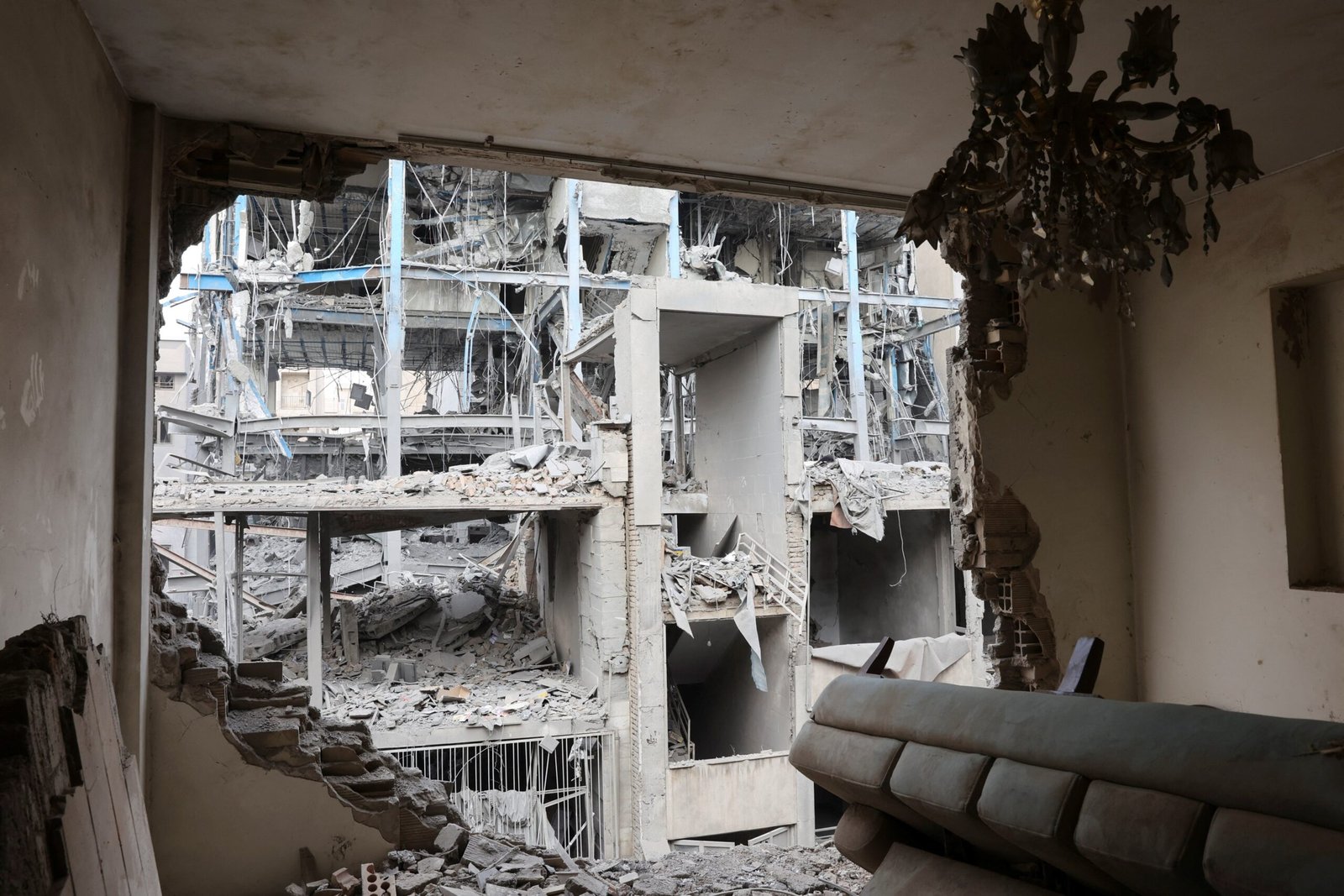
Image shows the interior of a house damaged by an attack in Tehran, Iran, on March 15, 2026. Majid Asgaripour/WANA (West Asia News Agency) via Reuters Iran warned this Sunday (15) other countries that, if they intervene, there will be “an escalation” in the war in the Middle East, which American President Donald Trump has ruled out ending for now. In an interview with NBC News, the president of the United States assured that Tehran wants to sit down to negotiate, but that Washington will continue with its offensive. “Iran wants to reach a deal and I don’t want to do it because the conditions are not good enough yet,” Trump told NBC News. He also stated that he might again bomb targets in Iran’s main crude oil export hub, located on Kharg Island, “just for fun.” See the videos that are trending on g1 Iran has already stated that the war will not end until it has guarantees of its definitive end. “This war will end when we are sure that it will not be repeated and that reparations will be paid,” his foreign minister, Abbas Araghchi, told the Arabic-language outlet Al-Araby Al-Jadeed. “We already experienced this last year: Israel attacked, then the United States (…) regrouped and attacked us again,” he added, referring to the brief war in June 2025 triggered by attacks from Israel and the United States. The minister also called on other countries to “refrain from any action that could lead to escalation” and stated that he has “a lot of evidence” that American bases in the Middle East were used to attack his country, citing the United Arab Emirates. The Pentagon claims that more than 15,000 targets were hit in the country. After more than two weeks of war between the United States and Israel against the Islamic republic, neither party has moderated its rhetoric, despite the casualties, mainly in Iran, and the economic consequences of the war. Trump also said that American forces would intensify attacks on the Iranian coast, north of the Strait of Hormuz, to clear the way and allow oil shipments to resume. The Iranian blockade of this strait, through which a fifth of the world’s hydrocarbon production used to pass, has skyrocketed the price of oil. Iran’s new supreme leader, Ayatollah Mojtaba Khamenei, who has not yet been seen in public, promised in a written statement to keep Hormuz closed. But Trump suggested he may not be in charge of Iran. “I don’t know if he’s alive,” he said. For Araghchi, “there is no problem” with the new leader, who was apparently injured on the first day of the war. New attacks by Israel The Israeli army announced this Sunday a new wave of attacks against targets in western Iran, after the Iranian Revolutionary Guard described Prime Minister Benjamin Netanyahu as a criminal and vowed to persecute and kill him. The Iranian military said it had launched drone strikes against a major police unit and a satellite communications center in Israel. The war began on February 28, when attacks by the United States and Israel took the life of former supreme leader Ali Khamenei, Mojtaba’s father. For the first time since then, Tehran experienced a relatively normal business day this Sunday, with heavier traffic than last week and some cafes and restaurants open. In Tayrish Bazaar, a popular shopping center in the northern part of the capital, more than a third of shops reopened five days before Noruz, the Persian New Year. Some customers waited in front of ATMs to withdraw money. There were also people at bus stops, which had been practically deserted since the start of the war. Escort of ships in Hormuz Trump has proposed an international naval operation to escort oil tankers through the Strait of Hormuz, which would reduce pressure on the price of oil and guarantee supplies to countries whose economies are most exposed to the conflict. “With luck, China, France, Japan, South Korea, the United Kingdom and others affected by this artificial restriction will send ships to the region,” Trump said Saturday on social media. Many countries appear hesitant. The UK Ministry of Defense said it was “looking into” the issue, as did South Korea and Japan, which did not provide a clear statement. Bahrain and Saudi Arabia claimed to have intercepted new projectiles. In Manama, an AFP journalist heard warning sirens. On Saturday night, Dubai authorities also reported new air defense interceptions. On Friday, American forces attacked the island of Khark, from which almost all of Iran’s oil exports flow. But both sides confirmed that the attacks destroyed only military defenses and left crude oil export terminals intact. More than 1,200 people died as a result of attacks by the United States and Israel, according to figures from the Iranian Ministry of Health, which could not be independently verified. The UN refugee agency says up to 3.2 million people have been displaced in Iran.
Source link
Iran warns that if other countries intervene, the war will escalate
20
