
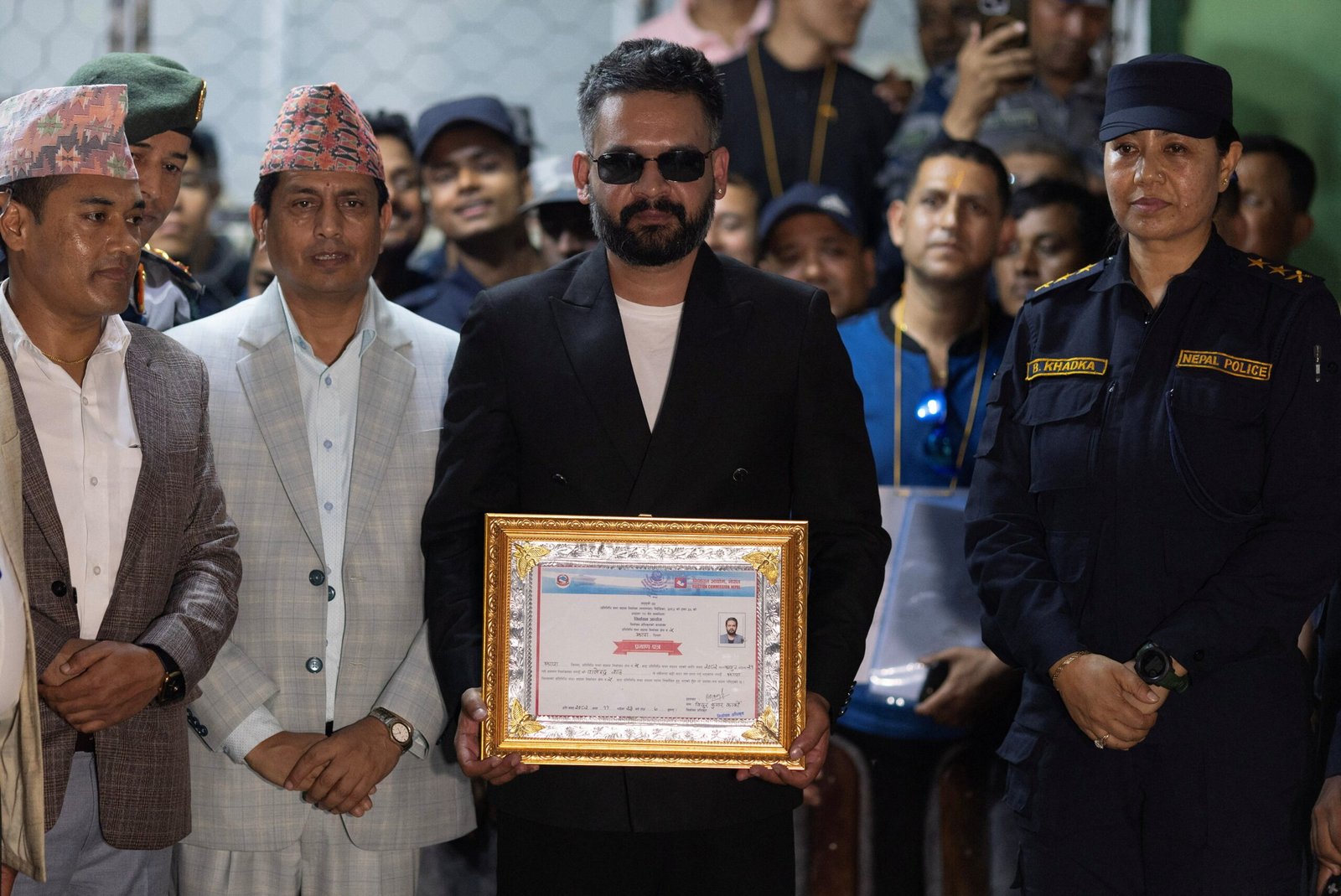
Nepal’s ‘Nepo kids’: Social media boast fueled wave of protests in the country The party led by Balendra Shah, a rapper-turned-politician, won a majority in Nepal’s Parliament in an election held after Gen Z protests that toppled the government last year. The results were announced this Thursday (12) by the electoral commission. ✅ Follow g1’s international news channel on WhatsApp The vote on March 5 elected a new 275-member House of Representatives, the lower house of Parliament. Of this total, 165 seats are chosen directly and 110 through a proportional representation system. According to the electoral commission, the center party RSP obtained 125 of the 165 seats in direct elections and another 57 through proportional representation, totaling 182. The party was just two seats short of a two-thirds majority. The election was the first since youth protests against corruption that shook the country in September 2025 and toppled the government. The demonstrations, associated with the so-called Generation Z, began after a brief ban on social media. The acts quickly began to express broader discontent with corruption and the economy. Rapper Shah defeated 74-year-old four-time prime minister KP Sharma Oli in his constituency. The victory marks the rise of the current mayor of the capital, Kathmandu, who is now emerging as the likely prime minister. READ ALSO Politicians’ ostentation, poor population and blocked networks: understand the fury of ‘Generation Z’ that led Nepal into chaos Fire hits laundry on US aircraft carriers amid war with Iran VIDEO: China mocks Trump’s meeting with American countries: ‘Chains of the Americas’ Balendra Shah, rapper turned politician and candidate for prime minister for the RSP, displays his certificate of victory REUTERS/Adnan Abidi The demonstrations The wave of protests that plunged the country in chaos generated historic images in the capital, Kathmandu. During demonstrations in September, government buildings and ministers’ homes were set on fire. In brutal scenes, government officials were dragged by the crowd and attacked. 💸 Social inequality is one of the main points of discontent among young Nepalis who have led thousands of people to the streets. According to the World Bank, the richest 10% earn more than three times the income of the poorest 40% in the country. One in five Nepalis lives in poverty. Furthermore, 22% of young people between 15 and 24 years old are unemployed. Nepal is on the UN list of 44 least developed countries in the world. Gaurav Nepune, one of the protest leaders, said young people had been running an online campaign for three months to expose the contrast between the lives of politicians and ordinary people. Users began to criticize the Nepalese elite by publishing photos of politicians’ children showing off luxury, while young people from poor families have to leave the country to support their relatives. In the midst of this, corruption scandals benefited politicians. Impunity further fueled the population’s revolt. 👉 Strength of youth: The demonstrations were strongly organized by young people from “Generation Z”. This is the popular name given to people born between 1995 and 2009, aged between 16 and 30. It is the first generation considered digital native, as it grew up using the internet, smartphones and social networks. Therefore, this group is often described as more connected, critical and engaged in debates about diversity, sustainability and politics, in addition to having consumption and communication habits shaped by the digital environment. 🔥 The popular unrest, which resulted in the burning of the government headquarters, Parliament and the Supreme Court, was the worst in decades in the country. The country has faced political and economic instability since the 1990s, when a civil war that lasted 10 years resulted in the abolition of the Nepalese monarchy in 2008. Because it is very recent, democracy in Nepal is still considered very fragile. Still, according to the 2025 Democracy Index, published by V-Dem, from the University of Gothenburg, in Sweden, Nepal is classified as an electoral democracy — on the same level as Brazil, Argentina and Poland. VIDEOS: most watched on g1
Source link
Rapper-turned-politician wins Nepal elections after ‘Generation Z’ demonstrations
15
