
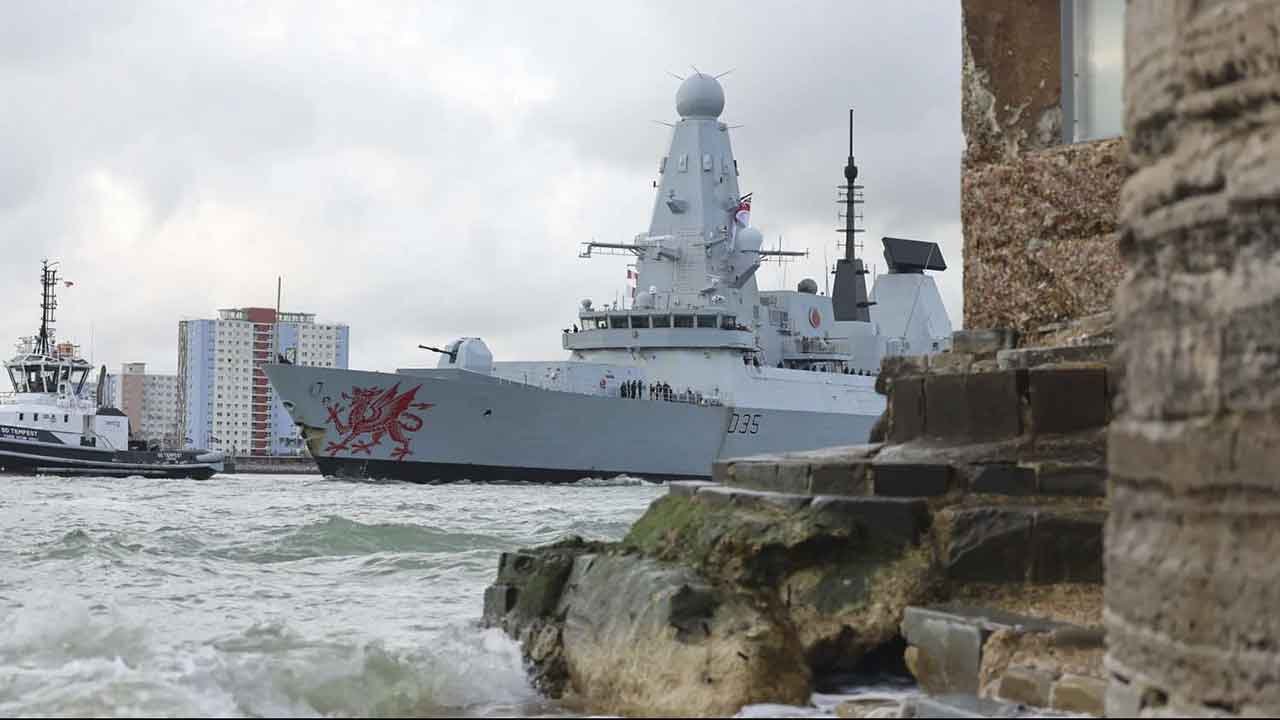
The British destroyer HMS Dragonof the Type 45 class, finally left Portsmouth harbor this Tuesday (10) bound for the eastern Mediterranean to bolster the defense of British interests in the region.
The mission comes amid rising tensions in the Middle East and following drone attacks linked to Iran against targets linked to the UK.
However, the ship’s departure was accompanied by strong criticism and questions about the delay in the British military response, revealing problems with preparedness and logistics in Royal Navy.
Delayed deployment amid rising tensions
The decision to send HMS Dragon came after drone strikes hit areas near the British air base RAF Akrotiri in Cyprus. The destroyer was sent to bolster air defenses in the region using the Sea Viper missile system, which is capable of intercepting drones, aircraft and high-speed missiles.
With a crew of around 200, the ship is considered one of the most important air defense platforms in the British Navy and can track hundreds of targets simultaneously, while also being able to fire multiple missiles almost simultaneously to neutralize threats.
The vessel is also supported by Wildcat helicopters armed with Martlet missiles, which are designed to intercept drones and other aerial threats.

Maintenance and logistics problems delayed the mission
Despite the official representation of a quick response, information published in the British press indicates that the dispatch of the ship was delayed due to maintenance problems and contractual issues at the yard.
HMS Dragon was in dry dock for maintenance and had to go through an accelerated preparation before she could sail. Normally this type of preparation would take around six weeks, but was reduced to just six days to allow for an emergency deployment.
Still, the delay caused controversy. Reports indicate that parts of the work were hampered by contract restrictions such as limited overtime and weekend work, forcing the Ministry of Defense to intervene to speed up repairs.
There was also criticism that the yard operated within normal office hours, which may have contributed to delaying the preparation of the vessel.
Political criticism and doubts about British naval capacity
The delay led to criticism in British politics. Conservative leader Kemi Badenoch stated that the destroyer is sailing “only after several weeks of hesitation», which underlines concerns about the government’s speed of reaction during the crisis.
Experts also point out that the episode reveals a larger problem: the lack of available ships in the Royal Navy. Of the six Type 45 destroyers, several are in various stages of maintenance or modernization, reducing the fleet’s ability to respond immediately.
In addition, the British naval presence in the Middle East has been reduced in recent years, contributing to the perception that Britain reacted late to the escalation of threats.
Critical mission
HMS Dragon now faces a journey of approximately 3,000 nautical miles to the eastern Mediterranean, which could take around a week to reach the area of operations.
Although the destroyer is capable of providing advanced air defense against drones and missiles, analysts warn that its arrival could come when the most critical phase of the crisis is already over, raising questions about the effectiveness of the delayed deployment.
Meanwhile, the Royal Navy insists the ship’s crew and systems are fully ready for the mission. The ship’s commander, Iain Giffinstated that the team worked intensely to ensure the vessel’s readiness.
+ China unveils 2 new Type 055 super destroyers and expands fleet of ships
Source and images: Royal Navy. This content was created with the help of AI and reviewed by the editors.
