
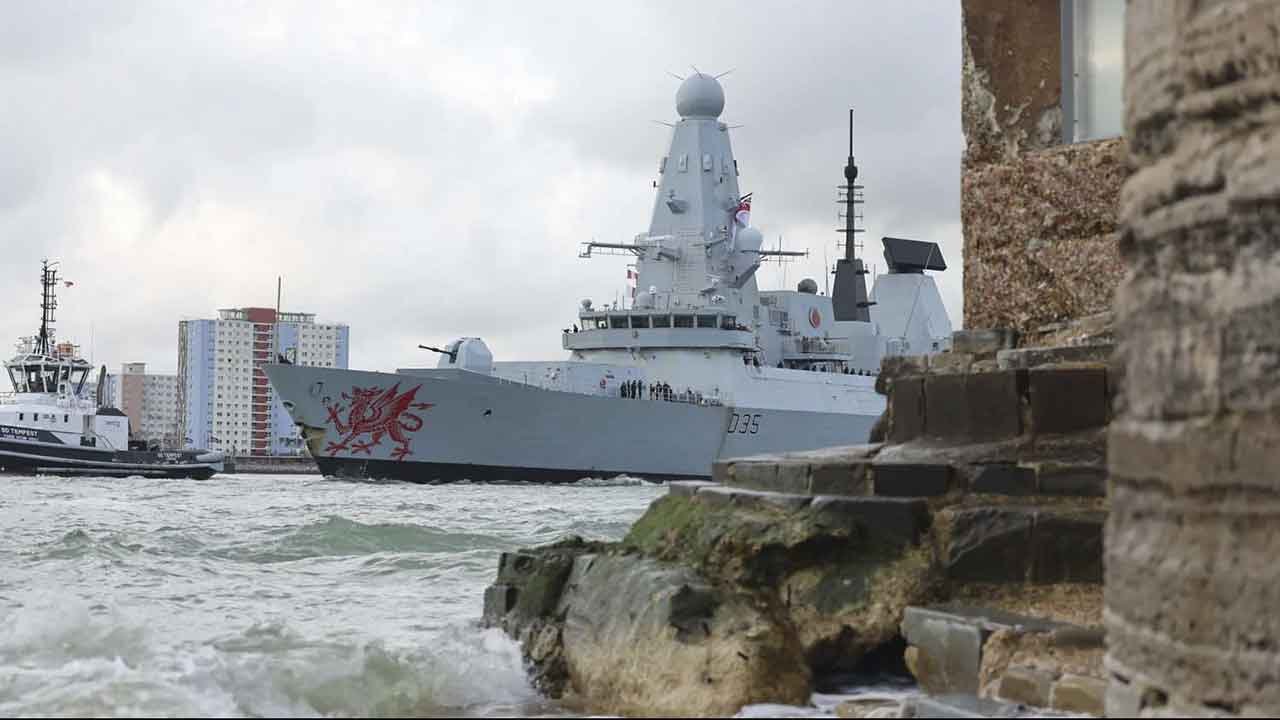
British Type 45 class destroyer HMS DragonThe ship finally left the port of Portsmouth this Tuesday (10th) for the Eastern Mediterranean, embarking on a mission to defend British interests in the region.
The mission comes amid heightened tensions in the Middle East and comes after drone strikes linked to Iran targeted targets linked to the UK.
However, the ship’s departure was accompanied by strong criticism and doubts about the delay in the British military response. Royal Navy Internal preparedness and logistics problems were revealed.
Delayed deployment amid heightened tensions
The decision to deploy HMS Dragon was taken after an area near RAF Akrotiri, a Royal Air Force base in Cyprus, was attacked by a drone. The destroyer is deployed to strengthen air defense capabilities in the region using the Sea Viper missile system, which can intercept drones, aircraft and high-speed missiles.
With a crew of around 200, the vessel is considered one of the Royal Navy’s primary air defense platforms, capable of tracking hundreds of targets simultaneously and launching multiple missiles almost simultaneously to neutralize threats.
The ship is also supported by Wildcat helicopters armed with Martlet missiles, capable of intercepting drones and other aerial threats.

Mission delayed due to maintenance and logistics issues
Despite official explanations of a quick response, British media reported that the ship’s dispatch was delayed due to maintenance issues at the shipyard and contract-related issues.
HMS Dragon was in dry dock for maintenance and urgent preparations were needed before setting sail. Typically, this preparation takes about six weeks, but for emergency deployment it has been shortened to just six days.
Nonetheless, the delay caused controversy. Some reports said contract terms restricting overtime and weekend work had delayed some parts of the work, forcing the Department of Defense to step in to speed up repairs.
In addition, the fact that the shipyard was operating under normal working hours was also criticized as a cause of the delay in ship preparation.
Political criticism and questions about British naval capabilities
The delay also drew criticism from British political circles. Conservative Leader Kemi Badenoch said the destroyer “After several weeks of hesitation, we set sail.” he pointed out, emphasizing concerns about the speed of government response in a crisis situation.
Experts also point out that this incident reveals a bigger problem. The problem is that the Royal Navy lacks ships that can be deployed immediately. Several of the six Type 45 destroyers are in the maintenance or modernization phase, limiting the fleet’s ability to respond immediately.
Additionally, the UK’s naval presence in the Middle East has declined in recent years, reinforcing perceptions that the UK has been slow to respond to the escalating threat.
important mission
HMS Dragonwill now move to the Eastern Mediterranean on a voyage of approximately 3,000 nautical miles and is expected to take approximately a week to reach the operational area.
The destroyers could provide advanced air defense capabilities against drones and missiles, but analysts are questioning the effectiveness of their late deployment, warning that their arrival could be after the most critical phase of the crisis has already passed.
Meanwhile, the Royal Navy is emphasizing that its crews and ship systems are fully prepared for the mission. ship commander Iain Giffinsaid the team worked intensively to ensure the ship’s full readiness.
+ Electric aircraft testing approved in 26 US states
Sources and images: Royal Navy. This content was created with the help of AI and reviewed by our editorial team.
