
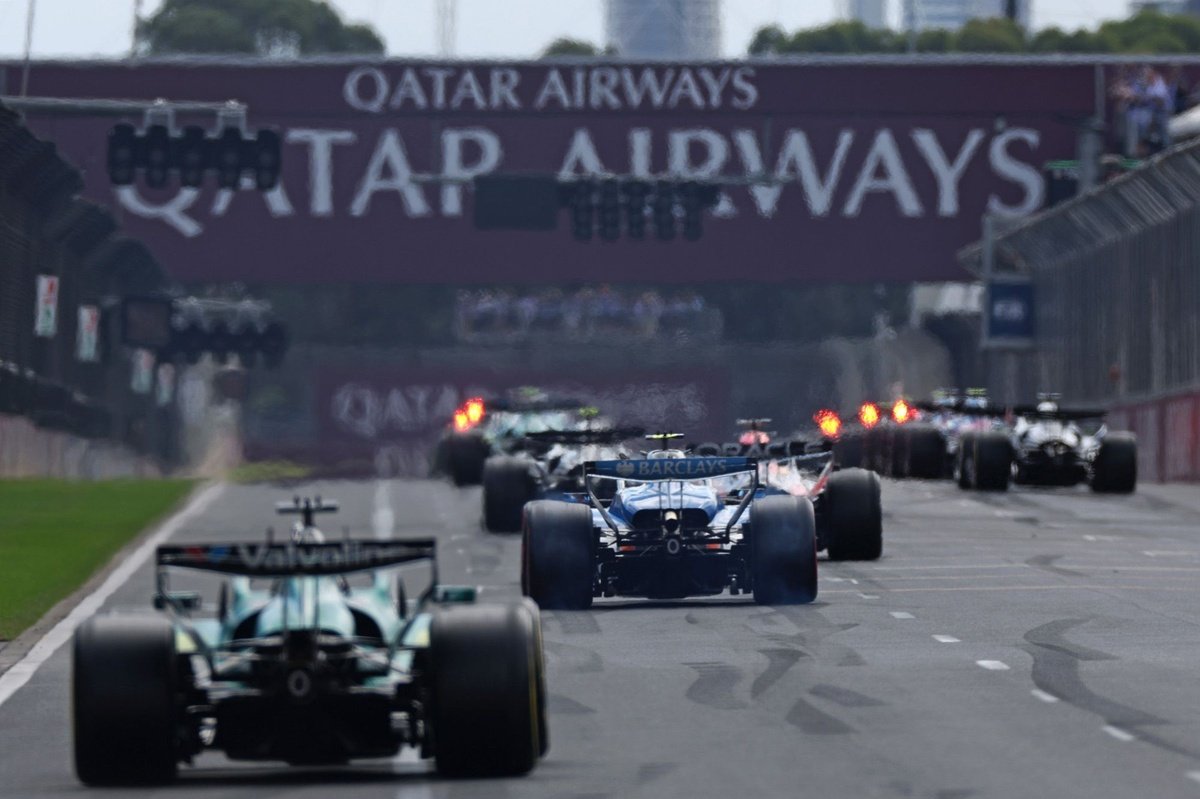
There was great anticipation surrounding the start of the first Formula 1 race of the season: not only to understand the true competitive order, but also to observe how the 2026 cars would behave.
The topic of starts had been one of the most discussed issues during pre-season testing, with differing opinions between manufacturers emerging depending on the characteristics of each power unit.
What is certain is that Ferrari launched exactly as expected, with Charles Leclerc skilfully weaving through rivals to Turn 1 almost as if they were slalom poles. This advantage had already been seen during testing, but here it was further amplified by another factor: many drivers arrived on the grid with an empty battery.
Curiously, the Monegasque himself also had a low battery, though not completely depleted. In Ferrari’s case, however, the impact was less significant: the smaller turbo and relatively short lower gears reduced the effect of the lack of additional electrical energy provided by the MGU-K, a handicap that proved considerably heavier for other teams.
The regulations forbid the use of electrical energy when the car is stationary on the grid and also prevent the battery from being used until the car reaches 50 kph after the start. This limitation is far from insignificant for those using a larger turbo, because it takes longer to reach the ideal rotational speed and achieve effective acceleration, especially when paired with generally longer gear ratios.
It is therefore not surprising that some drivers, including those from Mercedes, began raising engine revs even before the five-second warning that now occurs before the lights going out, in an attempt to spool up the turbo. The problem is that the lack of battery caught many by surprise, creating speed differences that added to the normal variations in launch performance.
Starting grid
Photo by: Simon Galloway / LAT Images via Getty Images
This situation created some safety concerns, especially in the midfield, with cars forced to dodge rivals during acceleration or avoid those who had launched very slowly – such as Franco Colapinto, who narrowly avoided rear-ending Liam Lawson, who had remained almost stationary on the grid due to a power unit issue.
The lack of energy also produced another surprising issue: for some drivers, such as Kimi Antonelli, without the electrical boost it was not possible to complete the necessary burnouts on the grid. Without being able to complete the usual burnout sequence to warm the rear tyres, the wheels spun at the start, resulting in a sluggish launch.
“The start was difficult,” explained Mercedes’ Andrew Shovlin. “We didn’t do a good enough job of managing the limited energy around the formation lap and both drivers ended up at with low battery on the line.
“The drivers did a great job to stay out of trouble but dropped a lot of places and we had to go into recovery mode.”
It is therefore not surprising that numerous position changes were seen on the first lap. Some drivers were forced to use the opening lap more to recharge the battery than to attack, for example by using more pronounced lift-and-coast techniques. This generated power and speed differences across the lap that further shook up the order.
But why did so many cars arrive on the grid without energy? This is linked both to the limited amount of energy available and to the way drivers warm up their tyres and brakes.
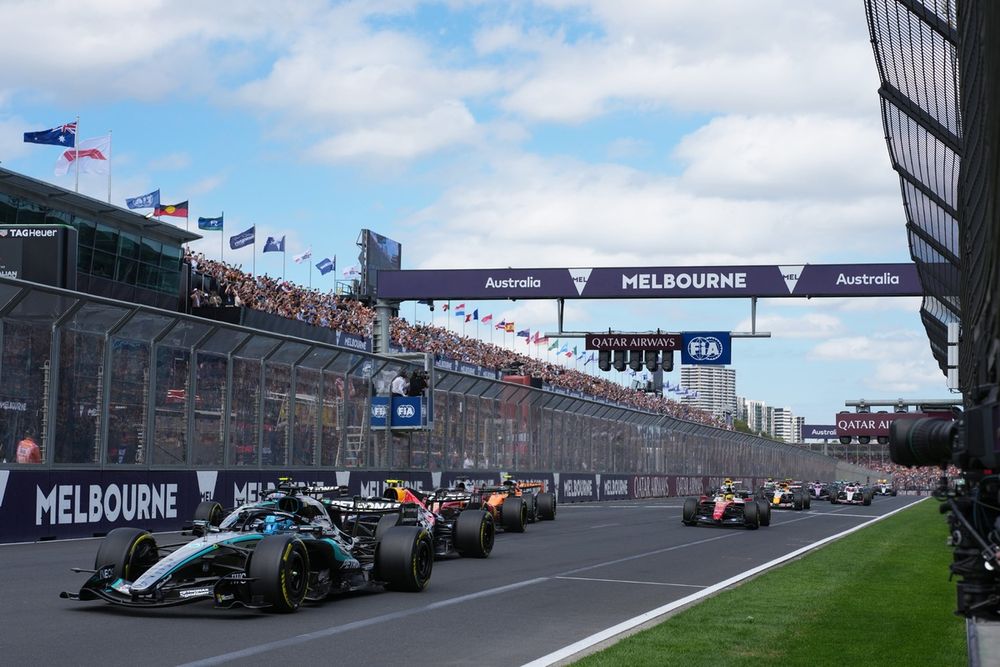
Start action
Photo by: Jayce Illman / Getty Images
“It’s our responsibility to avoid to be in that situation. We have been caught by some limitations of the way you can charge and discharge the battery in the formation lap,” added Laurent Mekies on the topic, with both Isack Hadjar and Max Verstappen running out of battery on the grid even before lining up.
Compared to a normal qualifying out-lap – where the FIA grants an exception allowing up to 8.5MJ of energy to be recovered and where cars tend to leave the pits with the battery already fairly charged – the formation lap follows different dynamics.
“With the unusual behaviours that drivers need to have on a formation lap – with acceleration, braking, acceleration, braking to warm your brakes, to warm your tyres – we ended up in a point where we were unable anymore to get to the right state of charge for the race start. We had to build up that battery level through the first lap, which obviously was not enjoyable,” added the Red Bull team principal.
To try to warm the tyres and brakes, drivers generally adopt quite an aggressive driving style during the formation lap, alternating constant cycles of acceleration and braking. The battery therefore comes under heavy stress, because the car repeatedly transitions from low to high speeds and energy consumption increases significantly during the acceleration phases.
On a track like Melbourne, which offers few real opportunities for recharging, this continuous cycle does not help, also because the last real chance to recover energy is the braking zone at Turn 11 following two long straights. By proceeding more slowly in the final sector, it becomes much more difficult to recharge the battery because the recovery action of the MGU-K is reduced.
A second problem is added to this. To warm tyres and brakes, the brake balance is often shifted toward the front axle, altering the relationship with the ERS: it is the same principle as what Mercedes, until last year, called “brake magic”, which aimed to generate temperature before lining up on the grid or during safety car periods when cars proceed slowly.
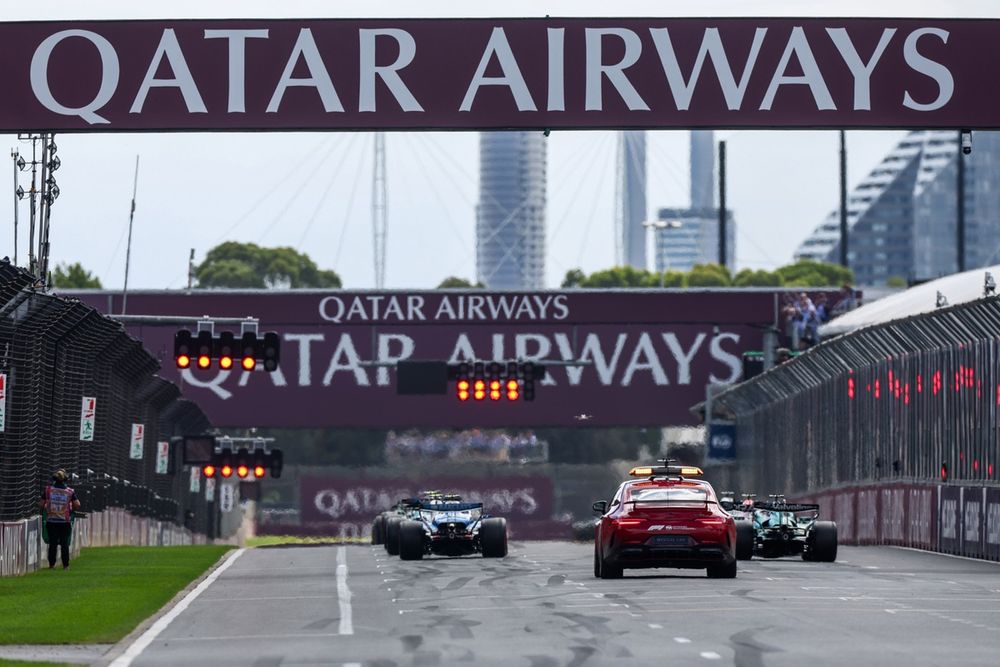
The FIA Medical Car lines up on the grid
Photo by: Peter Fox / Getty Images
With the braking action shifted more to the front to generate temperature, the motor-generator is required to work less. Under normal conditions this year, the rear braking system has actually been reduced in size because the MGU-K provides much of the deceleration.
On a challenging circuit like Melbourne, however, finding the ideal procedure was not simple and several driver were caught by surprise, arriving on the grid with empty batteries.
We want to hear from you!
Let us know what you would like to see from us in the future.
– The Autosport.com Team
