
NATO mobilized its largest coalition air power this year in two training missions between the Baltic states and Romania.
NATOteethMarch 4th and 5th, 2026To,Eastern Franks of the AllianceA large-scale air-military exercise involving troops from multiple member states was conducted along the same lines. This time’s strategy isAllied Air Command(AIRCOM)led byEastern SentryIt is part of an initiative aimed at strengthening air defense capabilities and demonstrating the ability to jointly respond to potential threats.
According to NATO, the exerciseFlexible Deterrent Option(FDO)carried out as part of the operation, designed to demonstrate alliance unity and military readiness.Largest cooperative effort between allied air forces this yearIt became.
+ UK establishes and confirms military repair base network in Ukraine
+ NATO AWACS aircraft conducts mission in Finnish airspace for the first time
+ Get to know the E-2C Hawkeye: the U.S. Navy’s “flying radar”

C-A2AD training in Romania
The first mission isMarch 4thof RomaniaMihail Kogălniceanu Air BaseIt was carried out in the surrounding area. The exercises areCounter Anti-Access/Area Denial(C-A2AD)Training focused on operations to neutralize enemy air defense systems and ensure freedom of air operations in conflict environments.
The following aircraft took part in this mission:
- frenchMirage 2000Dfighter jet
- germanEurofighter Typhoon
- spanishF/A-18 Hornet
- romanianF-16
Germany currently has a detachment at a base in Romania and NATO’sEnhanced Air Policingis supporting. Spain, on the other hand, envisaged more decentralized and flexible air operations.Agile Combat Employment(ACE)The base is used for training.

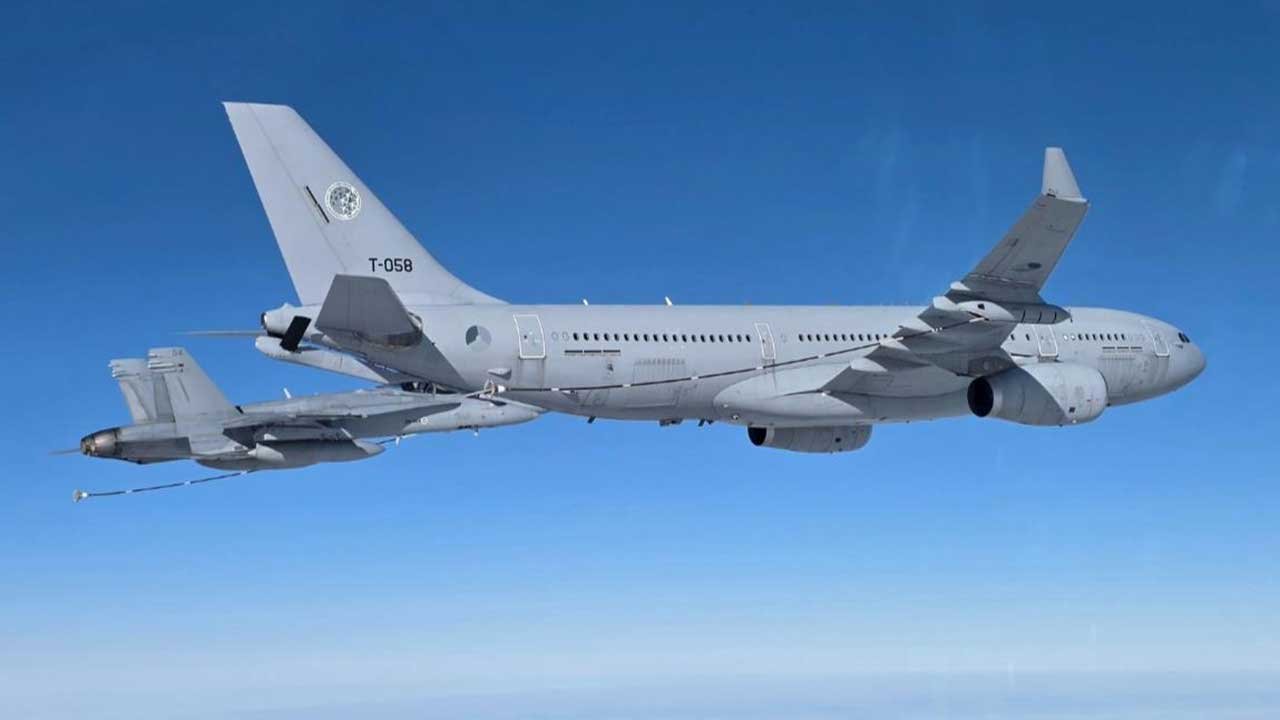
Support aircraft are also participating in this mission.French A330 MRTTandSpanish A400Mwas used as an aerial refueling aircraft. Romanian ground air defense systems also participated, providing realistic threat scenarios.
The entire operation was based on the SpanishTorrejónNATO inJoint Air Operations Center (CAOC)adjusted by.
Multi-domain exercise in the Baltic Sea region
the next dayMarch 5thIn , the focus of operations shifted to northern Europe,From the Baltic Sea to FinlandTraining was conducted in the following areas. In the exerciseF2T2(Find, Fix, Track and Target)The concept was used to train the process of finding, identifying, tracking, and ultimately attacking targets in a complex operational environment.
For this mission8 NATO member statesmilitary assets participated, and capabilities from multiple domains were integrated.
- air power
- ground system
- cyber ability
- space assets
The main forces participating were as follows.
- frenchMirage 2000Dfighter jet
- FinnishF/A-18 Hornet
- of French and multinational MRTT forces.A330 MRTTaerial refueling aircraft

Poland, Estonia, Finlandair traffic control and combat command centers provide command and control from the ground;Estonia, UK, USAGround air defense systems also participated in the exercise.
Also,Canadian Joint Operations CommandteethIntelligence, Surveillance and Reconnaissance (ISR)provided the ability.
This mission was carried out by Germany, which is responsible for airspace management in the northern region.UedemNATOCAOCadjusted by.
NATO’s new air defense strategy
Eastern Sentryis a NATO extended surveillance operation.enhanced Vigilance Activity(eVA)is part of the Alliance’s new air defense model.
This concept does not rely solely on fixed bases and constant patrols;A dynamic, distributed defense postureis adopted. As a result, air powerThe entire eastern flank extending from the Baltics and Poland to the Black SeaIt becomes possible to move quickly.
According to NATO, this approachSituational awareness abilitystrengthen cooperation among allies and improve our ability to respond quickly to emerging threats.
The main objectives of the two missions carried out in March were:
- Improving interoperability between allied militaries
- Improving tactics and operational procedures
- Integrating multi-domain operations in complex scenarios
This allows NATO toIntegrated air and missile defense postureThe aim is to strengthen the airspace of member states and continuously protect the airspace of member states.
Source and image: NATO. This content is created with the help of AI and reviewed by our editorial team.
