
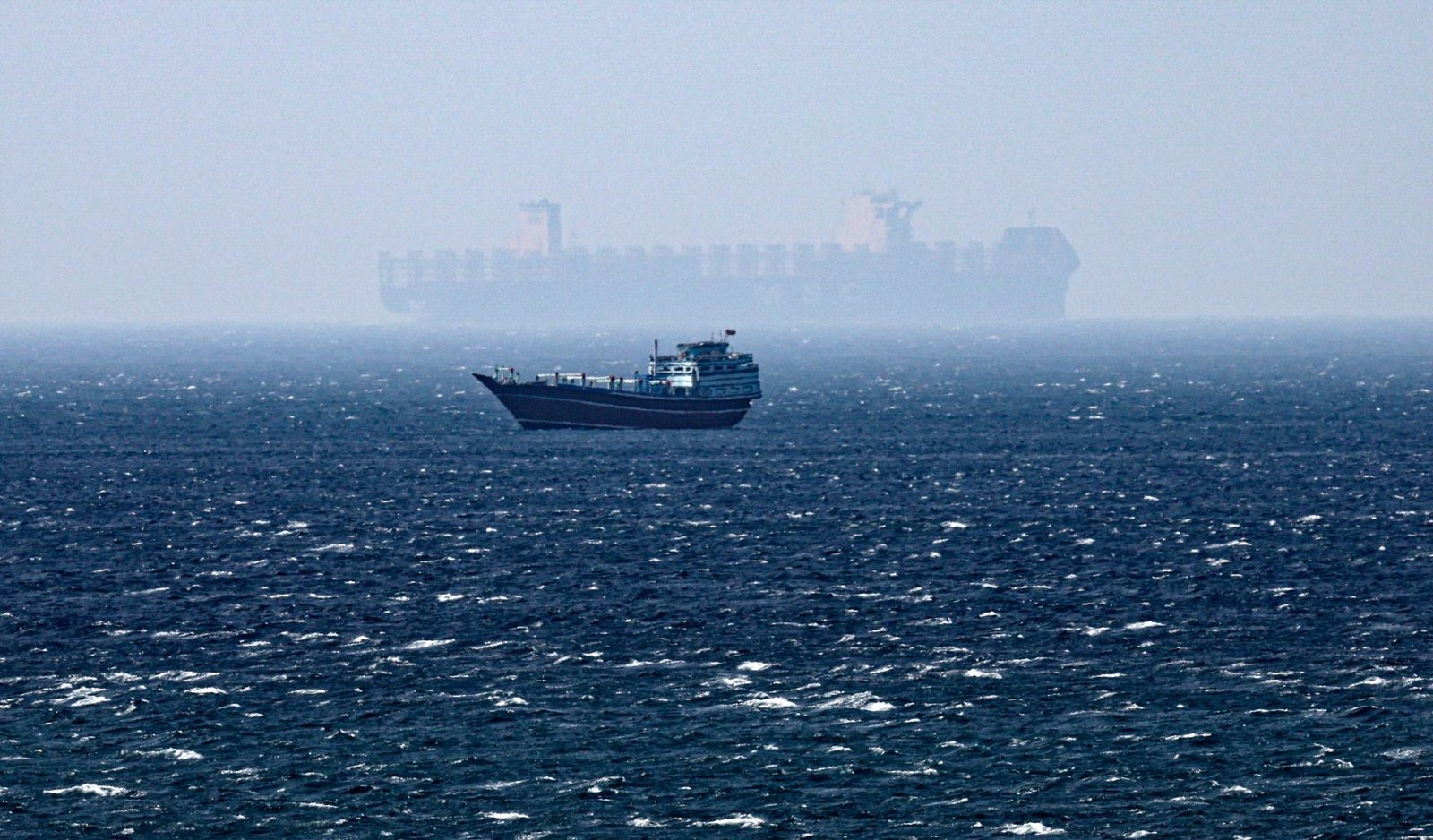
US President Donald Trump has promised to act to protect maritime trade passing through the Strait of Hormuz, one of the world’s main oil shipping routes, amid statements by Iran’s Revolutionary Guard that the site is “completely under the control” of the Islamic regime.
“Effective immediately, I have ordered the U.S. Development Finance Corporation (DFC) to provide, at a very reasonable price, political risk insurance and guarantees for the financial security of all maritime commerce, especially energy, transiting the Persian Gulf,” Trump wrote on Truth Social.
He added that “insurance will be available to all shipping companies” and that “if necessary, the U.S. Navy will begin escorting oil tankers through the Strait of Hormuz as soon as possible.”
The Iranian regime announced the closure of the route last Monday and threatened to attack vessels that try to cross the strait. “The Strait (of Hormuz) is closed. If anyone tries to pass through, the heroes of the Revolutionary Guards and the regular Navy will set these ships on fire,” Ebrahim Jabari, senior advisor to the Revolutionary Guards commander, told Iranian state agencies.
The Strait of Hormuz is the only sea passage connecting the Persian Gulf with the Gulf of Oman and the Indian Ocean, and 20% of the world’s crude oil passes through it.
Since the start of the war last Saturday, oil prices have soared, with Brent well above US$80 a barrel, and gas prices, which in the European reference market have practically doubled.
Trump praised American economic and military power as “the greatest on Earth” and stated that new actions could be announced soon.
US says it destroyed 17 ships and hundreds of Iranian ballistic missiles
The US Army Central Command (Centcom) said in an update on Tuesday that dozens of its bomber planes destroyed 17 ships and a submarine during a mission in a military port in southern Iran.
Around 2,000 targets were attacked, including 100 ballistic missiles that were destroyed, according to Admiral Brad Cooper, head of Central Command, who presented his first report of the war.
Cooper, who plays a leading role in American operations in the Middle East, detailed that the destruction of Iranian ships left the regime without any identifiable military vessels in the Persian Gulf and the Gulf of Oman, where it had had a presence for decades.
Before the release of the report, the American Secretary of State, Marco Rubio, had commented in Congress that the intensity of the attacks would only increase in the coming hours.
