
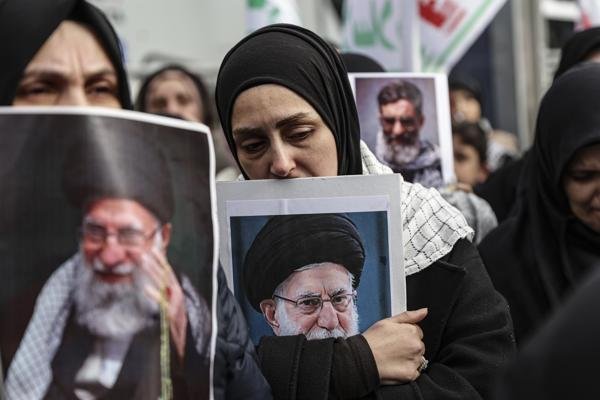
After the death of Ali Khamenei, in office since 1989, Iran began the succession at the helm of the regime. According to the Spanish news agency EFE, experts point to four names as favorites for the position. One of them is the grandson of the founder of the Islamic Republic and another is the son of Khamenei.
This Sunday morning (1st), Ayatollah Alireza Arafi took over as a jurist member of Iran’s Leadership Council. The council brings together the President of the Republic, Masoud Pezeshkian, and the head of the Judiciary, Gholamhossein Mohseni Ejei. The collegiate will lead the country on an interim basis until the new supreme leader is chosen.
“The State Interest Discernment Council has elected Ayatollah Alireza Arafi as a member of the interim leadership council,” said Mohsen Dehnavi, the council’s spokesman, in a post on the X network.
Iran follows a theocratic regime, in which political power is exercised by religious leaders. The population does not directly elect the country’s main authority. The Constitution assigns this function to the Assembly of Experts, composed exclusively of 88 Islamic clerics for an eight-year term and chosen by popular vote recorded on paper ballots.
The Assembly of Experts assumes three central responsibilities. It elects, supervises and can remove the supreme leader. Clerics internally analyze the names considered suitable, according to religious and political criteria set out in the Constitution. The last formation of the Assembly of Experts was elected in 2024.
Supreme leader has a lifetime position and president has a four-year term
The supreme leader assumes a lifetime term, but if the Assembly negatively evaluates performance, members can vote for removal. After the choice, the supreme leader concentrates direct and indirect power over the State. It defines the guidelines for foreign policy and domestic policy. Article 110 of the Constitution gives him the prerogative to declare war or peace and to mobilize the Armed Forces.
The position also ensures broad appointment power. The supreme leader chooses the heads of the Judiciary, the heads of state media and representatives of strategic bodies. He oversees the Executive, Legislative and Judicial branches.
The Constitution also authorizes the dismissal of the president, who is elected by the people for a four-year term and may seek re-election. The focus of the president’s work is on the country’s economy.
Who are the most popular names for the position of supreme leader in Iran?
Among the names mentioned for succession, Alireza Arafi appears as the central figure. He is part of the provisional leadership committee and appears as a possible heir to the position. Iranian outlets describe Arafi as a figure who combines religious authority and political weight, a typical feature of the country’s power structure.
Another recurring name is Mohammad Mehdi Mirbageriaround 60 years old. An ultra-conservative cleric, he maintains a speech hostile to the West. Mirbageri heads the Academy of Islamic Sciences in the holy city of Qom, one of Iran’s main religious centers.
The name of Hassan Khomeini53 years old, grandson of the founder of the Islamic Republic. He manages the Khomeini Mausoleum on the outskirts of Tehran and has never held central state positions. Allies classify him as moderate. Khomeini supports politicians of this current and defends a controlled opening of the country. In the weeks leading up to the war, he was present at several public events.
Finally, Mojtaba Khamenei56 years old, son of the deceased leader, has appeared for years as a potential successor. Sources attribute strong political influence and proximity to sectors of the Armed Forces, such as the Revolutionary Guard, to him. The possibility of a hereditary succession, however, generates internal resistance and weighs against his candidacy.
With information from EFE.
