
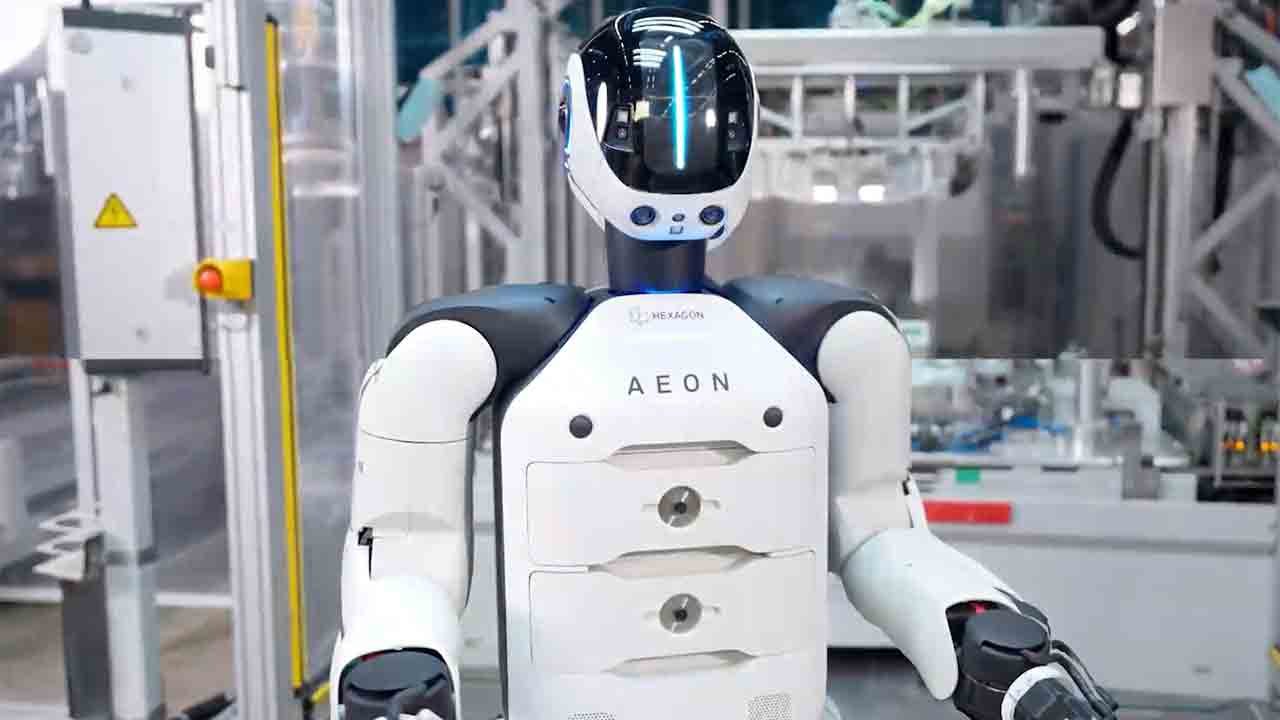
Munich – The BMW Group announced that it is expanding its industrial digitalization strategy by introducing so-called ‘Physical AI’ at its European operations.
The first pilot project on the European continent will take place at the Leipzig plant in Germany and will focus on integrating humanoid robots into the vehicle mass production process.
This initiative combines digital artificial intelligence with physical machines and robots to enable intelligent systems to operate directly in the factory environment. According to the company, this technology expands automation capabilities and opens new possibilities for more flexible and adaptable production processes.

Milan Nedeljković, responsible for production on the Board of Directors of BMW AG, emphasized that digitalization is a strategic element to maintain global competitiveness.
“Digitalization improves our production competitiveness in Europe and around the world. The synergy of engineering expertise and artificial intelligence opens up completely new possibilities in production,” he said.

Testing in the mass production process
A pilot project taking place at the Leipzig plant will evaluate the integration of humanoid robots into existing assembly lines. In addition, we plan to explore the possibility of applying physical AI in the battery and parts production field, which is strategically important in the automobile industry environment where electrification is accelerating.
The goal is to verify whether humanoid robots can collaborate with human workers to perform repetitive or physically demanding tasks while increasing operational efficiency.
Prior experience in the United States
The decision to introduce it in Europe was made after a pilot project was successfully completed at the Spartanburg plant in the United States. The North American plant was the first to test humanoid robots in an actual automobile production environment.
According to a company announcement, the experience gained at Spartanburg is being used to expand and improve the application of physical AI to other plants within the group.
Establishment of a dedicated competency center
BMW Group established a new ‘Physical AI Competence Center in Production’ to accelerate the global integration of artificial intelligence and robotics. This organization will be responsible for coordinating technology development, standardizing processes, and expanding technology adoption on an international scale.
Through the Leipzig project, BMW reaffirms its commitment to making advanced digitalization a key strategic axis of automobile manufacturing and is building a new industrial production model that combines traditional engineering and artificial intelligence.
Source and image: BMW Group. This content was created with the help of AI and reviewed by our editorial team.
Humanoid robots enter BMW production line in Germany – Source and images: BMW Group#BMWGroup #BMW #robots pic.twitter.com/QZl9GNX0NA
— saibadetudo.com.br (@saibadetudo25) February 27, 2026
