
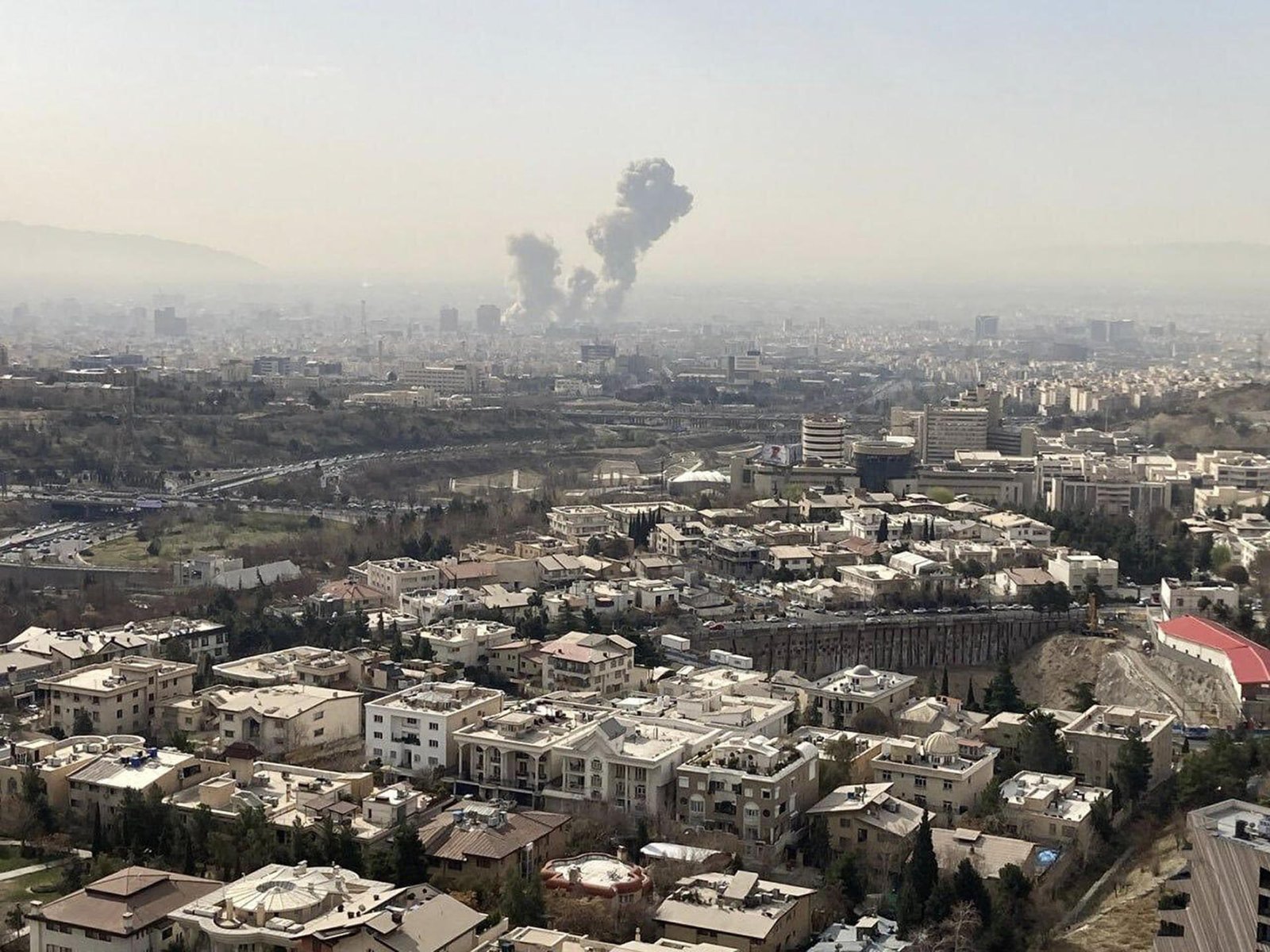
The attack carried out this Saturday by the United States and Israel against Iran could significantly affect the price of oil, which could reach US$100 per barrel, given that Iran has 10% of the world’s crude oil reserves.
The country maintains crude oil production of approximately 3.3 million barrels per day, making it the economic engine of its economy. Of this amount, between 80% and 90% are exported to China.
Although European countries do not import Iranian oil directly, the indirect impact could be significant as Iran is the third largest producer of crude oil by volume within the Organization of Petroleum Exporting Countries (OPEC), and even more so if Tehran blocks the Strait of Hormuz, through which 20% of the world’s crude oil production passes.
Despite the sanctions imposed, the Iranian oil industry has consolidated its position in recent years as a reference in crude oil production, accounting for approximately 4.5% of global production.
After the attack on Iran, several experts agree that the price of crude oil could reach US$100 per barrel, representing a increase of more than 37% compared to Friday’s closing price of $72.48 per barrel for Brent crude, the European benchmark.
“If Iran’s production capacity is affected, this will reduce supply in the market, which will increase the price of crude oil to US$100”, explains Raymond Torres, director of Economic Analysis at Funcas, a private, non-profit institution in Spain.
Strategic position
The price of oil could also rise if Iran blocks the Strait of Hormuz in response to the attack, a waterway through which 20% of global oil production passes, added Manuel Pinto, an analyst at investment firm XTB.
Iran’s ambassador to Spain, Reza Zabib, told EFE Agency that all options are on the table, although he emphasized that Iran has always ensured peaceful navigation in the Strait of Gibraltar, including energy transit.
This is made worse by Iran’s strategic position, close to other large hydrocarbon-producing countries in the Middle East, where it is concentrated almost half of the world’s reserves.
If the price of oil rises to US$100, it will not be the first time it has reached this level. This has already occurred in other periods of geopolitical tension, such as in 2022, with Russia’s invasion of Ukraine, as well as between 2011 and 2014 and in 2008, due to conflicts in the Middle East.
Inflation
Rising oil prices could fuel inflation and therefore open the possibility that central banks will review their monetary policy, opting to raise interest rates rather than maintain or reduce them.
If the conflict continues, Juan Carlos Martínez Lázaro, professor of Economics at IE University, warned that this increase in the price of oil could be felt in the price of gasoline and transportwith higher logistical costs.
“The risk is that these so-called second-round effects will be more permanent, even if the price of crude oil subsequently falls,” he said.
Analysts say Monday’s trading session will be crucial to understanding how markets will react to new geopolitical tensions, a scenario that typically boosts the price of gold, a safe haven in times of uncertainty.
SEE ALSO:
- Iran promises “historical lesson” to Israel and US after 201 killed in attacks
- Iran’s Defense Minister and head of the Revolutionary Guard were reportedly killed in US attack
