
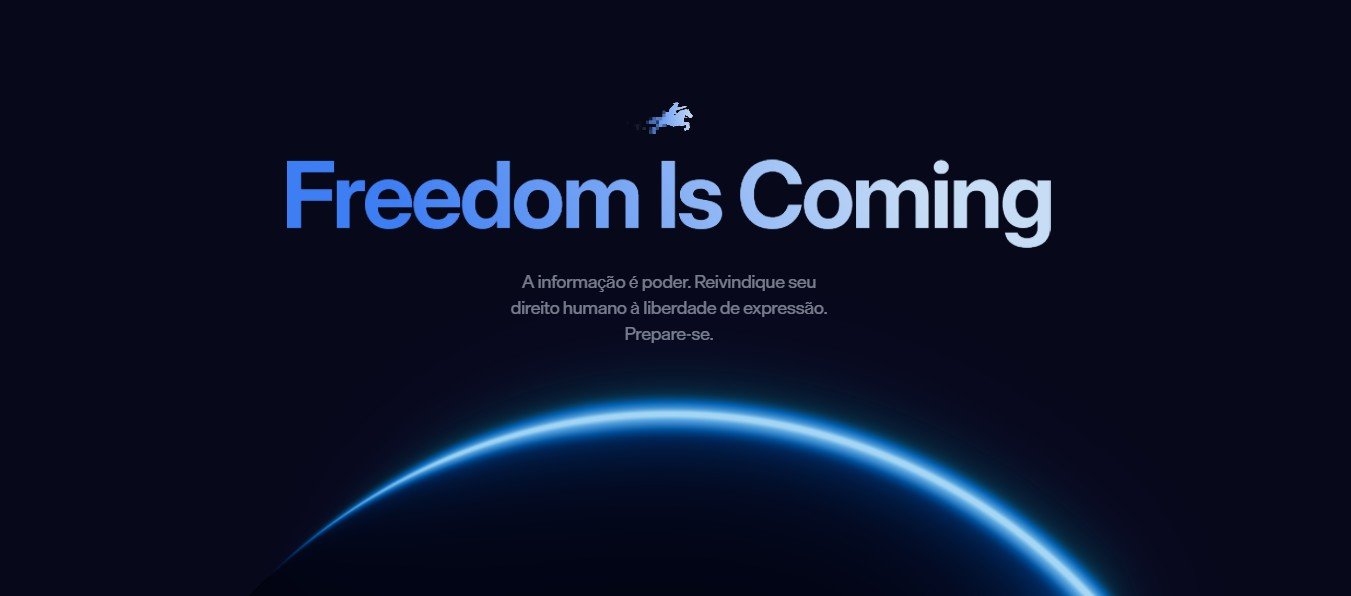
Donald Trump’s government is preparing to launch Freedom.gov, a website developed by the US Department of State. The objective is to allow citizens around the world to access content blocked by local governments and browse anonymously to guarantee freedom of expression.
What is the Freedom.gov project and what is its use?
Freedom.gov is a portal that will act as an alternative gateway to the internet. It was created so that people living in countries with digital restrictions can access websites and social networks that have been banned or removed by court orders and local laws. The idea is to offer the same level of freedom of access outside the United States that Americans have, combating the advance of state control over what can be read or published online.
How will the site work technically to avoid blocks?
The website must integrate technology similar to a VPN (Virtual Private Network). This means that when someone accesses the portal, the data traffic is masked to appear as if the connection is coming from within the United States, even if the user is in another country. Furthermore, American authorities state that the portal will not record the user’s IP address, browsing history or any data that could identify who is accessing the content.
Why is Brazil mentioned as one of the possible beneficiaries?
Although the initial focus includes countries such as China and Iran, the Brazilian legal scenario attracted attention. Recent decisions by the Federal Supreme Court (STF) that suspended platforms and blocked profiles generated expectations that Freedom.gov will serve to make content available that is currently censored in Brazil. In fact, Rumble’s CEO, Chris Pavlovski, suggested on his social networks that the new tool could be a solution for Brazilian users.
What are the main global conflicts that motivated the creation of the portal?
The project comes in response to the increase in strict content moderation laws. In Europe, the Digital Services Act (DSA) has already resulted in heavy fines against X (formerly Twitter) for failing to quickly remove content deemed illegal. In the UK, similar laws also impose severe sanctions. The Trump administration classifies these regulations as threats to freedom of expression and intends to offer a technological tool to circumvent these limitations.
Who is leading this initiative in the United States?
The initiative is led by Sarah Rogers, Under Secretary of the State Department for Public Diplomacy. She argues that digital freedom is a strategic priority and a fundamental human right. Rogers has reinforced in interviews and podcasts that the American government will support tools that guarantee access to information without interference or censorship imposed by foreign governments on their own citizens.
Content produced based on information gathered by the Gazeta do Povo team of reporters. To access the full information and delve deeper into the topic, read the report below.
SEE ALSO:
- Freedom.gov: Trump administration will launch website to circumvent global censorship
