
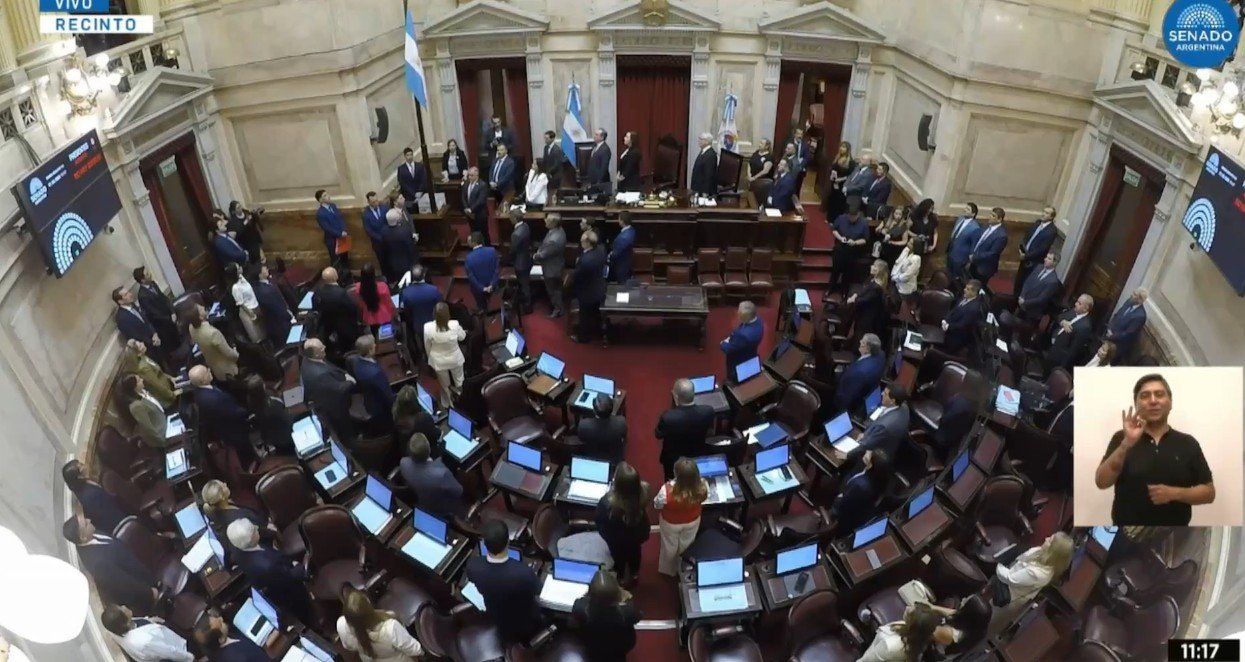
The Argentine Senate approved this Friday (27) the new Juvenile Penal Regime, which includes the reduction of the age of criminal responsibility from 16 to 14 years old. As the Chamber of Deputies had previously approved the project, the final vote in the Senate transforms the proposal into law and structurally changes the way in which the country should judge minors involved in crimes.
In the Senate, the measure was approved by 44 votes in favor, 27 against and one abstention. The text had broad support from Milei’s party, La Libertad Avanza, the Radical Civic Union (UCR), the PRO, Maurício Macri, and other provincial blocs. Kirchnerism and part of Peronism voted against.
With the new legislation, teenagers aged 14 and over will be able to face criminal charges for their actions. For serious crimes – such as murder, kidnapping, sexual abuse and robbery with violence – the maximum penalty will be 15 years in prison. The law prohibits life imprisonment and determines that minors do not serve sentences together with adult inmates.
For less serious offenses, the law provides alternatives to prison. Judges may apply warnings, electronic monitoring, provision of community services, restrictions on contact with victims or bans on leaving the country. Closed detention will be restricted mainly to more serious cases.
The text also creates a specific system to monitor teenagers who have problems with the law, with provision for educational, psychological and social support. To implement the new model, the government of Javier Milei, the main sponsor of the proposal, will allocate around 23.7 billion pesos (around R$85 million, at the most recent exchange rate), an amount that should be used to structure appropriate units and guarantee the legal defense of young people being prosecuted.
