
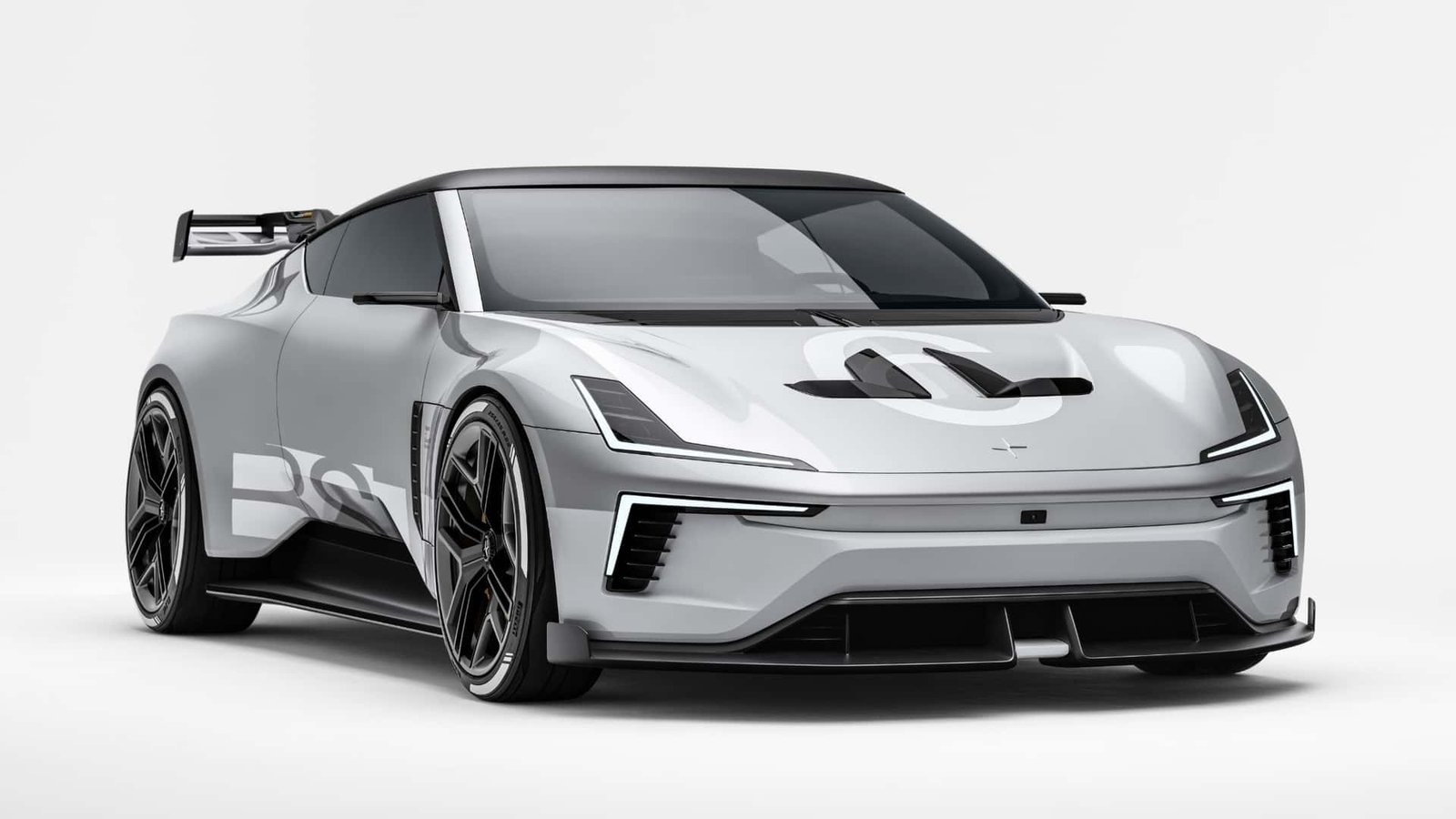
- Polestar will launch four new models by 2028, led by the Polestar 5.
- It aims to rival BMW M and Mercedes-AMG by expanding its high-performance BST sub-brand.
- The Polestar 5 will deliver up to 884 hp, marking a major push into elite EV performance.
Four new models in just three years, with one clear goal: to challenge the German high-performance elite. That’s the roadmap laid out by Polestar, as it prepares for a major lineup transformation over the next few years.
By 2026, the spotlight will be on the debut of the Polestar 5, alongside a new variant of the Polestar 4—likely a wagon. The second-generation Polestar 2 is scheduled to arrive in 2027, followed in 2028 by the Polestar 7, a compact SUV aimed at expanding the Geely-owned brand’s commercial footprint.
This ambitious product offensive follows a difficult financial stretch, including a $900 million (around €830 million) loan from its parent company. But the broader vision goes well beyond recovery.
More ‘Beasts’ On The Way
Photo by: Polestar
CEO Michael Lohscheller has made it clear that Polestar wants to compete directly with performance heavyweights like BMW M and Mercedes-AMG. Central to that strategy is the expansion of the BST (“Beast”) badge—so far reserved for limited-run versions of the Polestar 2—into a true high-performance sub-brand.
Expect sharper suspension setups, more focused track dynamics, and significantly quicker acceleration. Dedicated high-performance variants are planned for the Polestar 2, 3, and 4.
Even the already potent Polestar 5 could spawn a more extreme derivative, one capable of taking on Audi RS models and the latest high-performance EV flagships. It would be a fitting return to the brand’s roots, given that Polestar originally served as Volvo’s in-house performance arm before becoming a standalone manufacturer.
The Charge Begins With The Polestar 5

Photo by: Polestar
At the forefront of this new era is the Polestar 5, a four-door flagship featuring a 112.0-kilowatt-hour battery and 800-volt architecture. In its performance specification, it produces up to 884 horsepower and 748 lb-ft of torque—numbers firmly in electric grand tourer territory.
A more powerful version of the Polestar 4 will follow, while the next-generation Polestar 2 is expected to evolve into a more traditional sedan. It could grow beyond its current 181.1-inch length and introduce a variant capable of rivaling the Tesla Model 3 Performance.
Rounding out the expansion will be the Polestar 7, positioned in the premium compact C-SUV segment and designed to further strengthen the brand’s presence in the zero-emissions market.
Motor1’s Take: Polestar certainly has the styling and numbers to take on BMW M and Mercedes-AMG, but it will be interesting to see if the Swedish EV maker can nail the driving dynamics synonymous with those performance models.
