
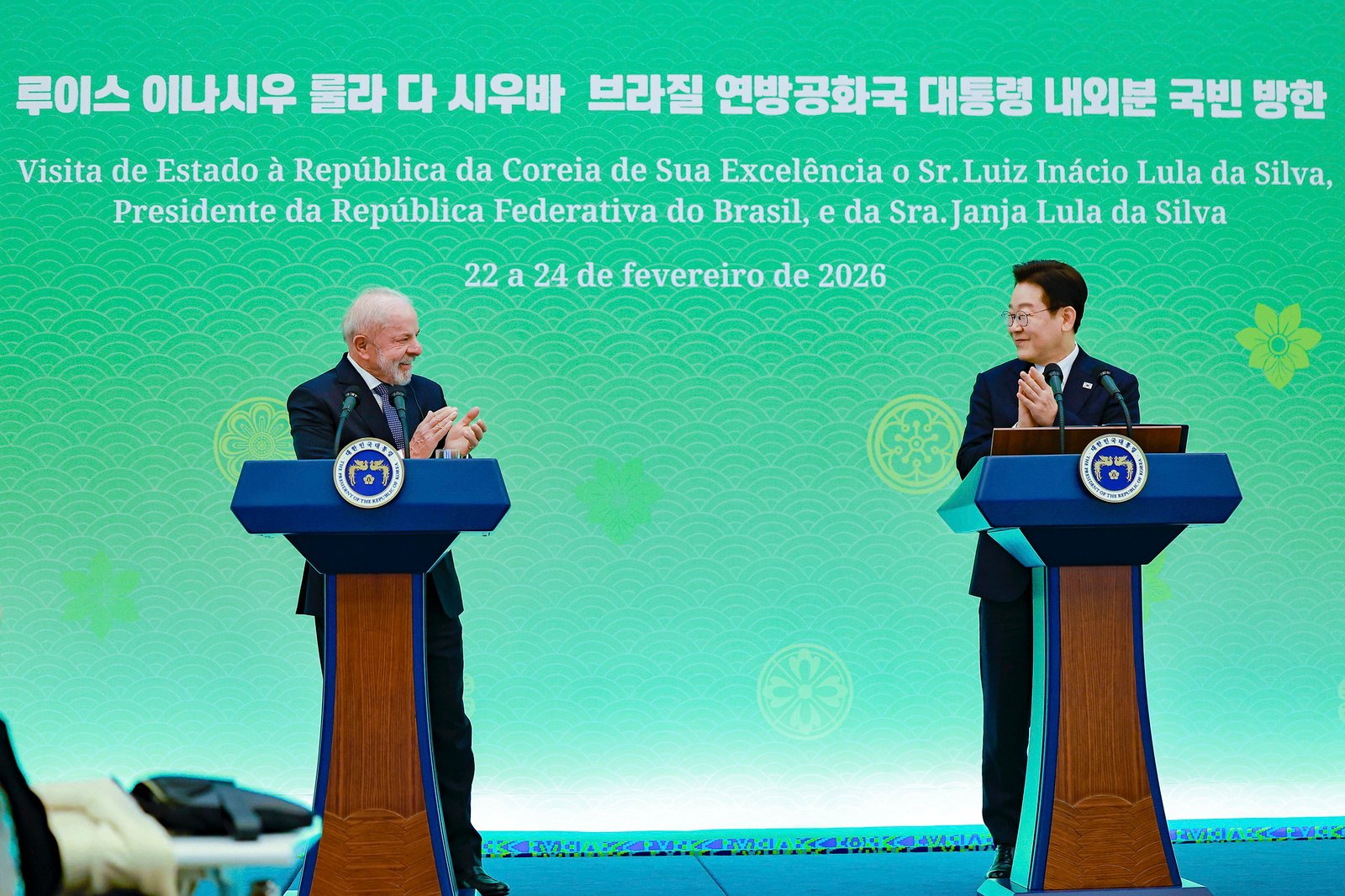
Presidents Luiz Inácio Lula da Silva and Lee Jae-myung announced this Monday (23), in Seoul, a series of cooperation agreements between Brazil and South Korea in the areas of agriculture, technology, medicines, in addition to expanding cultural and educational exchanges. The leaders also reinforced their commitment to strengthening bilateral trade and expanding the strategic partnership between the two countries.
The meeting took place after Lula’s visit to India. In a joint statement and press interview, the presidents highlighted the defense of democratic values and the importance of popular sovereignty in the face of global scenarios marked by extremism, disinformation and authoritarian threats. Lula highlighted that the visit marks the resumption of a high-level dialogue interrupted for years and classified the interval without official Brazilian visits as incompatible with the economic and social ties between the nations.
According to the Brazilian president, South Korea is currently the main destination for Korean investments in Latin America, with commercial exchange of around US$11 billion and the position of Brazil’s fourth partner in Asia. Lula also stated that the countries are beginning a new cycle of joint development, with opportunities in areas such as energy transition, critical mineral chains, semiconductors and artificial intelligence.
Among the instruments signed is a Commercial and Productive Integration Framework Agreement, aimed at facilitating trade, harmonizing regulations and offering greater legal security to companies. A memorandum was also signed to strengthen financial cooperation and discuss the resumption of negotiations between Mercosur and South Korea, suspended since 2021.
In the health area, the agreements provide for partnerships in the production of medicines and vaccines, research into the diagnosis of communicable and chronic diseases, as well as initiatives in advanced genomics and digital health. According to Lula, scientific and technological collaboration will be one of the central pillars of the new stage of bilateral relations.
