
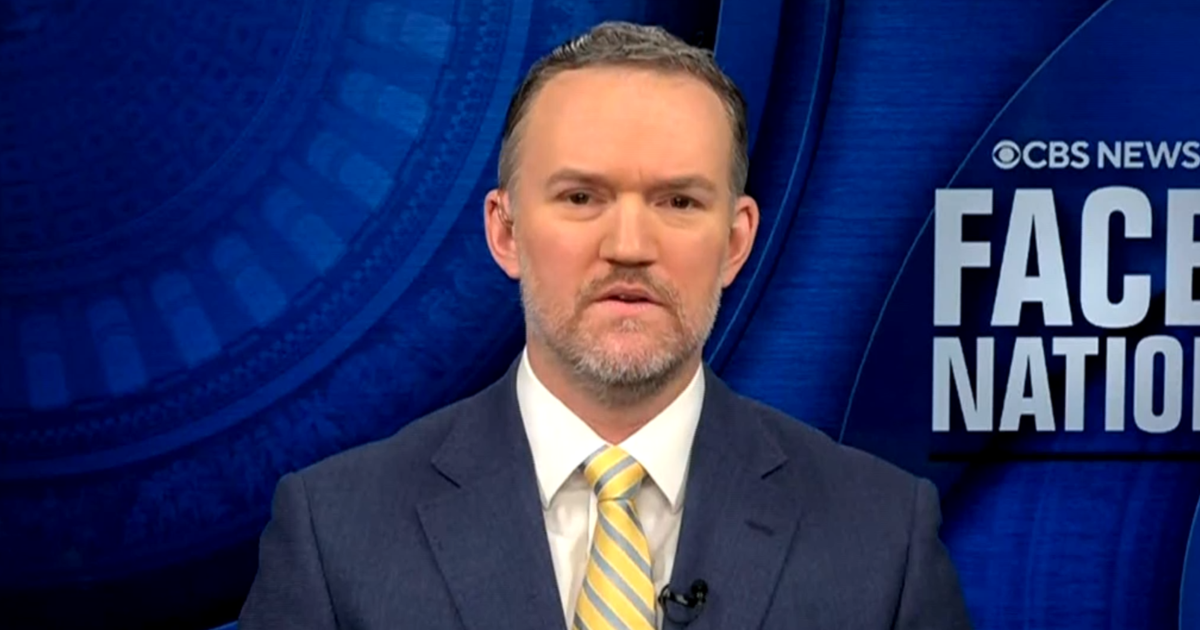
The following is the transcript of the interview with U.S. Trade Representative Jamieson Greer that aired on “Face the Nation with Margaret Brennan” on Feb. 22, 2026.
MARGARET BRENNAN: We turn now to the U.S. Trade Representative, Jamieson Greer, Ambassador. Welcome back to Face The Nation.
JAMIESON GREER, UNITED STATES TRADE REPRESENTATIVE: Thank you. It’s great to be on.
MARGARET BRENNAN: So the president had imposed these tariffs using several different statutes, but the Supreme Court declared that invoking tariffs under the International Emergency Economic Powers Act was illegal because taxation is the authority of the Congress, but the president then said he is going to issue quote “legally permissible tariffs” and that he doesn’t need to go to Congress. So can you clarify? Will you ask Congress to legislate tariffs? And if so, which ones?
JAMIESON GREER: So again, thanks for having me on and right now, it’s important to understand that over the years, Congress has delegated enormous tariff-setting authority to the president, depending on the situation. So even though the Supreme Court struck down tariffs under one authority, tariffs under other national security elements remain in place. Tariffs under what we call Section 301 related to unfair trading practices, remain in place. And so we of course, can conduct additional investigations under these tools to impose tariffs, to have continuity in the president’s trade policy.
MARGARET BRENNAN: But to be clear, those investigations, they have guardrails. They have processes. In fact, the 301s, they could take a year or so to complete those investigations before tariffs come in. You won’t have the ability to move as quickly now that the court has ruled, correct?
: So we don’t have the same flexibility that IEEPA gave us, which is the emergency statute under Section 301, we have series of hearings, we have public comment, we consult with the other countries, and then we try to resolve the unfair practices we identify, and if they’re not resolved, you can take actions like tariffs or other things to try to resolve them. We have tariffs like this already in place on China. We have open investigations already.
MARGARET BRENNAN: But back on the question of congressional authority, there were six House Republicans who voted the other week to roll back the tariffs that the U.S. had put on goods from Canada. That is a signal here of apprehension among members of the president’s own party. Given the president’s low approval ratings on the economy, according to CBS polling, he’s at 39% now, can you go and ask Republican lawmakers, when you were just months out from those midterm races, to take a vote to legislate on tariffs?
: So this is, this is interesting, because one, I’ve heard from a lot of Republicans over the past year, ones who traditionally, you know, weren’t always in favor of tariffs, they’ve now come around. And they said, one, we’ve seen this as effective to negotiate deals. Two, we’ve seen it’s effective to re-shore. And three, it’s real money coming in. And so I’ve heard from folks all over the spectrum, and I have to point out too, we did get one Democrat voting in favor of the tariffs as well. And the Republicans who voted against the president, they vote against him on everything, these are people who are either in the doghouse or on the way out. So it’s not, it’s not really representative of where the party is.
MARGARET BRENNAN: Well, one of them had been endorsed by the president, though the president just pulled back the endorsement because he didn’t like what he said about tariffs, but it but to my point, will you ask Congress to actually legislate, or are you just going to avoid going to Congress?
: Well, well, first of all, Congress has already put out statutes allowing the president to impose tariffs. And tariffs have been in place under those types of statutes for, for many years at this point. So in some ways, Congress has already pre-approved these types of authorities. I’m happy to have conversations with Congress about how to legislate the president’s trade program. And I’ve had, you know, conversations like that already, and there is some interest, and so we’re happy to talk to them about it, but we’re not going to stop our program. We’ll just use the congressional authorities they’ve extended already for now.
MARGARET BRENNAN: Okay, so in terms of the existing authorities, the president said he’s going to sign an order to impose a 10% global tariff under Section 122. That was Friday. The next morning, he posted on social media, he’s going to hike it to the maximum of 15%. What changed overnight in your strategy?
: Well, I think, well, the strategy didn’t, didn’t change, because the problem remains the same, and frankly, as the president’s advisers ref- review- reviewed this action, this authority allows the president to go up to 15%. And considering the severity of the issue we’re dealing with, which is a huge, huge unfairness, huge disparity, huge imbalance between the United States and its trading partners, just the urgency of the situation demands that he use his full authority, which is to impose a tariff at–
[CROSSTALK BEGINS]
MARGARET BRENNAN: –but that expires at five months–
: –15% for about five months.
MARGARET BRENNAN: Yeah, that expires at five months.
: That’s right. That’s exactly right–
MARGARET BRENNAN: –what back to, you would have to then ask Congress–
: –So in the meantime what we will be doing. No, so I’m not sure you understand how Section 301 works. We [inaud] process process–
MARGARET BRENNAN: –No, we’re talking about Section 122–
:–an investigation–
[CROSSTALK ENDS]
MARGARET BRENNAN: We’re talking about Section 122, you said, isn’t that what the president’s using to hike to 15%?
: I’m agreeing with you. So that’s right, that’s right. And during that time, we’re going to conduct investigations that can allow us to impose tariffs if it’s justified by the investigation. So we expect to have continuity in the president’s tariff program. We know that these laws work. They’re tried and true, and so we’ll have continuity. The pres- the policy hasn’t changed, just the tools have changed.
MARGARET BRENNAN Okay, so you’re saying 122 expires after, after this period of time, but you expect your investigation to sort of pick up where they left off. Is that what you’re saying with continuity?
: Yeah, that’s one way to put it, yeah, yeah.
MARGARET BRENNAN: Okay, so in terms of what’s happening around the world, you had India reportedly call off a visit by their trade delegation to Washington, because they’re trying to figure out what just happened South Korea, the EU bloc, they’re both holding emergency se- meetings to try to figure out what’s going on. They have trade deals with the U.S. What’s going to happen to those trade deals? Are they in jeopardy?
: So I spoke with my counterpart from the EU this weekend. I have a call that I’m going to have with others. I spoke to my counterparts in other countries. And so the deals, the deals, were not premised on whether or not the lit- the emergency tariff litigation would rise or fall. They weren’t premised on that. So it’s totally normal for these countries to talk to each other, have meetings internally to determine this. But rest assured, I’ve been speaking to these folks as well, and I’ve been telling them for a year whether this case, whether we won or lost, we were going to have tariffs. The president’s policy was going to continue. That’s why they signed these deals, even while the litigation was pending. So we’re having active conversations with them. We want them to understand that these deals are going to be good deals. We, we expect to stand by them. We expect our partners to stand by them. And I haven’t heard anyone yet come to me and say, the deal’s off. They want to see how this plays out. I’m in active conversation with them on it.
MARGARET BRENNAN: Okay, so we’ll watch that space. The Supreme Court ruling that vote was 6-3. The president, as you know, you were there, came out publicly, and he railed against some of those justices by name. He said this on Friday, take a listen.
[SOUND ON TAPE BEGINS]
PRESIDENT DONALD TRUMP: They’re very unpatriotic and disloyal to our Constitution. It’s my opinion that the court has been swayed by foreign interests and a political movement that is far smaller than people would ever think.
[SOUND ON TAPE ENDS]
MARGARET BRENNAN: That’s a pretty huge allegation. What foreign interest has corrupted the Court according to the president?
: Well, I won’t characterize his words too much. He speaks for himself what I will say is that–
MARGARET BRENNAN: –Do you know what he’s talking about?–
: So many, so many of the interests that are, that were at issue in this case, were really about foreign importers or foreign- foreign companies that have interests here in the U.S. who are suing the president and suing the administration. It’s foreign companies that are benefiting from, from the tariffs being struck down. This is why, when we impose tariffs, foreign countries don’t like it and foreign companies don’t like it, because they’re the ones that don’t want to have the tariffs in place. They’re the ones that are suing. They’re the ones that are trying to get together coalitions and groups who oppose what the president is doing. The president’s fighting for American workers. He’s trying to impose a trade policy that has a, has a through line through the first Trump administration, Biden and Trump with tariffs. But it’s foreign countries and companies that are suing that want these things to go away.
MARGARET BRENNAN: They are suing, but the president wasn’t talking about them. The president was talking about the Supreme Court justices who he said are unpatriotic and disloyal and swayed by foreign interests. Do you have any evidence to back–
: –the foreign–
MARGARET BRENNAN: –that allegation about the Supreme Court justices who, as you know, face security threats on a daily basis?
: So when the foreign interests sue, they appear before the courts. They’re literally arguing before the courts that they should have a different outcome. So they are, and it’s quite obvious that foreign interests are involved. They’re helping bring lawsuits. They’re arguing before the Court, and these justices, six of them, agree with what a lot of these foreign interests want, which is take down the tariffs, take down the barriers and let us import as much cheap crap as we want to the United States at the expense of American workers.
MARGARET BRENNAN: But do you need to clarify, or feel compelled in any way to clarify, in regard to the allegations against the justices themselves?
: I’m not, I’m not speaking for the President. What I’m telling you is that when the President talks about foreign influences, at a minimum, what we see is that foreign companies are involved in the coalitions, the PR effort, they’re involved in the cases and they don’t want these tariffs. It’s not a secret. I mean, for, for months these, these foreign countries and companies and people the United States who benefit from their commercial relations with them, they want these tariffs to be gone. That, that should be the signal for us that we’re doing the right thing, that we’re over the target, when the foreign countries and companies are literally arguing in court through their advocates to take it down, we know they have influence.
MARGARET BRENNAN: Well, 1500 businesses, including Costco, have filed lawsuits to get repaid for these tariffs, but we will leave it there. Jamieson Greer, thank you for your tim this morning. We’ll be right back with a lot more Face the Nation, stay with us.
