
McLaren boss Andrea Stella previously outlined three major concerns with the 2026 Formula 1 power unit rules and he has since revealed a fourth issue entered the mix.
This year F1 is introducing a completely new set of regulations with one of the changes concerning the power unit, which is now more reliant on electrical energy. That should significantly change the style of racing in 2026, as battery harvesting will now play a greater role in grands prix, but there are concerns which come with this.
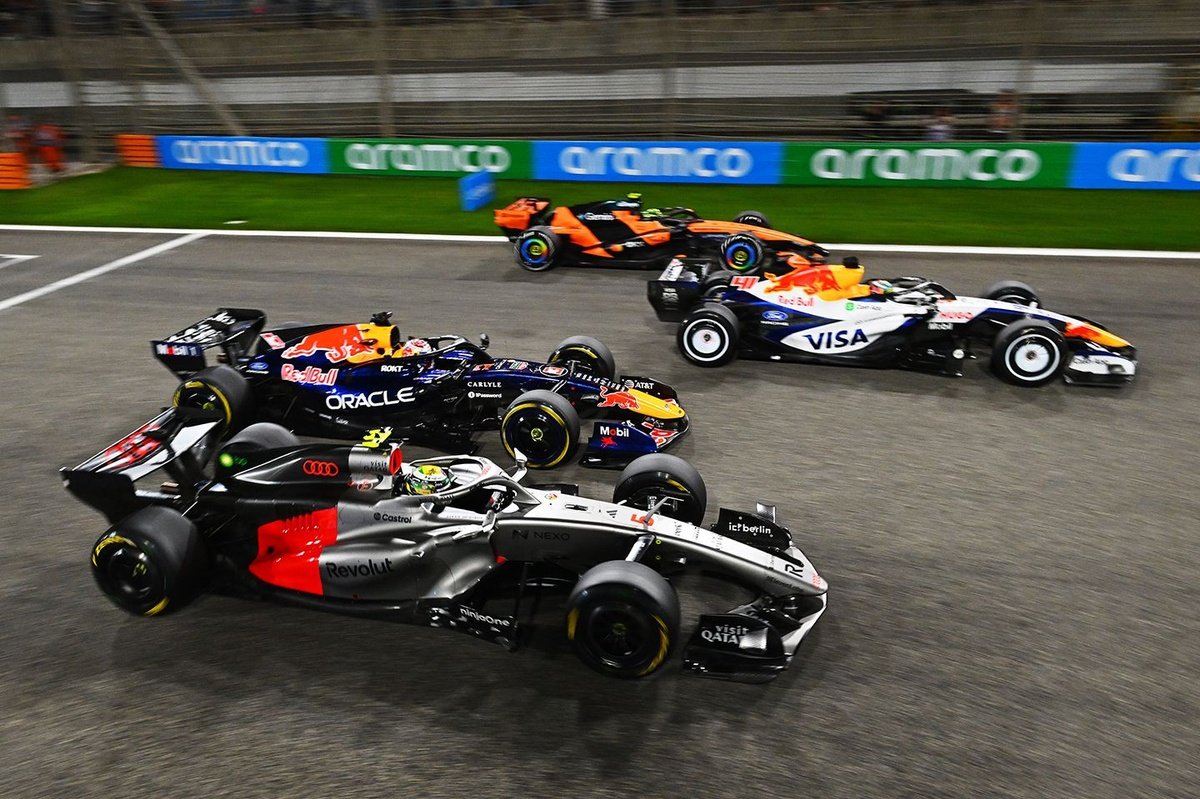
Stella outlined those at the end of the opening week of Bahrain pre-season testing last Friday, with the first concerning race starts. In recent years, they have been seamless and instantaneous, but a lot of that could be put down to the MGU-H, which has been removed for this year, making it all a lot more complex.
Drivers must now rev their engines for at least 10 seconds to spool up the turbo, but timing it wrong could pitch the car into anti-stall while those at the back might not even get the required amount of time to reach the necessary level.
So the McLaren team principal therefore claimed that F1 must allow “all cars to have the power unit ready to go, because the grid is not the place in which you want to have cars slow in taking off the grid”.
F1 thus took action and, at the end of each session in the second week of testing, system checks were performed, which included simulated race starts with various tweaks to the procedure every time.
Watch: Autosport Explains: F1 Testing Day 6
Stella’s second issue concerned the necessity to lift and coast at the end of a straight, all part of the objective to harvest energy, which has been a contentious talking point and led Max Verstappen to call it “Formula E on steroids”.
The final worry was the fact that because cars are so energy-starved, they may run out of battery power early and there is no longer a DRS-like system to help gain speed on the car ahead to overtake. What made the matter worse is that pre-season running occurred in Bahrain and Barcelona, which are quite good circuits for energy harvesting, whereas tracks like Jeddah and Melbourne have many long straights and curves but lack heavy braking zones to recharge the batteries.
All of these concerns were discussed in an F1 commission meeting on Wednesday, but Stella said that a fourth issue arose regarding straight mode. This is new for 2026 and, when available, it will see the front and rear wings change alignment to a lower angle of attack – thus reducing drag.
Stella said: “There was a fourth item and it was the fact that at the start, from the grid to the first corner, whether you wanted to use the straight mode. We are overall happy that these items have been received and discussed, and I think the activity that is happening on the starts is very positive.
“I think it’s creating a situation where everyone is given the opportunity to prepare their power unit, even if in fairness we still see that there’s quite a lot of disparity in the start performance.”
Although the race starts concern has been largely dealt with, there are still worries with the other matters – particularly lift-and-coast. But on Friday, one potential solution tested was increasing the ‘superclip’ from 250 kilowatts – ‘superclip’ referring to when the MGU-K runs against the engine while flat-out.

Andrea Stella, McLaren
Photo by: Sam Bloxham / LAT Images via Getty Images
“When it comes to the lift-and-coast, we need to be a little bit careful as an F1 community because Bahrain does not necessarily expose the need to do lift-and-coast,” added Stella. “It’s a harvest-rich circuit, so you can harvest in braking and you don’t need to do these special manoeuvres that can surprise the car that follows you.
“So we tested something today. We tested the possibility to increase the superclip to 350kW. There are all the conditions to make this 350kW harvest while the driver is in full throttle, which means that the driver doesn’t have to lift and coast to harvest 350kW.
“We discussed this with the FIA and it will ultimately be up to the FIA to decide whether they introduce it or not. We successfully tested it today and we are happy.”
As regards the use of straight mode, Stella said: “When it concerns the overtaking, I think there are some solutions. Probably this is something that is a bit further away and I think the decision overall, as a group of the FIA community, will be to look at the first races.
“We as McLaren have already said that we think the conditions exist to actually apply measures relatively soon. But we accept the lead by the FIA and I think there was a common agreement in terms of the straight mode from the grid to the first corner, not to use it.
“While this has to be ratified in a way by the FIA, I understand that there is general agreement across the paddock.”
We want to hear from you!
Let us know what you would like to see from us in the future.
– The Autosport.com Team
