
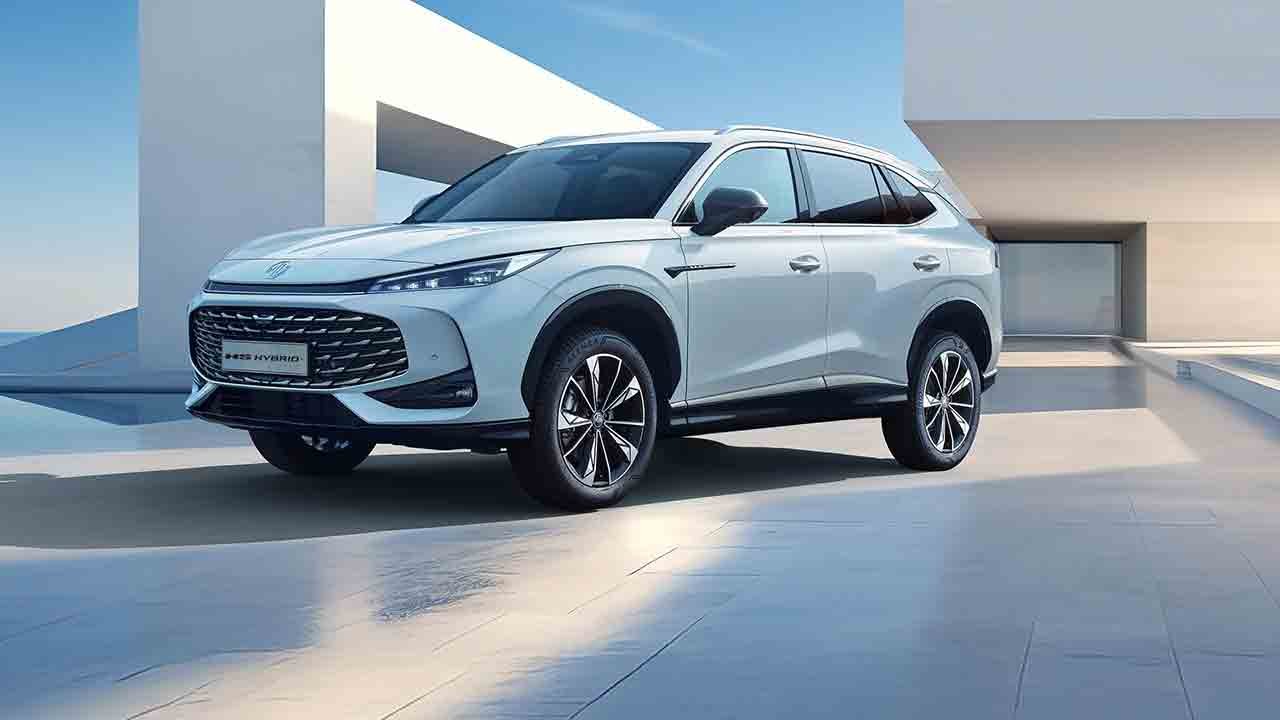
MG Motor confirmed the delivery of its millionth vehicle to a European customer, cementing the brand as one of the fastest growing on the continent over the past decade.
Since returning to the UK market in 2011, with the launch of MG6the manufacturer has expanded its presence to 34 European markets, supported by more than 1,300 partner dealers.
In 2025, the company recorded 300,000 units sold in Europe – a growth of 30% compared to 2024. The UK remains the brand’s most important market, with a total of 386,000 units sold since the relaunch.

Growth driven by electric cars and hybrids
One of MG’s most important driving forces for expansion has been the offer of electric and hybrid vehicles with an accessible profile and a focus on technology. So far, the car manufacturer has delivered 317,000 fully electric vehicles in Europe. The MG4 EV model, widely recognized in the segment, has been one of the pillars of this strategy and recently received 2026 versions as well as the new MG4 EV Urban.
In addition to battery electric cars, the Hybrid+ series also showed strong performance in 2025, with 139,000 units delivered in the period. According to the company, the combination of energy efficiency, embedded technology and competitive positioning has helped to expand its customer base.

Next step
The company stated that it will make new strategic announcements related to technology and design in the first half of 2026, thus strengthening its commitment to the European market and the expansion of its electrified portfolio.
MG in Europe – Milestone of 1 million units
Main figures:
- Sale in Europa in 2025: 300,000 units
- Hybrid+-sales in 2025: 139,000 units
- Total number fully electric vehicles: 317,000 units
- Best selling model: MG ZS (424,000 units)
- Most important European market: Great Britain (386,000 units)
The history of MG Motor

MG Motor has British origins and was officially established in 1924. The abbreviation MG stands for Morris Garagesthe name of the dealer in Oxford that belonged to William Morris. It was in this environment that Cecil Kimber, then head of the company, began to develop sportier versions of the Morris models, laying the foundations for a brand that quickly became known for the production of light, accessible cars with a focus on driving pleasure.
Throughout the 1930s to the 1960s, MG became one of the symbols of British sports cars, particularly with its compact roadsters that conquered markets such as Great Britain and the United States. Models such as the MGB helped strengthen the company’s reputation as a maker of elegant and relatively affordable sports cars, and linked the brand to a strong car culture and owners’ clubs that are still active today.
From the second half of the 20th century, MG underwent several changes of ownership and became part of groups such as the British Motor Corporation and British Leyland. After the bankruptcy of MG Rover in 2005, the brand was bought by the Chinese company Nanjing Automobilelater incorporated into SAIC Motorthe current owner. Although MG today belongs to a Chinese group, the company maintains a design center in the UK and combines its British heritage with a strategy aimed at electric and hybrid vehicles in the global market.
Source and images: MG Motor UK Limited. This content was created with the help of KI and reviewed by the editors.
