
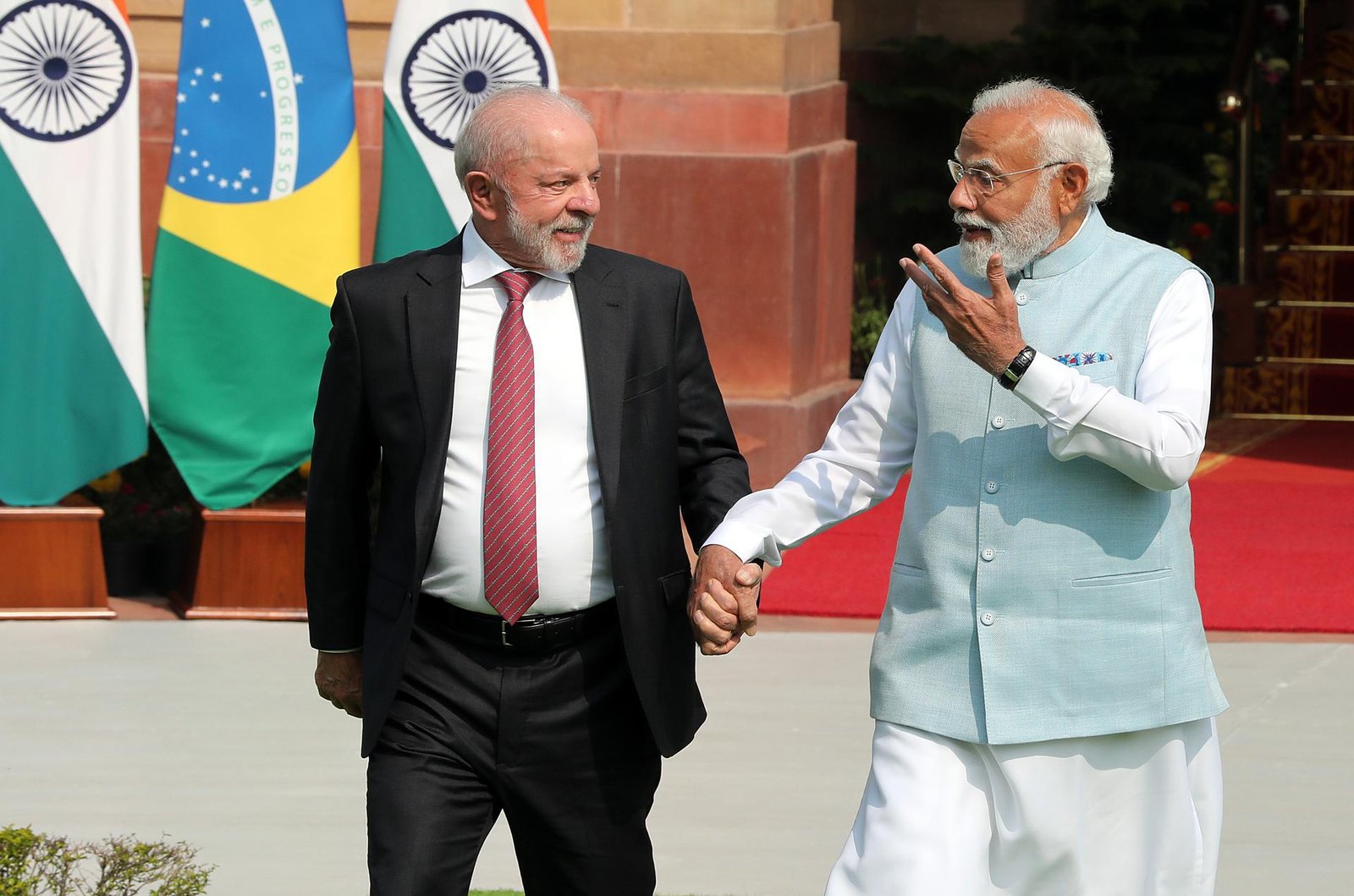
The President of Brazil, Luiz Inácio Lula da Silva (PT), and the Prime Minister of India, Narendra Modi, made official this Saturday (21) an agreement aimed at investments and technical cooperation in the area of critical minerals and rare earths. The focus is to ensure access to strategic inputs for the energy transition and high-tech industry, such as rare earths, lithium and niobium.
The signing took place after a meeting in New Delhi. In a joint statement, Lula stated that the partnership in renewable energy and strategic minerals plays a central role in bringing the two countries closer together, by inserting Brazil and India more actively into the international climate and energy agenda. “Our countries are ensuring their place in the global climate and energy agenda,” said the Brazilian president.
The understanding is in line with the Indian policy called “Critical Minerals Mission”, which provides tax exemption for the import of 25 minerals considered essential. The measure is part of New Delhi’s strategy to strengthen its supply chain and increase competitiveness against China.
Modi classified the pact as a relevant step towards structuring more resilient supply chains, at a time of accelerated expansion in the Indian technology sector. This week, companies announced investments of US$300 billion in digital infrastructure in the country.
“The agreement reached on critical minerals and rare earths is an important step towards building resilient supply chains. We prioritize collaboration in areas such as artificial intelligence, supercomputing and semiconductors, as both countries firmly believe that technology must be inclusive,” Modi highlighted.
SEE ALSO:
-
Trump announces that India will exchange oil from Russia for supplies from the US and Venezuela
What happens in practice with the agreement on critical minerals and rare earths
In practice, the agreement paves the way for Indian companies to acquire stakes in mining assets in Brazil and import raw materials tax-free. The movement reinforces India’s presence in Latin America and appears as an alternative to Chinese dominance in this market.
Holder of around 90% of global niobium production and the third largest rare earth reserves, Brazil now occupies a strategic position in India’s industrial and technological expansion plans.
The two governments also revised the bilateral trade target, setting the objective of reaching US$30 billion by 2030. In 2025, exchanges had surpassed US$15 billion. To facilitate the expansion of business, it was agreed to extend the validity of tourist and business visas from five to ten years.
At the same time, India is in the final stages of negotiations to expand its trade agreement with Chile, with a focus on obtaining preferential access to lithium. The initiative is part of the strategy of diversifying suppliers and consolidating partnerships in Latin America to guarantee the flow of raw materials destined for processing in the Asian market.
