
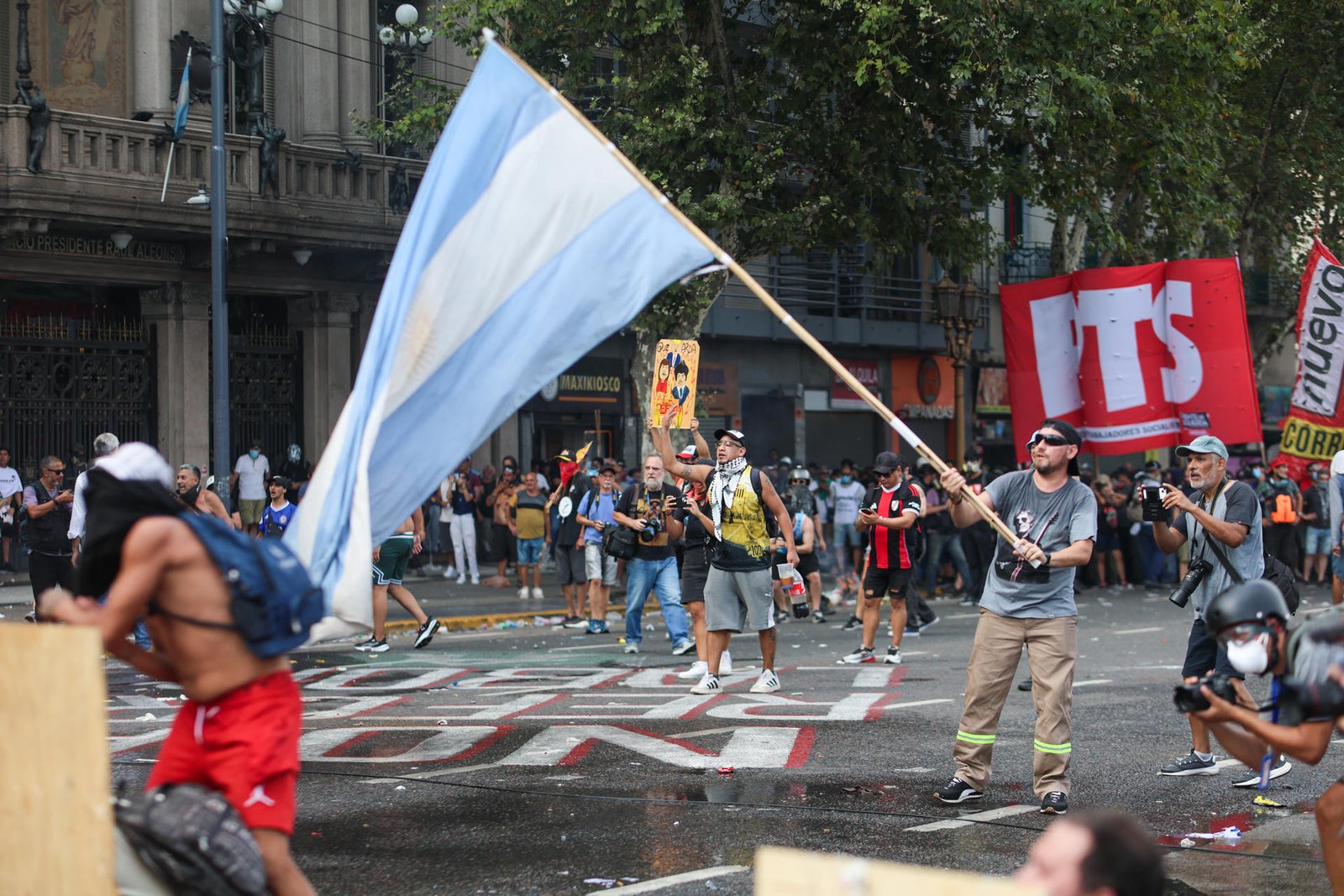
The general strike called by unions against the labor reform promoted by Javier Milei’s government paralyzed a large part of Argentina this Thursday (19), while dozens of workers headed to Congress, where the project that aims to radically change working conditions in the country will be debated. In total, the financial loss could reach almost US$600 million.
Under tight security, protesters are trying to reach Congress, in the center of Buenos Aires, on a journey marked by the interruption of trains, planes, the subway and most bus lines.
The General Confederation of Labor (CGT), the largest workers’ union and organizer of the fourth general strike during the Milei government, leads the actions.
“Adherence is extremely important; since last night, manufacturing sectors with night shifts have started to leave their jobs,” Jorge Sola, one of the three general secretaries of the CGT, told Radio Rivadavia.
13 unions and the Argentine Workers Central (CTA) joined the protest, while essential services, such as public health, also registered partial interruptions.
The Chamber of Airlines in Argentina (JURCA) reported the cancellation of more than 400 flights, affecting more than 64,000 passengers and cargo customers – Aerolíneas Argentinas alone canceled 255 flights.
The Department of Labor ordered transport workers to refrain from direct action measures. The government also announced that it will deduct the day’s salary from public employees who join the strike, a practice that until then was not common in the country.
According to a preliminary estimate by the Institute of Economics of the Argentine Business University (UADE) and sources from the Ministry of Economy, the economic cost of the strike fluctuates around US$575 million, representing around 0.8% of February’s GDP.
The axis of the protest is the labor reform that already received approval from the Senate on February 12, when there were clashes between police and protesters. The project, which introduces the “dynamic salary”, the time bank and limitations on the right to strike, will be debated by the Chamber of Deputies this afternoon.
Before the session, the government removed Article 44 from the text, which provided for the reduction of salaries during sick leave.
