
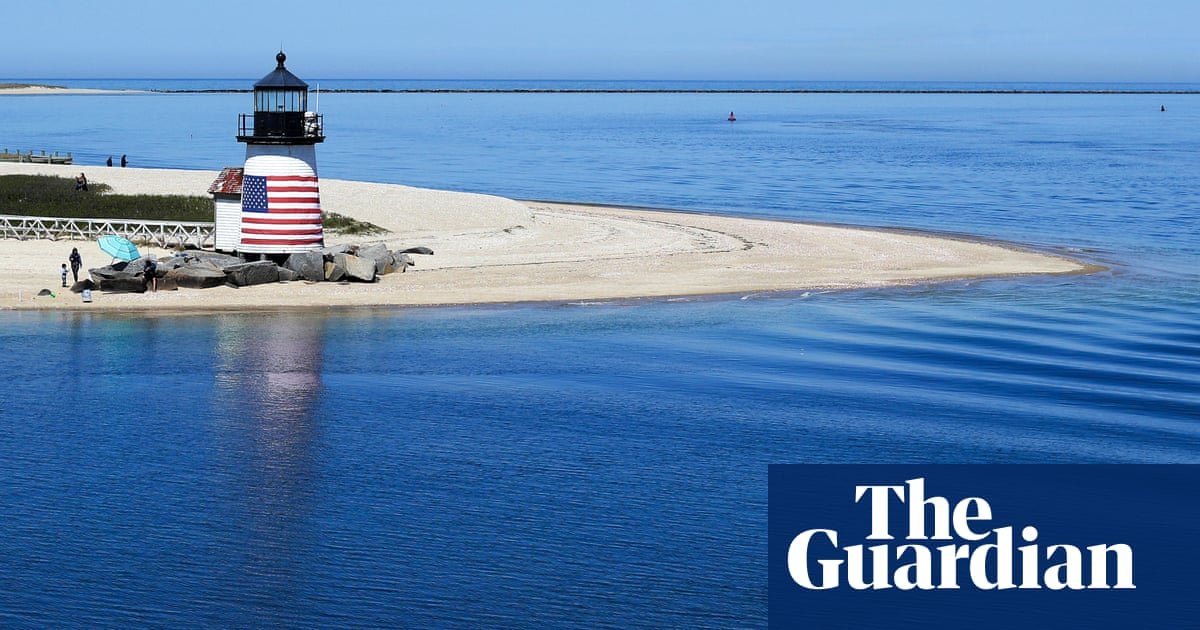
Tests on wastewater in an upscale Massachusetts ocean resort town have revealed unexpectedly high levels of cocaine – up to three times the national average.
Officials in the town of Nantucket on the eponymous island off Cape Cod began testing its wastewater last summer “to monitor high-risk substances and opioids in the community”.
The isolated island, located south-east of Martha’s Vineyard in the Atlantic Ocean, is an upscale and popular summer retreat for the prosperous, complete with sandy beaches, quaint cedar-shingled buildings and cobbled streets, and classic New England lighthouses and seafood.
It is known as a favorite of celebrities and prominent politicians including former US presidents John F Kennedy, Bill Clinton and Joe Biden.
While early results in September showed a presence of cocaine already 50% higher than that found nationally, surges in October and December sent levels soaring to “dangerous amounts” on the island, according to the town’s health and human services department.
“Nantucket, like communities across the country, is not immune to the growing public health crisis of substance misuse and overdose,” said a statement on the official website of the town and county of Nantucket. It noted that the town’s population quadruples during the summer, representing a “unique challenge of managing behavioral health risks”.
Accompanying results showed cocaine levels reaching a peak on 14 October last year of 2,948.70 nanograms per liter, almost three times above the US average of about 900-1,000 ng/L, and higher still than the regional average.
Nantucket’s figure topped 2,800 ng/L again three days before Christmas.
“The data will help identify concerning patterns, such as sustained increases in certain drug markers, that can guide timely, evidence-based interventions. If a prolonged spike in stimulant use is observed, the town can coordinate educational outreach, screening efforts, or peer-led recovery support tailored to that substance,” the statement said.
The testing, meanwhile, showed levels of fentanyl and methamphetamine far below regional and national averages, a clear indication that cocaine remains the recreational drug of choice in a town renowned for being a playground of the fashionably wealthy and famous.
As well as human use of cocaine, measured by the presence in the samples of its primary metabolite, benzoylecgonine (BZE), officials said the evidence suggested quantities of the drug were dumped in the water infrastructure.
“Some portion of the cocaine entering the sewer system did not come from typical human metabolism,” the report said.
“This pattern often appears when unconsumed cocaine is dumped or disposed of, creating a spike in cocaine that is not reflected in BZE.”
Roque Miramontes, the town’s director of public health, said in a local media interview that more testing was needed to help officials plot a counter strategy.
“For high-risk substances and opioids, a sustained increase over several weeks may be a stronger indicator for intervention. We are sharing the data now to begin equipping community behavioral health partners with actionable information,” he said to the Nantucket Inquirer.
