
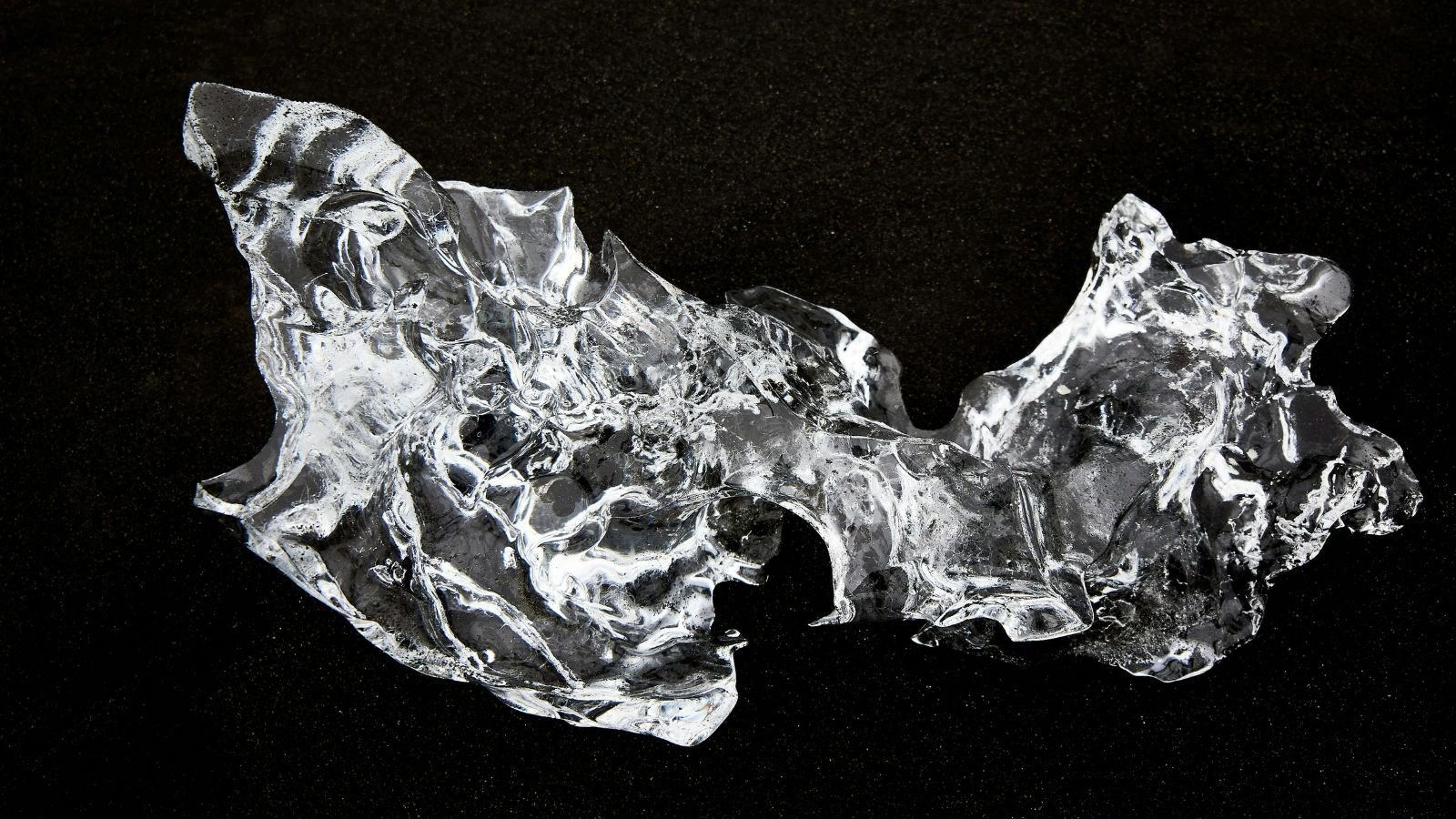
The frontiers of chemical engineering and materials science have been challenged by researchers at the University of Sydney. The team used a new technique to observe crystals in liquid metal. According to the study published in the journal Nature Communications in 2025, they captured unprecedented images of the growth of platinum structures within liquid gallium.
The team, led by Professor Kourosh Kalantar-Zadeh, used X-rays to pass through gallium – an opaque and dense metal that does not allow light to pass through. Real-time recording shows how atoms organize themselves to form small rods.
The search offers a path to industrial production with less energy consumption: create green catalysts, substances that accelerate chemical reactions with low environmental impact. By visualizing the formation of crystals, scientists can design materials to sustainably produce hydrogen and batteries.
What have scientists discovered about crystals in liquid metal?
The researchers observed in an unprecedented way how atoms organize themselves in the transition from liquid to solid state by monitoring crystals in liquid metal. Previous models of crystallization relied on mathematical theories or low-resolution imaging.
The current research replaces assumptions that the process was slow and disorderly with real observations in three dimensions. Now, the images show rods growing rapidly inside the liquid metal.
The team used platinum dissolved in gallium, similar to sugar in a glass of water. However, the process occurs at much lower temperatures. Platinum normally melts at 1,768°C, but in liquid metal it dissolves at just 500°C.
Gallium acts as a solvent, allowing the noble metal to spread. When the temperature drops, platinum becomes solid again in shapes that resemble small, delicate metallic snowflakes.
3D imaging has made it possible prove that atoms do not come together randomly, but follow a pattern. Therefore, the internal behavior of materials can be studied at a level previously invisible to human eyes.
“To understand how liquid metals can be harnessed to shape the future of smart materials and identify those that play important roles in energy sources, we need to understand their metallic and chemical properties, inside and out,” said Professor Kalantah-Zader, from the University of Sydney, leader of the research, to the school’s official website.
What is crystal growth in liquid metal?
The emergence of crystals in liquid metal can be compared to the process of dissolving sugar in hot water. When the liquid cools, the excess platinum can no longer remain dissolved and begins to clump together. The grouping forms solid structures with organized and well-defined geometric shapescalled crystals.
The new technique to record crystallization in real time
Professor Kourosh Kalantar-Zadeh explained in a statement that its atoms are so tightly packed that traditional microscopes cannot penetrate a thick layer of the metal.
To overcome this barrier, the team used X-ray computed tomographyan imaging equipment commonly used in hospitals to examine internal organs.
The technology uses high-energy radiation to penetrate the dense liquid. By firing several shots at the metal droplet, scientists were able to see through the gallium.
The system captured cross-sectional images, such as visual slices of the interior, which were stitched together to recreate a 3D model. According to research co-author Moonika Widjajana, the chosen technique overcomes the challenge of low resolution found in current technologies.
Scientific Images of Crystals: Why Are They Important?
Seeing images of crystals in liquid metal means eliminate the need for trial and error in manufacturing new industrial technologiessuch as high-performance batteries. This results in products with a longer shelf life, which reduces waste and environmental impact over the years.
As a result, the study gives greater control of the process to the scientists responsible for creating materials on nano and micro scales. Nanotechnology previously only relied on theoretical models.
By seeing inside metals, science now has tools to shape industrial production in a predictable way. When engineers understand how each atom fits together, they can create stronger, more efficient alloys.
The importance of capturing images of crystallization also lies in industrial sustainability. Currently, chemical production consumes 10% of the world’s energy in processes that reach 1,000 degrees Celsius. The new method operates at 500 degrees, a significant reduction that reduces greenhouse gas emissions and operating costs of modern factories.
