
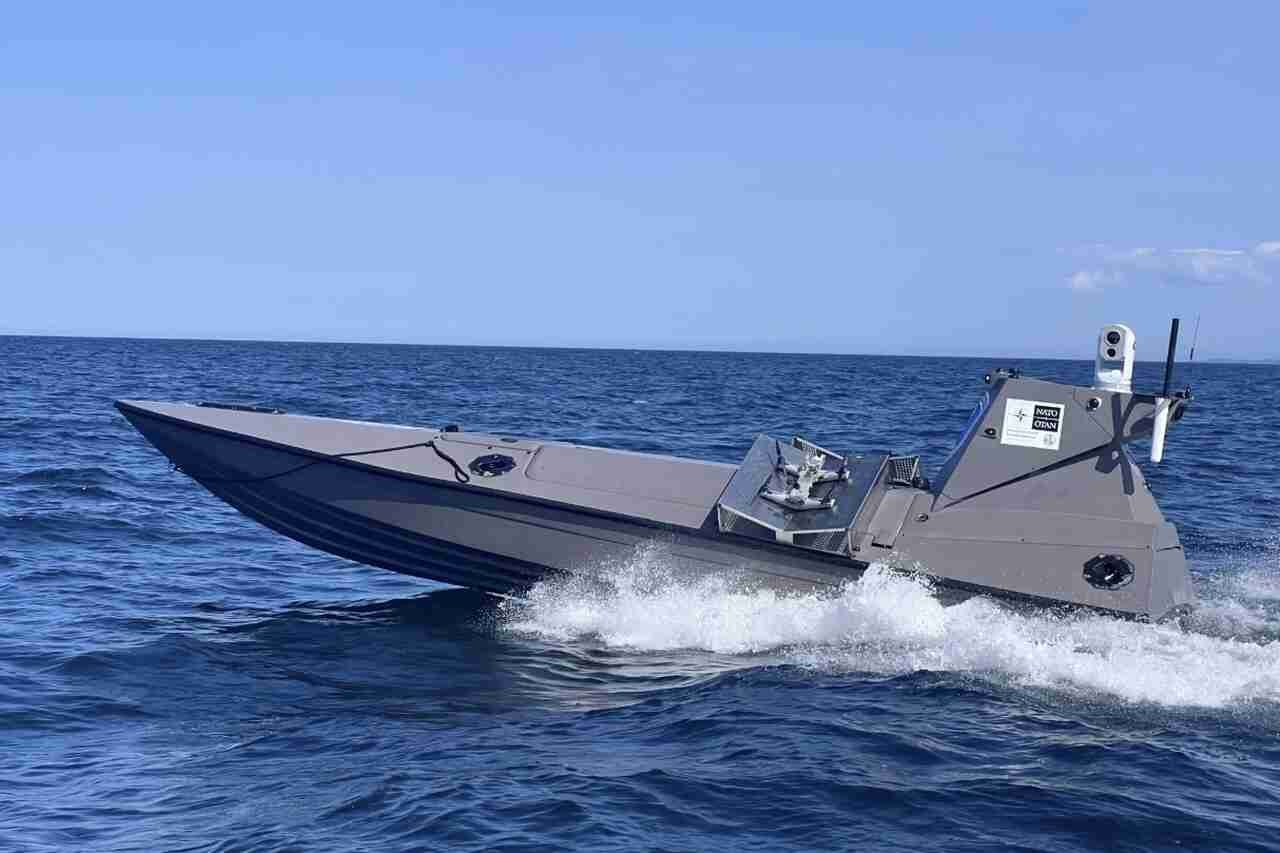
NATO is moving to expand the use of unmanned systems to protect the Baltic Sea, the website revealed UK Defence Journal.
According to the report, the next phase of the initiative will Task Force X Baltic be formalized through a new declaration of intent signed by the eight participating allies. According to NATO, the program represents a practical shift from innovation testing to real operational adoption.
“At the 2025 NATO summit, Allied governments agreed to significantly increase our defense spending to meet a new and ambitious set of defense targets,” said Nikolaos LoutasDirector of NATO’s Department for Defense Industry, Innovation and Weapons, at NATO Headquarters in Brussels.
According to him, they also approved “a Rapid Adoption Action Plan to accelerate the pace of technology adoption to meet these goals.”
The action plan was described as a tool to integrate innovation into defense planning to meet what he called an urgent operational need for new, effective technology.
“The Action Plan integrates NATO’s innovation efforts into defense planning and capability development to meet the urgent need of our armed forces for innovative and effective technological products,” said Loutas.
He said the allies have committed to measures aimed at accelerating acquisition and integration, including sharing best practices, new adoption pathways and increased experimentation to reduce the risk of new products.

Loutas also pointed out the initiative Task Force X Baltic as one of the practical mechanisms that make this possible. “A step in this direction is the structure of Task Force X Balticwhich today reaches a very important second milestone, with the signing of a letter of intent for the second phase of Task Force X Baltic.”
“The first phase of Task Force X Baltic demonstrated that allied navies and land forces, by working closely with industry, can deliver sustained intelligence, surveillance and reconnaissance from the seabed to space at speed, at scale and in a more accessible way,” Loutas added.
NATO officials said the second phase will see the eight allies reaffirm their cooperation in the rapid acquisition of multi-domain capabilities enabled by technology for maritime operations. These countries are: Denmark, Estonia, Finland, Germany, Latvia, Lithuania, Poland and Sweden.
With the second phase of Task Force X Balticnow being formalized, NATO is positioning the program as a model for wider adoption, with the lessons learned from the Baltic Cable incidents driving momentum to incorporate commercially available unmanned capability into NATO’s overall capabilities.
Photos: NATO / Saildrone. This content was created with the help of AI and reviewed by editorial team.
