
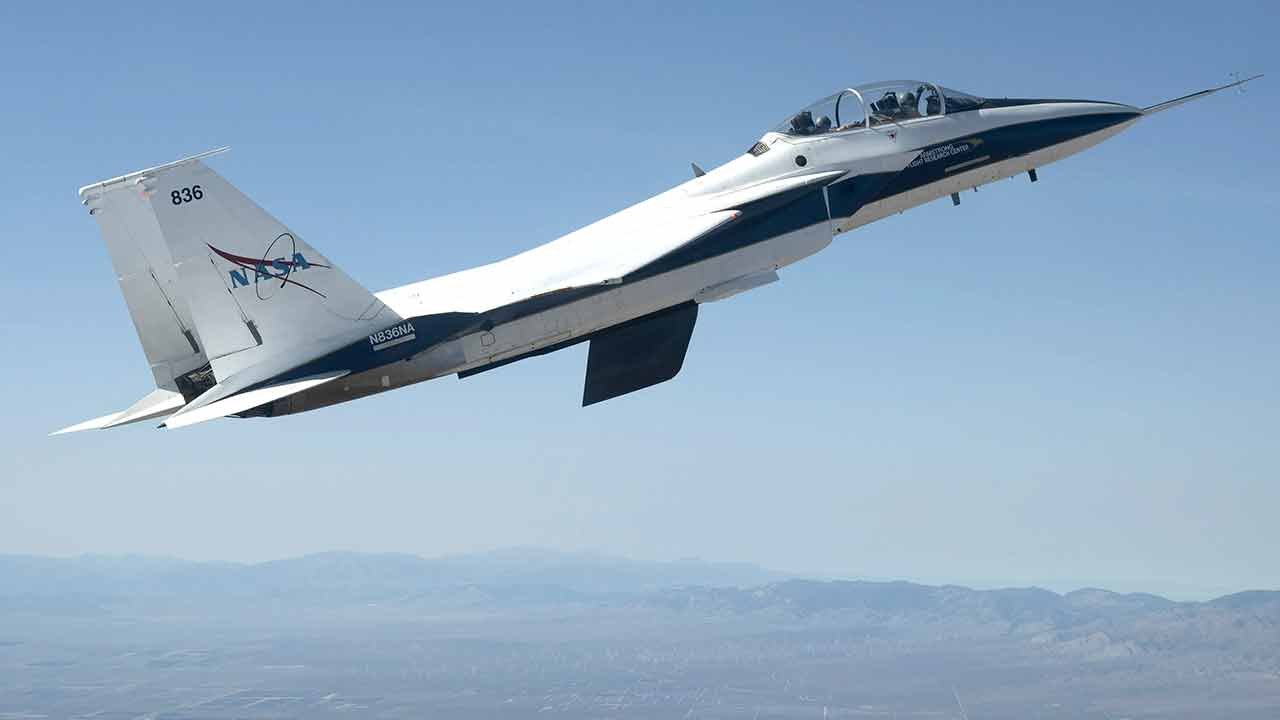
NASA, CATNLF He initiated a new phase of flight testing with the experimental laminar flow wing concept known as (Compact Advanced Technology Nonplanar Laminar Flow).
technology for research purposes F-15B It was integrated into the aircraft and allowed aerodynamic evaluations to be made in real conditions without the need to develop a completely new aircraft.
For the tests, engineers fixed a wing model about 40 inches (about 1 meter) long in a vertical position under the jet’s fuselage. This configuration makes it possible to measure the behavior of airflow in the operational environment, reducing costs and accelerating the technological validation process.

First flight focused on safety and expanding the flight envelope
The first flight lasted approximately 75 minutes. According to Michelle Banchi, the project’s principal investigator, the initial goal was to F-15BThe aim was to show that it could operate safely and predictably.
“The first flight focused mainly on expanding the flight envelope,” Banchi said. Technically, this means gradual evaluation of different altitudes, speeds and flight situations before moving on to more challenging flight profiles; It means verification of stability, control and structural integrity.
Next tests will be more challenging
The campaign includes at least 15 additional flights and increasingly complex operational regimes will be deployed. At this stage engineers:
- Will change speed conditions and angle of attack
- Will monitor transitions between laminar and turbulent flow
- Will compare real data with computational fluid dynamics models

Monitoring the flow is done through an infrared camera. Because turbulence leads to different surface heating compared to laminar flow, thermal variations make it possible to precisely map where aerodynamic transition occurs on the experimental wing surface.
+ Laser attacks on the rise in the US, Air Force launches new protection system for pilots
Fuel saving potential
The laminar flow concept is considered to be of strategic importance for civil and military aviation. Thanks to the reduction of aerodynamic drag, wings designed to maintain laminar flow for longer periods of time can significantly reduce fuel consumption and emissions.
If the tests confirm the expected results, CATNLF technology could influence future aircraft designs and deliver higher energy efficiency, lower operating costs and lower environmental impact in the aviation industry.
Source and images: NASA. This content was created with the support of artificial intelligence and reviewed by the editorial team.
