
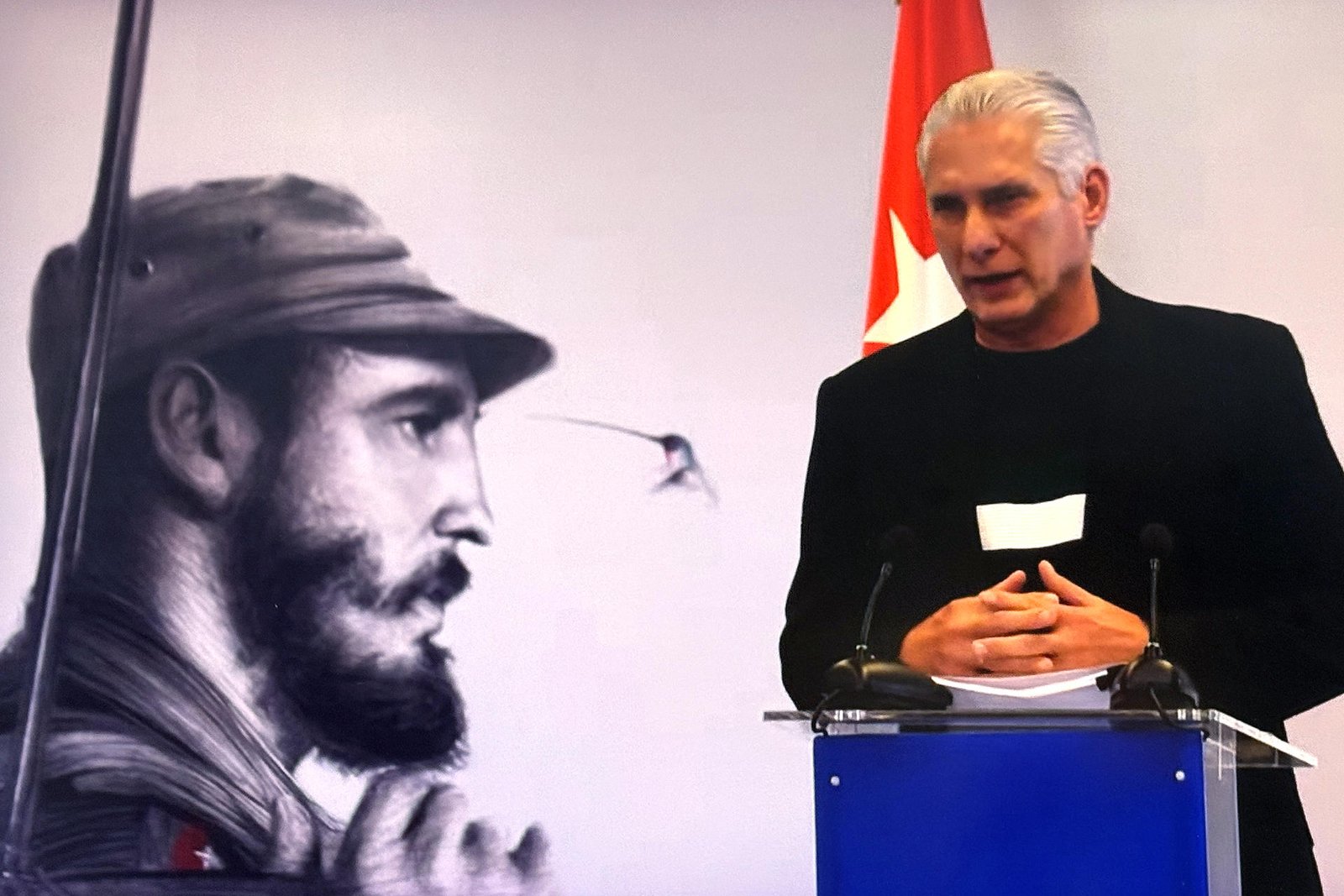
In January, Cuba’s regime announced a series of measures to implement a “state of war” amid growing pressure from the United States. Days later, the crisis on the island worsened with the announcement of flight cancellations, record blackouts, fuel rationing and the local currency in free fall (500 Cuban pesos per US dollar), which led the dictatorship to adopt a softer tone, seeking “dialogue”.
The Castroists’ resistance plans are based on the concept of “All the People’s War”, a strategy promoted in the 1980s by then dictator Fidel Castro that envisages the general mobilization of the Cuban population to face possible external aggression. This speech, however, has barely found an echo on the streets, where life has practically come to a standstill with restrictions on the use of public transport and the suspension of employment contracts.
The growing American pressure on the Cuban energy sector with the most recent threat of imposing tariffs on countries that supply oil to the island generated a chain reaction, which quickly affected the tourism sector, one of the last pillars of inflow of external resources that support the regime. US President Donald Trump has argued that the dictatorship should not survive until the end of the year.
Regime on the verge of collapse?
Robert Huish, associate professor of International Development Studies at Dalhousie University in Canada, classified Cuba’s current situation as one of the worst social and economic catastrophes since the 1959 revolution. The Conversation that the unprecedented crisis may be insufficient to overthrow the dictator Miguel Diáz-Canel and his allies.
He cites different economic weapons used by the US since the beginning of the 1960s. One of the most severe, known as the Helms-Burton Act, not only prohibited American companies from doing business with Cuba, but also punished any foreign company that traded at the same time with Americans and Cubans. And the regime survived.
Since the rise of Fidel Castro in 1959, two other crises have come close to the one currently experienced in Cuba. One of them occurred with the Missile Crisis of 1962, when Soviet nuclear missiles were installed in Cuba and the USA intervened with a naval blockade of the island. The other emerged after the dissolution of the Soviet Union, which was the main supplier of resources to the Castro regime – Cuban GDP shrank by around 35% almost instantly after the fall of the Soviet Union.
What changes in the current scenario is the widespread collapse of the economy and essential systems, such as energy, work, health and food. Although crises are part of the island’s history, never before have Cubans experienced such far-reaching challenges internally.
The cut in fuel supply promoted by the Trump administration, with the capture of Venezuelan dictator Nicolás Maduro, drastically escalated the crisis, given that oil is what keeps the country running, from public transport to factories and farms across the country – and Havana has the capacity to supply only 40% of this domestic production.
In recent years, already marked by economic and social precariousness, the population received a monthly ration of rice, beans and other basic foods through a card offered by the regime, which lasted an average of 10 days. In the current time of crisis, food is barely available in distribution warehouses. At the same time, Cubans face prolonged blackouts that last 20 hours a day.
SEE ALSO:
- Cuba on the brink of collapse: is change finally coming?
Allied dictatorships maintain a cautious stance due to possible US reactions
China reaffirmed its political support for Cuba this week, but avoided detailing how it could – and would accept – provide assistance to the socialist regime.
Foreign Ministry spokesman Lin Jian said at a press conference on Wednesday that Beijing “firmly supports Cuba in safeguarding its national sovereignty and security” and that it “resolutely opposes inhumane actions and behaviors that deprive the Cuban people of their right to subsistence and development.” Beijing did not explicitly mention the US in the statements.
However, days ago, the Chinese regime publicly urged Washington to “immediately put an end to the blockade, sanctions and all forms of coercive measures against Cuba.” In recent weeks, the dictatorship allied with Xi Jinping announced the sending of food aid, including a shipment of 90,000 tons of rice, as well as an “emergency financial assistance” line of US$80 million to the island.
By 2024, Beijing had already granted the island another US$100 million in aid.
For its part, Russia signaled that it is preparing to send “humanitarian aid” to the island, including oil supplies, which could generate new friction with Washington.
Moscow this week suspended flights to Cuba after having to evacuate thousands of tourists stranded in Havana due to the energy crisis. Russia is the second largest source of tourists to Cuba, after Canada, with 131,000 registered travelers in 2025, according to official data.
Kremlin spokesman Dmitry Peskov said on Thursday he did not want an escalation of tensions with the US, but downplayed the current level of trade relations between the countries by citing aid to Cuba.
