
Berkshire Place in north-west Toledo is an unremarkable street of potholes and unembellished single-family homes in a working-class Ohio neighborhood like thousands of others across the US’s industrial heartland.
Last July, a three-bedroom, two bath house on the street with children’s toys and bikes strewn around its snow-covered yard was sold for the princely sum of $20,000 to an entity called J Kushner & Associates with an address in Bet Shemesh, Israel. It had recently been put up for rent for $1,600. That means the Israel-based owner or owners would, at that price, make a return on their initial investment in just a little over a year.
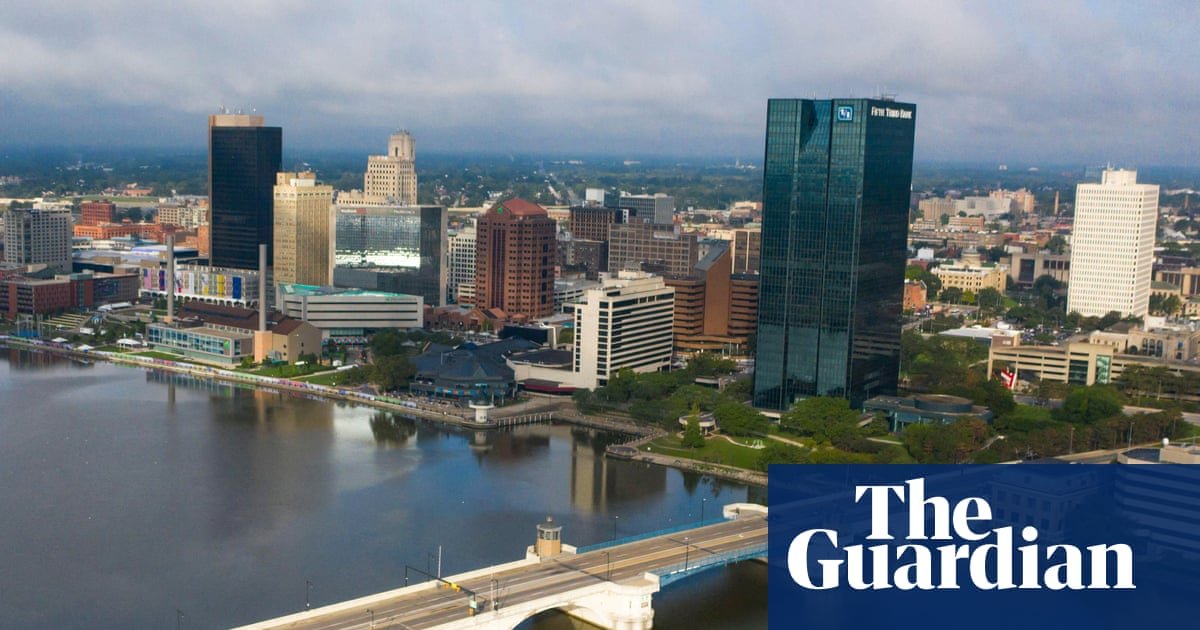
On the surface, Toledo may not seem to have a lot by way of attractions. The local Jeep plant, which employs 4,400 workers, has served as a source of jobs, and job losses, for decades. Ten years ago, a huge algae bloom in western Lake Erie forced the city to spend $500m on a new water purification system for residents.
But its location less than an hour’s drive from downtown Detroit, its proximity to the Great Lakes amid climate concerns and dirt-cheap properties have attracted interest from a surprising corner of the global economy: real estate investors. Toledo has lost about 120,000 people since its height as a 1970s industrial powerhouse, meaning there’s an abundance of empty, older houses, just like those on Berkshire Place.
While speculators and investors have for decades sought out residential property as a means to grow their assets, the unprecedented focus on regional cities such as Toledo marks a new departure for the US housing landscape.
A 2025 report by the Federal Reserve Bank of Cleveland found that out-of-state investors accounted for more than half of all investor-purchased single family homes in Toledo’s Lucas county between 2020 and 2024.
“Starting in 2008, the lending industry started to pull back from lending to moderate-income families, and that was codified by 2010 in the Dodd-Frank Act,” says Daniel Hammel, of the University of Toledo’s department of geography and planning, who has conducted research into property ownership in the Toledo area.
“That wasn’t necessarily the intent of the law, but that was the result, and given the political polarization since that time, it was never adjusted, as large pieces of legislation often need to be.”
Through a subsidiary, Maryland company Riparian Management LLC bought more than 115 properties in Toledo over two months alone last year, including a two-bedroom, one bath house close to the Maumee River south of downtown Toledo with a value of $13,800.
Emails to Kris Garin, Riparian’s CEO, asking if he thought investors such as he and others, by buying up affordable homes in blocks are preventing Toledo residents’ path to wealth through homeownership, were not responded to.
In Baltimore, where the company is headquartered, Riparian faced criticism for its role in temporarily evicting a single mother of five children in 2023. In Pittsburgh, Riparian tenants say they have been facing utility issues and unexpected notices to vacate.
“We get a lot of calls from tenants who live in substandard housing conditions and difficult situations because of neglectful or absentee landlords,” says George Thomas, chief executive of the Fair Housing Center in Toledo.
“Sometimes, when we start representing the person, we find that there is a local property management company, but even they have very limited ability to act on certain situations – they’ll say the investor/owner doesn’t want to do X, Y or Z, or they don’t want to pay for the basic thing that the tenant needs.”
Reporting by WTOL11 found that last year, outside investors were responsible for $13m worth of delinquent property taxes, and that “out-of-town” property owners tend to evict tenants at a higher rate than those living in or around the city.
But interest in Toledo’s residential property market extends far beyond Baltimore.
The aforementioned J Kushner & Associates has no apparent website or contact emailing addresses, though a LinkedIn profile associated with it suggests its managing director runs a “Boutique tax compliance and consulting firm” in Israel.
Nor is this the only Israeli interest in Toledo.
The statutory agent for the J Kushner & Associates owned home on Berkshire Place, Ori Elmaliah LLC, shares the same mailing address in Toledo with more than a dozen other companies and individuals with links to Israel.
New York-based company, American Eagle Equity LLC, advertises property investments in Toledo, Akron, Memphis and South Bend, Indiana – all cities with large communities of people of colour where many residents live well below the poverty line.
Inexplicably, its website has testimonials from people with their faces blurred, including an investor from Netanya, Israel. Emails sent to American Eagle Equity CEO, Gary Spund, were not responded to.
Another investor, Yotam Rozenbaum, posts videos to social media with captions in Hebrew depicting homes in Toledo and ways that Israeli investors can finance home ownership in the Ohio city. Emails to Rozenbaum were not responded to.
LLCs are often owned by other LLCs that are in turn often owned by anonymous corporations. Registered agents that are required to be listed with state authorities when an LLC is established often turn out to be fake personas, as highlighted by Wired.
And since statutory agents do not have to be a person – regularly other companies and corporations play that role – identifying actual ownership of properties can be difficult, say researchers.
“Over time, it has become much more difficult to identify the actual owner,” says Hammel. “In 2006 many houses were listed as being owned by an individual. That still happens a bit, but it is financially dangerous, and most owners are now incorporated as an LLC or some other form of business.”
Still, while institutional investors may be making it harder for regular Toledo residents to purchase homes, by and large, laws are not being broken.
Many investors argue that the renovations they finance create local jobs and the property taxes they pay to struggling US towns and cities play an important role in paying municipal bills.
What’s more, Hammel suggests that while property ownership of single-family rentals by out-of-state investors has risen from 16% in 2006 to about 23% last year, there are other challenges for working-class residents at play.
“At this point in Toledo, I suspect that the largest barrier to homeownership among low- and moderate-income families is not the cost of the housing,” he says, “but the ability to secure a loan to buy a house.”
With midterm elections on the horizon, the Trump administration is taking note of voters’ concern with the cost of living in the midwest. During a visit to Toledo last month, JD Vance suggested the Trump administration would move to prevent large companies from buying up “American homes”.
This is the second in a two-part investigation into how housing in the US’s most affordable cities is increasingly out of reach for working residents. In part one, we speak to working-class Toledo residents struggling to find decent housing, and those trying to help them.
