
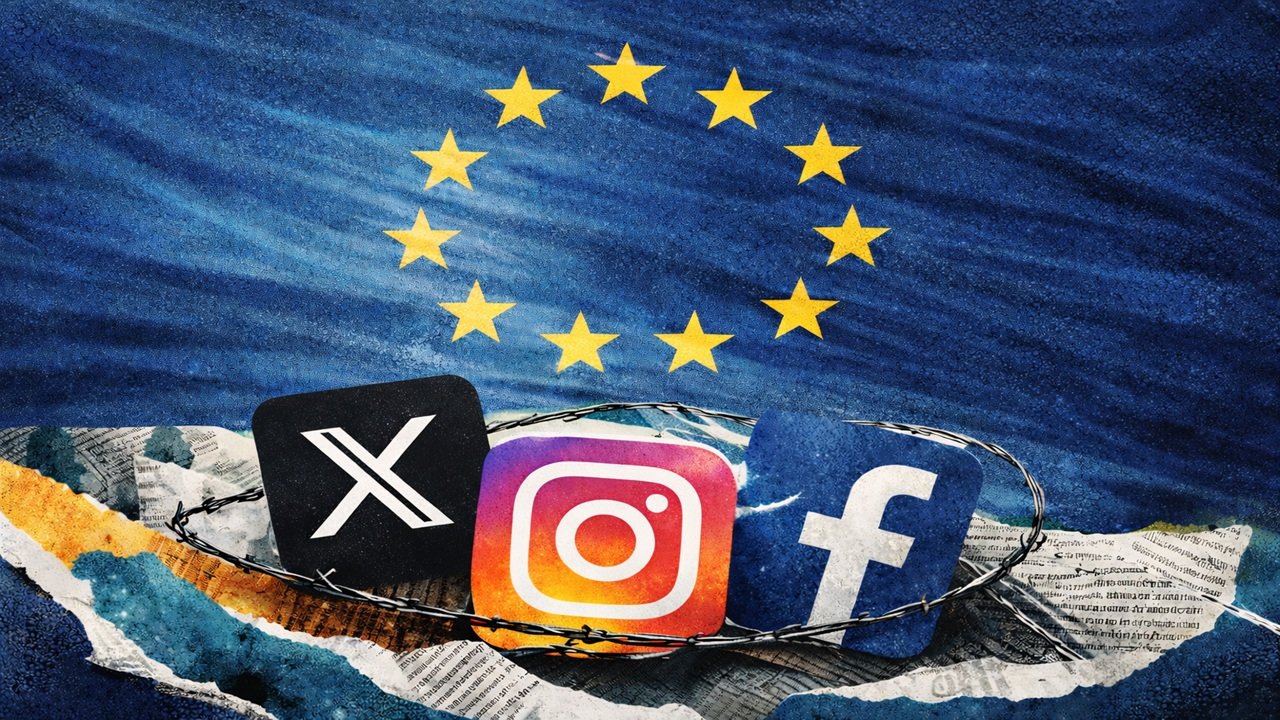
The operation carried out by the French Public Prosecutor’s Office at the headquarters of X, in Paris, to investigate alleged irregularities in the use of algorithms and the functioning of the Grok artificial intelligence tool, is yet another episode that demonstrates the increased pressure from European governments on social media platforms.
Earlier this month, French authorities summoned the owner, Elon Musk, and other X executives to provide clarification. The company, in turn, classified the operation as an “abusive judicial act” and stated that the measure was “politically motivated”.
The case occurs in a broader context of tightening digital rules on the continent. In recent years, the European Union (EU) has expanded its digital surveillance apparatus with the aim of combating the spread of what it classifies as “fake news” and so-called “hate speech” on social media. The measures have been criticized, especially in the United States, due to the risk of indirect censorship that could affect other countries.
The European bloc, with the support of the majority of its member countries, developed a set of rules and regulations that impose direct obligations on large social networks, expand state supervision over algorithms and digital advertising and provide for billion-dollar fines in case of non-compliance.
The main instrument of this European model of digital surveillance is the so-called Digital Services Act – DSA, approved in 2022 and in force since 2023.
The DSA created specific duties for the so-called “very large platforms” that operate in Europe, demanding “greater transparency” about network content recommendation systems, the creation of rapid mechanisms for removing content considered “illegal” by the European Commission – the executive arm of the EU – and expanded access to data by authorities and accredited researchers from the European bloc. Fines against platforms that fail to comply with the DSA can reach 6% of companies’ global annual revenue.
Social networks have already been fined millions of euros
In December last year, the European Commission imposed its first fine based on this law. The target, again, was Elon Musk’s social network X, fined 120 million euros for alleged failures related to the transparency of the blue seal verification system and advertising on the platform. According to the European Commission, the current X blue seal verification model could “mislead users” regarding the authenticity of profiles and would not “fully meet the transparency requirements set out” in the legislation.
American Vice President JD Vance publicly criticized the penalty, stating that the European Union was adopting measures “incompatible with the tradition of protecting freedom of expression”. In a publication on X, Vance declared that the European bloc “should support freedom of expression and not attack American companies”.
Musk also reacted to the imposition of the fine, stating that the European Union “should be abolished”. He also classified the European bloc as a “bureaucratic monster”.
Before X, other US technology giants had already been targeted with fines on the continent based on EU digital rules. Instagram, owned by Mark Zuckerberg’s company Meta, was fined 405 million euros in 2022 for alleged “failures in protecting teenagers’ data”. Apple and Google also received heavy penalties based on other EU digital rules.
Currently, several parallel investigations remain open at the European Commission that investigate how digital platforms, most of them from the USA, treat content classified as “illegal” by the bloc’s rules, what mechanisms they use to remove them and how their recommendation algorithms operate, especially during election periods and on topics considered “sensitive” by European regulators.
US Committee talks about global censorship
A report published on the 3rd by the Judiciary Committee of the United States House of Representatives points out that European Union laws, such as the DSA, can produce effects that go beyond the bloc’s borders.
According to the document, the DSA, for example, imposes structural obligations and threatens social media companies with stratospheric fines, which leads many of them to “preventively” adjust their content moderation policies on a global scale, and not just on European territory. According to the report, platforms such as X, Facebook and Instagram operate with “unified global standards” and changes implemented to comply with the DSA, for example, tend to also be applied to users in other countries.
In the assessment made by the American committee in the document, this extraterritorial effect could result in the export of European criteria on what constitutes “illegal content” or “disinformation”, with a potential impact on freedom of expression outside the European Union. The document states that, in practice, the DSA is currently functioning as an “instrument of global indirect censorship.”
“The DSA is the culmination of a decade-long European effort to silence political opposition and suppress online narratives that criticize the establishment political”, says the document.
In December last year, the US State Department announced visa restrictions against former European Commissioner Thierry Breton, who was one of the main architects of the DSA. At the time, Secretary of State Marco Rubio said that the restriction was a punishment for “organized efforts to coerce American platforms to censor users and suppress views”. Breton reacted to the decision by classifying the initiative as a “witch hunt”. The former commissioner said that European digital legislation was approved by Member States and the European Parliament.
Blocking networks for minors accompanied by more control
In addition to fines and EU structural requirements, European governments have come forward with proposals to restrict minors’ access to social media. The French Parliament, for example, approved a law in January that restricts the use of social networks to children under 15 years of age.
However, the discussion is not limited to prohibiting the use of platforms by minors. Many initiatives presented and approved by European governments are accompanied by measures that further expand the State’s reach over the internal functioning of technology companies.
In Spain, for example, the plan recently presented by the socialist government of Prime Minister Pedro Sánchez is not just about banning access to social networks for children under 16. The proposal includes the requirement for new mechanisms to hold companies responsible for what the government may consider as “infractions committed on platforms” and the criminalization of what the Spanish State may define as “algorithm manipulation”. The creation of a system to measure the so-called “hate and polarization footprint” on networks was also announced, which should imply systematic State monitoring of content and information circulation patterns on platforms.
The Spanish government’s initiative was harshly criticized by Musk, who considers the proposal, which is still under discussion at the moment, as yet another advance by European bureaucracy on freedom of expression. In X, the businessman classified Sánchez’s announcement as a “betrayal” by the government to the Spanish people and called the socialist prime minister a “tyrant”.
Pavel Durov, founder of Telegram, echoed the criticism, stating that initiatives like the one discussed in Spain “could transform the country into a surveillance state under the guise of ‘protection’”. According to him, the adoption of these measures tends to result in “mass data collection and censorship”, as a direct effect of the requirements to verify the identity of minors and the government’s expanded monitoring of digital platforms.
MCC Brussels, a conservative think tank focused on the debate on public policies on the continent, stated that initiatives by European governments presented under the argument of “online security” could evolve into broader mechanisms of state control.
“The ban on social networks for children under 15 in France and, now, in Spain points to age verification mechanisms that should not remain restricted to children only. With VPNs (Virtual Private Networks) coming into the spotlight next and the X platform being the target of investigations because of its algorithms and artificial intelligence, the so-called ‘online security’ begins to resemble a planned system of controlling freedom of expression”, he said in a post on social media.
