
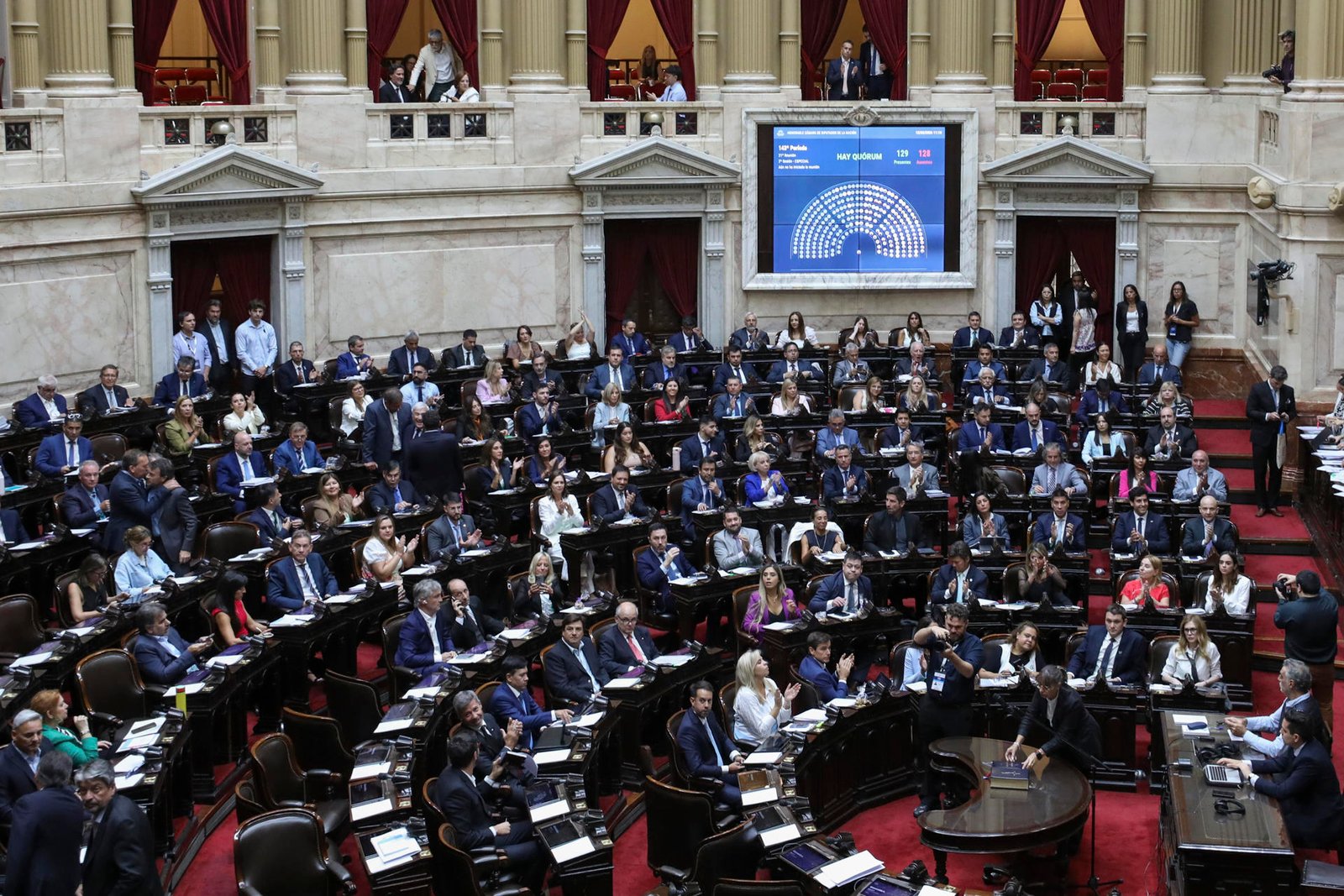
The Argentine Chamber of Deputies approved this Thursday (12), with a large majority, the reduction of the age of criminal responsibility from 16 to 14 years. The proposal received 149 votes in favor and 100 against and now goes to the Senate for analysis.
The measure is part of the Juvenile Penal Regime reform project, supported by President Javier Milei’s government as one of the central axes of its security agenda. The text was approved with the support of the governing bloc La Libertad Avanza and allies in Proposta Republicana (PRO), União Cívica Radical (UCR), Innovación Federal and other provincial groups.
In a statement released after the approval, President Milei’s office stated that the approval establishes the principle that “whoever commits a crime must answer to the courts, regardless of their age”. The government argues that the previous legislation remained “anchored in another era” and did not reflect the current reality of crime in the country.
According to the approved text, teenagers aged 14 and over may be held criminally responsible. However, the law establishes a maximum limit of 15 years for prison sentences applied to these minors, regardless of the severity of the crime provided for in the Penal Code for adults. The application of closed prison terms will be restricted to serious crimes, with a predicted sentence equal to or greater than ten years. For infractions with lesser penalties, the project determines the adoption of alternative measures, such as provision of services to the community, prohibition of approaching the victim and damage repair mechanisms.
The project also determines that teenagers will not be able to serve sentences in the same wings reserved for adult prisoners. The text provides for the creation of separate wings, with their own structure and specific rules for minors, in addition to guaranteed access to education, health care and programs aimed at social reintegration. If it passes the Senate, the new legislation will come into force six months after its regulation, a period intended for the adaptation of federal and provincial penitentiary structures.
Opposition sectors, including part of the left-wing bloc União por la Patria and other leftist parties, voted against the proposal and criticized the reform. The project will now be analyzed by the Senate.
