
The presidential elections in Portugal confirmed the victory of socialist António José Seguro, but they also revealed an unavoidable fact: the significant advance of the conservative right in the country. For the first time in decades, the Portuguese political system was strained by a candidacy that broke the traditional relay between socialists and social democrats and took the dispute to the second round.
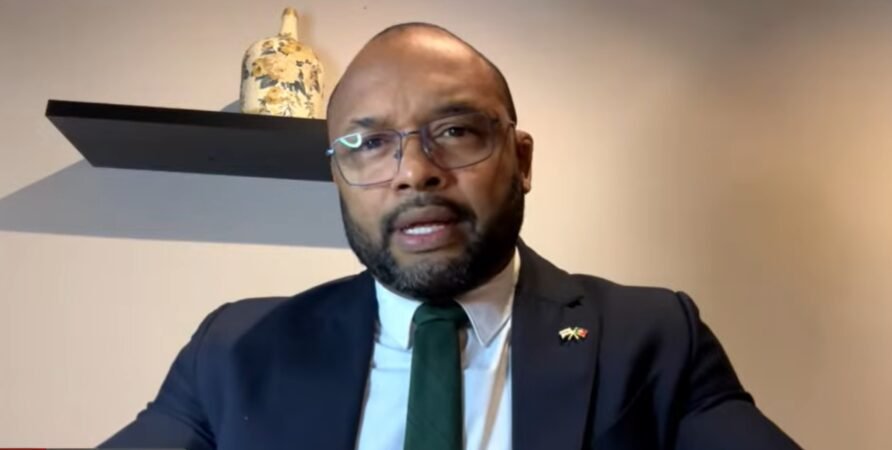
To analyze the results of the polls, the role of the press and possible lessons for the Brazilian scenario, the column Between the lines and the program Without beating around the bush heard exclusively from Portuguese-Brazilian deputy Marcus Santos, from the Chega party. In the conversation, he talks about the electoral growth of the right in Portugal, the strategy anti-establishment of the party, the massive support of the political system for the socialist candidate and the challenges of winning over the center electorate in majority elections.
Between the lines: Portugal has just gone through a presidential election won by the socialist António José Seguro. Still, the right grew significantly. How do you analyze this result?
Marcus Santos: And truth. It was a very close election. The president of the Chega party, André Ventura, initially didn’t even want to run. We couldn’t find a strong name that truly represented the conservative and right-wing Portuguese against the socialist candidate. Given this, André decided to move forward.
It is important to remember that Portugal lives under a semi-presidential system. The President of the Republic does not govern like in Brazil. The prime minister, elected in legislative elections, governs. The president is head of state, a more symbolic figure.
Even so, we went to the second round — something that hadn’t happened in around 40 years in Portugal. Since the end of the dictatorship, 51 years ago, the country has always been governed by two parties: the Socialist Party and the Social Democratic Party, which claims to be right-wing, but has always been a center-left party.
Between the lines: What caught your attention the most in this second round?
Marcus Santos: Something very revealing happened: all the other parties, including the PSD, which presents itself as center-right, supported the socialist António José Seguro. Of the ten parties with parliamentary seats, nine were against us. The result was the victory of the socialist candidate with 60.8% of the votes.
Even so, Chega and André Ventura achieved a historic result: 33.2%. To give you an idea, in the last legislative elections, in April last year, the PSD — which currently governs — had around 31%. In other words, we had more votes than the party currently in power.
Between the lines: What should be the impact on the political scenario of the future?
Marcus Santos: If this result were from a legislative election, Chega would have real room to govern. Of course, other parties come into play in a legislative session, but if we maintain this level, André Ventura could perfectly become prime minister.
That’s why I say it was a bittersweet defeat: we lost the presidential election, but we won politically by consolidating a very strong electoral base.
Between the lines: In Brazil, the right usually denounces the political-ideological actions of the mainstream press. In Portugal, how did the media position itself in relation to André Ventura?
Marcus Santos: Something very similar happened here. I can’t generalize, but a large part of the Portuguese press is militant. We competed against nine parties and also against a large part of the press. There are very few vehicles that are truly exempt. The press clearly took on an activist role against Chega.
Between the lines: How do you analyze Brazilian coverage of the Portuguese elections?
Marcus Santos: A Brazilian vehicle only interviewed Catarina Martins, who is a deputy and former leader of the Bloco de Esquerda, which is the extreme left in Portugal — something similar to the PSOL in Brazil. She is a radical left activist, with values completely opposite to ours. When the Brazilian press chooses to listen only to this type of voice, it conveys a completely skewed image of Portuguese reality.
In Portugal, the day before the election is the day for reflection. You cannot advertise or appeal to people to vote. It is a day highly respected by the population. Even so, a Brazilian newspaper, which has an office in Portugal, published an article clearly unfavorable to Chega on that day, without giving any right to contradict it. They only interviewed people aligned with their narrative, including immigrants, to speak against André Ventura.
Lawyers and party activists have already contacted the National Elections Commission to have this analyzed.
Between the lines: Chega ran an openly anti-system campaign. To To win majority elections, it is necessary to attract the center. In Portugal, the election ended up being presented as “moderates against radicals”. What is the lesson for the right?
Marcus Santos: The left always uses the same playbook, anywhere in the world. Italy, Poland, Portugal — the script repeats itself. They use the press, artists, influencers and try to sell the idea of “good versus evil”, “moderate versus radical”.
Here they tried to give André Ventura the image of being ultra-radical. Even the socialist was presented as a moderate. This moves part of the center away.
Our challenge is exactly this: to also win over those who see themselves neither on the right nor on the left. And how do we do this? Going to the streets, talking to people and using social media. Social media is Chega’s greatest strength. It is there that we can dismantle the fallacies of the old press.
Between the lines: What explains this growing support for Chega? Immigration, customs, economy, cultural agenda?
Marcus Santos: All this together. Portugal is a deeply Christian and conservative country. People value tradition, culture, food, music, national identity.
What we have seen is an increase in crime, illegal immigration and cultural shock. Many Portuguese people begin to feel like foreigners in their own land. This generates fear and indignation.
Chega is the only party that combats gender ideology, denounces organized crime and warns of the growth of Islamic radicalism.
People want order, security, cultural preservation. And today, in Portugal, the only party that clearly represents this is Chega.
SEE ALSO:
- Trump’s lawyer: “Moraes could be sanctioned again”
