
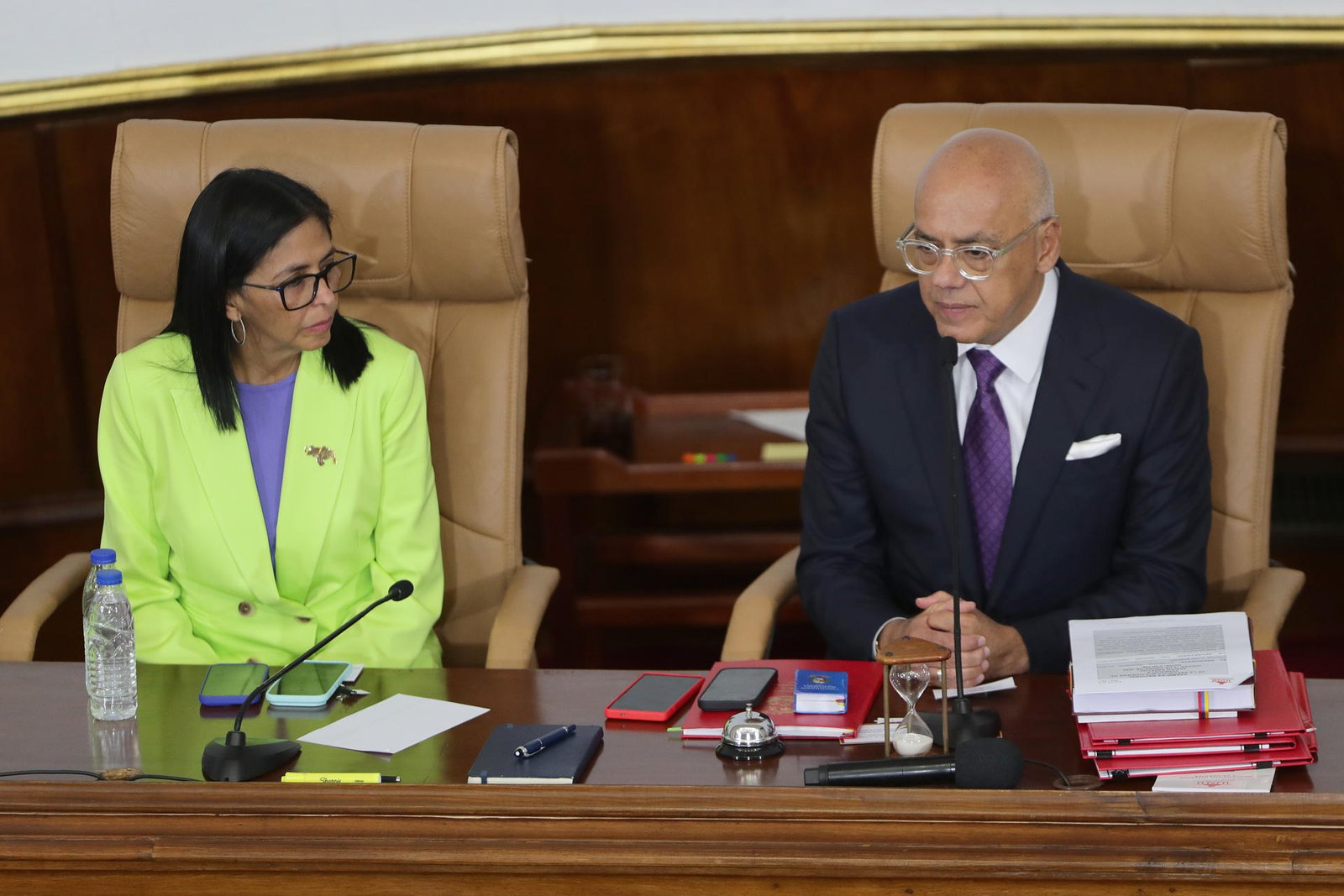
The president of the National Assembly of Venezuela, Chavista Jorge Rodríguez, declared that there are no presidential elections scheduled for the near future in the country, under the argument that the regime prioritizes “stability” in the current moment of transition triggered by the capture of dictator Nicolás Maduro by the USA.
“The only thing I can say is that there will be no elections in this immediate period,” said Rodríguez on Monday night, in the first interview by a Chavista leader with an international media outlet this year – given to Newsmaxan American broadcaster that sent a team to Caracas.
The president of the Venezuelan Assembly, brother of interim dictator Delcy Rodríguez, also said that the regime’s primary objective is to guarantee “Venezuela’s stability and reconciliation.”
In the interview with journalist Rob Schmitt, Rodríguez opened up the possibility of a vote if “advances can be made in national stabilization” and “an agreement with all sectors of the opposition” is reached.
Asked about opposition leader María Corina Machado, the Chavista leader mentioned the amnesty law being processed in the Assembly for political prisoners detained since 1999: “Allow me not to speak of just one name, because there are many actors abroad who must be included in the conversation (…). Through this amnesty law, we are promoting that all sectors of the opposition abroad comply with the law and can return to the country.”
Rodríguez and Schmitt also discussed the oil industry, which the Chavista regime is opening to foreign investment, especially American ones.
The parliamentarian acknowledged that Venezuela went through “difficulties under the blockade” and that the regime made “some mistakes”, but that the current moment opens up a “golden opportunity” to “advance and promote health, education and culture through a free market economy”.
“We have a great possibility of working and, as Trump said, there is a lot to do. What we seek is to convert this oil into hospitals, schools and benefits for the people of Venezuela”, he claimed.
Regarding the relationship with the Trump administration, Rodríguez admitted that “in the last 33 days things have moved very quickly, it has been very intense”, but that there is a chance to build a relationship of “mutual benefit”.
Since the capture of Maduro and the inauguration of Delcy Rodríguez as interim dictator, Venezuela has reformed its hydrocarbons law to allow American investment, returned to selling oil under US economic tutelage and began the release of hundreds of political prisoners.
The scenario generates expectations among civil organizations and the opposition about the real scope of this “reconciliation” and the economic impact of the new stage between Caracas and Washington.
