
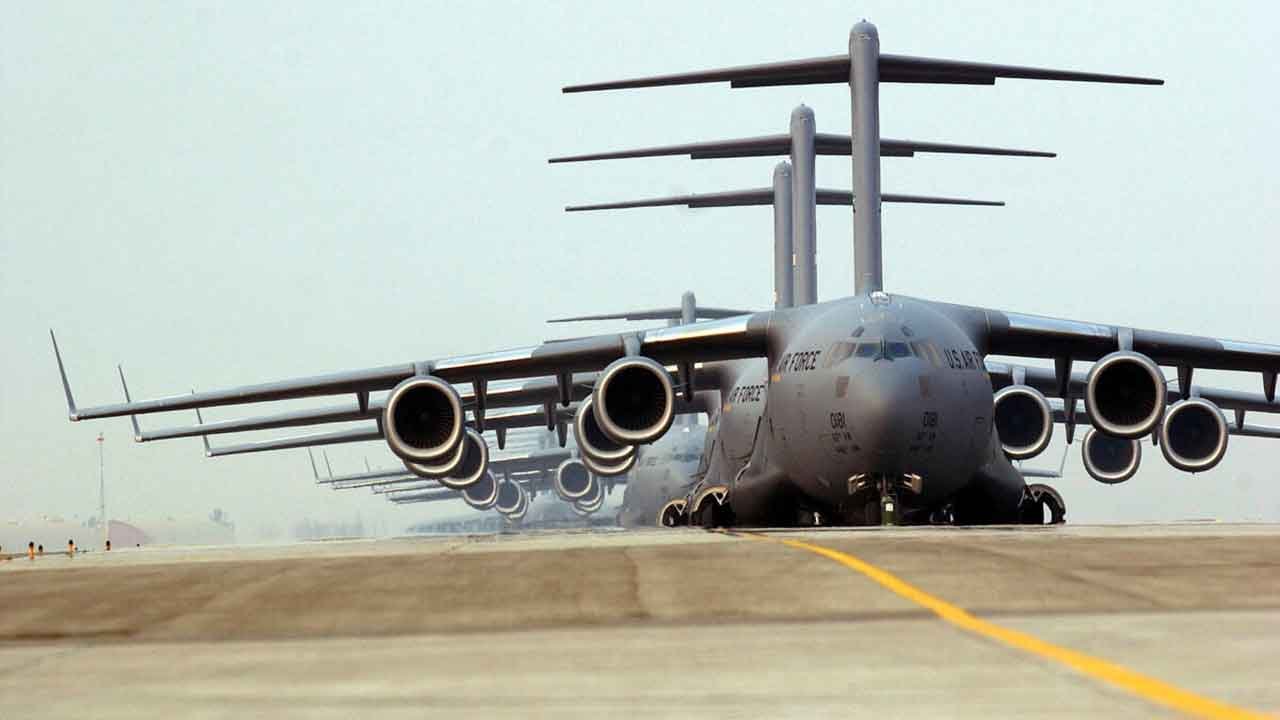
The Boeing Company announced on February 9, 2026 the award of a new United States Air Force contract aimed at modernizing the cockpit of the C-17A Globemaster III, an aircraft that entered service in the 1990s and has already been in operation for more than three decades.
The agreement provides for the design, manufacturing, integration, qualification and military certification of a new flight deck, replacing critical avionics and essential equipment with a modern, modular architecture based on open systems (MOSA). The approach enables plug-and-play upgrades, reduces long-term costs, and facilitates the rapid incorporation of new capabilities.
According to Boeing, the modernization is part of the effort to keep the C-17A operational until at least 2075, despite the advanced age of the platform. “The C-17A has been the backbone of global air mobility for more than three decades,” said Travis Williams, vice president of U.S. Air Force Mobility and Training Services at Boeing. According to him, the elimination of avionics obsolescence and the adoption of MOSA preserve a heavy, reliable aircraft that has been widely proven in real missions.
O C-17A Close III It is one of the main strategic transport vectors of Western military aviation, employed in global logistics, medical evacuation, humanitarian aid and combat operations support missions. Despite its age, the aircraft continues to be considered essential to the air mobility of the United States and its allies.

Between 1993 and 2015, Boeing delivered 275 C-17A aircraft. Of this total, 222 units were allocated to the US Air Force and 53 to international partners. Today, the fleet is part of a global support and sustainment system shared by nine countries, which reinforces the strategic importance of keeping the platform updated for several additional decades.
Source and images: Boeing Company. This content was created with the help of AI and reviewed by the editorial team.
