
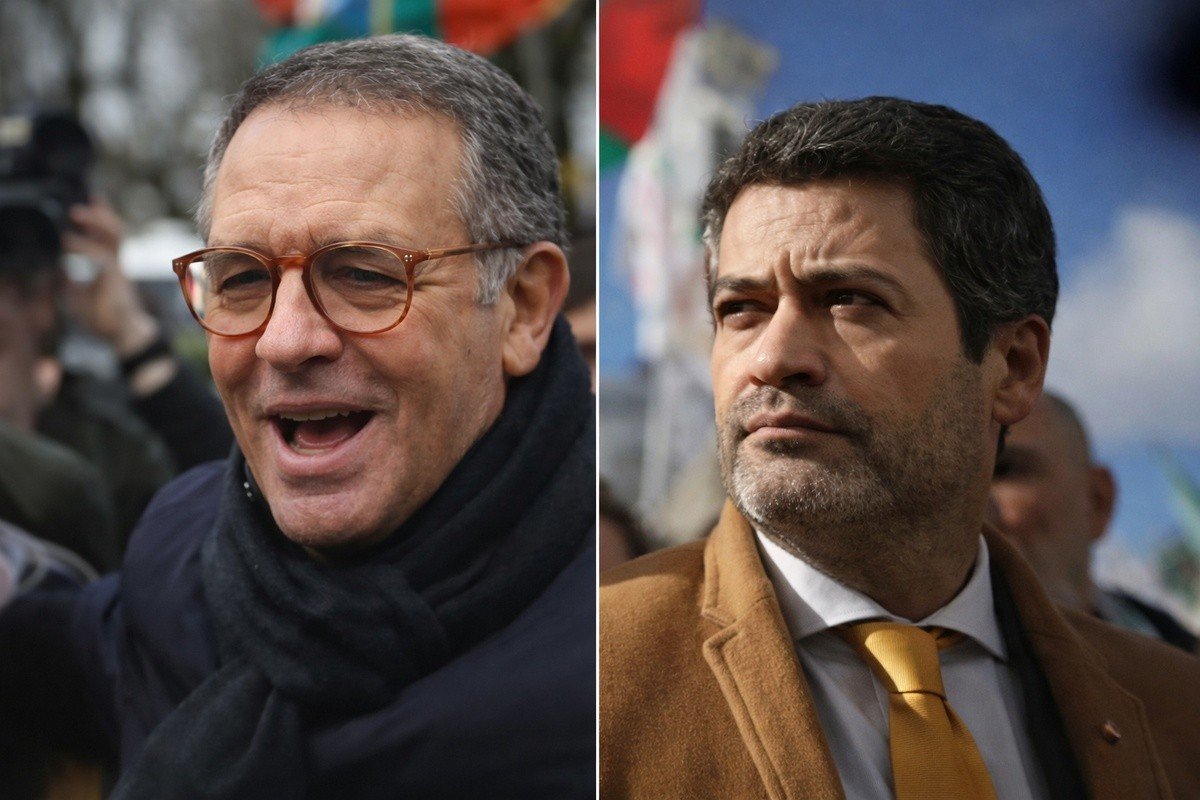
2nd round in Portugal: Brazilians talk about the climate on the eve of the election Portugal goes to the polls to choose its new president this Sunday (8). The left-wing candidate, António José Seguro, and the extreme right-wing candidate, André Ventura, are competing for the position in the second round of the presidential elections, the first in 40 years. ✅ Follow the g1 international news channel on WhatsApp Elections in Portugal: meet the leader of the ultra-right and the socialist who face each other in the 2nd round According to polls of voting intentions carried out by the Portuguese press last week, Seguro should be the winner of the dispute. Even so, Brazilians interviewed by g1 report fearing a victory for Ventura, who defends much stricter policies to control immigration. “The climate is one of fear and uncertainty, and I think that Portuguese citizens, including immigrants who are struggling, do not deserve to have this fear. They deserve to always have hope that things will improve”, argues Brazilian Letícia Bergamo, who has lived with her family in Portugal for nine years and leads a community to support mothers of autistic and disabled children. Bergamo, who has Portuguese citizenship and is a resident of Cascais, a metropolitan region of Lisbon, says she is surprised to discover that Chega’s candidate was the most voted among Brazilians in consulates and embassies in Brazil: “I may be a Portuguese citizen, but I am an immigrant. I don’t understand this about an immigrant who belittles another. We are in the same sea. I fear because of the threats, including taking away citizenships. Of interrupting citizenship processes that are in progress. progress.” António José Seguro, socialist candidate, and André Ventura, from the extreme right, are competing for the presidency of Portugal Disclosure / Reuters Also Brazilian Eliane Oliveira, who arrived in Portugal three months ago to work as a nanny, said that she knows a lot of people who are apprehensive. She entered the European country with her documentation up to date, but said that colleagues who have been there for some time are still irregular and are afraid of not being able to secure their residence visa because of the tightening of control caused by the new Foreigners Law, which came into force in October. ➡️ Previously, Brazilians and citizens from other countries where Portuguese is also spoken could arrive as tourists and then regularize their stay. “They opt for the other candidate because they are very afraid of what might happen if Ventura wins. They think like this: if André Ventura wins, it’s over. It’s about taking everything you have and leaving, because it will be unfeasible. It will be almost impossible for people to be able to migrate, even with a visa, you know?”, she laments. Brazilians Caroline Campos, Eliane Oliveira and Letícia Bergamo live in Portugal and spoke to g1 g1 👉 In recent years, not only in Portugal, but in other European countries as well, Brazilian immigrants have been reporting an increase in cases of xenophobia, which is prejudice against foreigners. Caroline Campos, who is an immigration lawyer and has lived in Mafra for eight years, states that, although it is necessary to note the issue of the number of immigrants in the country, the topic has been used by the extreme right in an inappropriate way, as if all the problems highlighted by the Portuguese were the fault of foreigners: “The only thing that is talked about is immigration, and it is forgotten that we have many problems in relation to health, education. These issues are left aside. This hate speech that has been propagated ends up bringing certain skeletons out of the closet (…). People who used to be they became more fearful and didn’t say anything and began to replicate this speech, (…) stimulated by all this misinformation and blaming immigration in the country as generating the current problems”. ‘Give Portugal back to the Portuguese’ Billboard by André Ventura in Portugal Social networks / Reproduction As part of its anti-immigration campaign, the far-right party Chega, led by candidate André Ventura, spread billboards across the country with phrases such as “Give Portugal back to the Portuguese” and “Immigrants should not live on subsidies”. The court ordered their removal, but the message had already spread, especially on social media. Letícia Bergamo says that, in her opinion, the accusation is unfounded, since, to receive government subsidies, foreigners need to have their documentation up to date: “Nobody can even receive a basic food basket, it’s very difficult.” Eliane Oliveira agrees and emphasizes that it is important to arrive in the country with a working visa up to date because this is the only way to access housing and a bank account. Documentation, in addition to residence authorization and tax contributions, are the requirements to access benefits. “When you come illegally, you pay amounts ‘out of pocket’. Everything becomes much more difficult and more expensive too. It’s not an easy task to get these subsidies”, says Oliveira. Despite the fear of Ventura’s possible victory, the president’s figure has less weight in day-to-day decisions in Portugal. The country follows a semi-presidential regime, and issues such as anti-immigration policies are taken up by the prime minister. ➡️ The Prime Minister of Portugal is the head of government — that is, he is the one who manages the day to day life of the country. The president, on the other hand, does not participate in the daily life of the Executive and exercises a more ceremonial and less political role. Currently, the Portuguese prime minister is Luis Montenegro, leader of the center-right Democratic Alliance (AD). His coalition has 91 of the 230 seats in Parliament. Chega, by André Ventura, has 60 – two more than the Socialist Party, by António José Seguro, which had its worst performance in four decades. “The president acts a bit as if he were the Queen of England, right? He reigns, but he doesn’t govern. I think that, in the end, it is the government that André Ventura wants. The government has the decisions, the measures that generate the greatest impact on society”, believes Caroline. Why Chega’s advance in Portugal’s election is an asset for the radical right even with little chance of victory See the videos that are trending on g1
Source link
Election in Portugal: Brazilians report ‘fear and uncertainty’ with anti-immigration candidate likely to win
33

previous post