
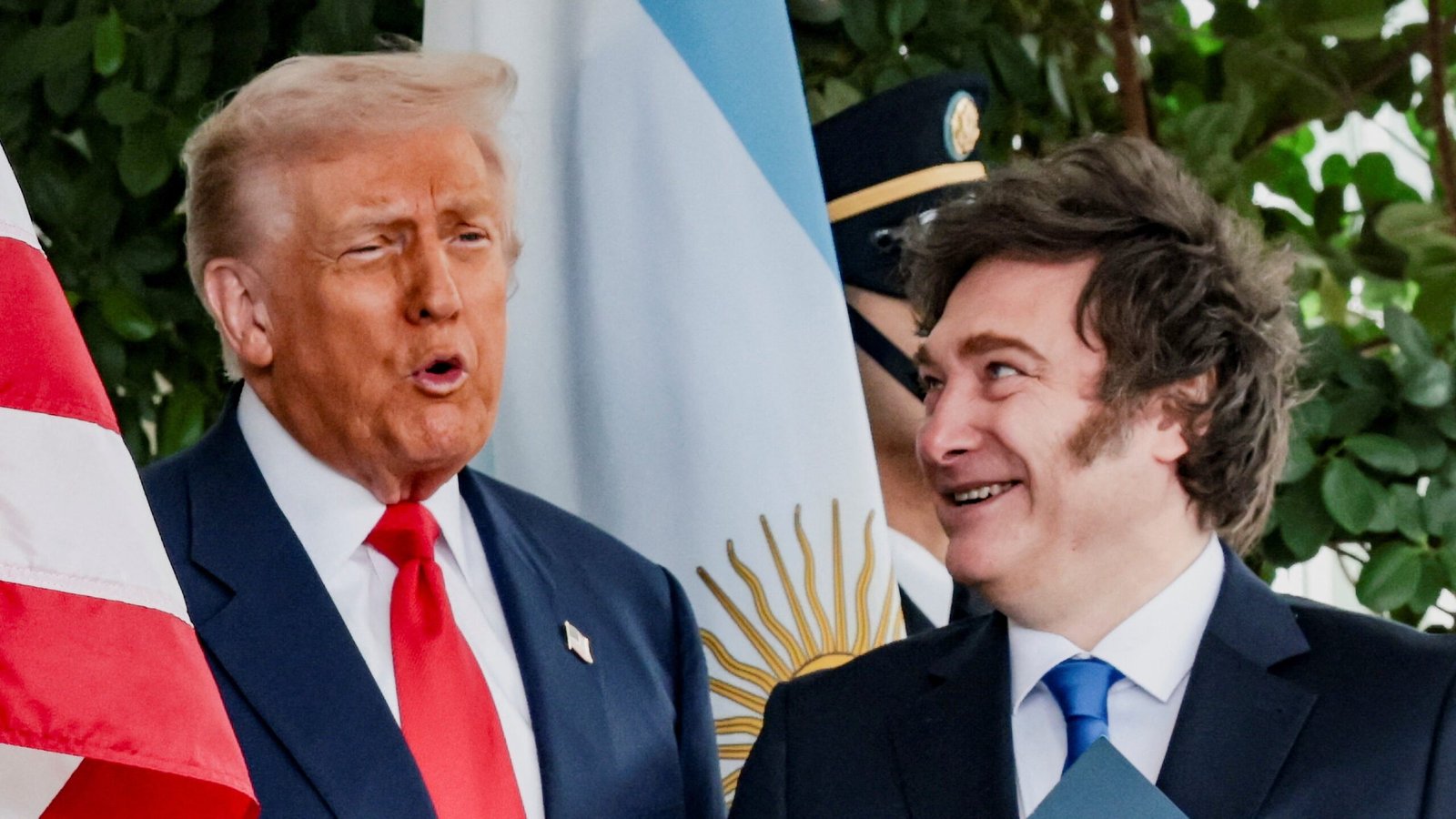
Argentina x China: Javier Milei drastically changed his speech about the Asian giant American President Donald Trump never fails to criticize United States allies for their rapprochement with China. For Javier Milei, his main ideological partner in Latin America, the situation is delicate, given Argentina’s strategic commercial ties with Beijing. This dilemma became evident again when Milei declared, in early January, that he intends to travel to China later this year, at a time when Trump is pushing to reinforce US influence in the Americas. During the campaign that led him to the presidency, in 2023, Milei promised that he would not do “business with China” or “with any communist”. After the election, however, he began to adopt a more pragmatic stance. 🔎 China is Argentina’s second largest trading partner, after Brazil, and invests millions in energy, lithium and infrastructure in the country. 📈 Trade with Beijing is on the rise and represented 23.7% of Argentine imports and 11.3% of exports last year, according to the National Institute of Statistics and Census (Indec). Trump receives Milei for the first time at the White House Jonathan Ernst/Reuters This change was consolidated with the renewal, in 2024 and 2025, of the active part of the currency swap agreement with China, worth the equivalent of US$5 billion (R$26 billion). The swap is a temporary exchange of currencies between countries, used to reinforce international reserves, one of the fundamental objectives of the Milei government. The partnership is such that Milei has reiterated her plans to visit China. So far, neither the Argentine Presidency nor the Chinese embassy in Buenos Aires have responded to AFP’s questions about the trip. It turns out that at the same time, the self-proclaimed anarcho-capitalist maintains a firm alignment with the United States under the Trump administration, which seeks to reduce China’s presence in the region. “This total alignment with the United States and Israel, which is a practically unique position in the world, conflicts with the attempt to strengthen relations with China,” Patricio Giusto, director of the Sino-Argentine Observatory, told AFP. Donroe Doctrine The United States intends to reaffirm its regional hegemony through a reinterpretation of the Monroe Doctrine, defended by Trump and nicknamed the “Donroe Doctrine”, according to which Washington can intervene in Latin America if it considers that its interests are threatened. “Argentina is a key country in the hemisphere, and not just on the continent, in this search for leadership legitimacy that Donald Trump is leading,” Florencia Rubiolo, director of Insight 21, an analysis center at Siglo 21 University, told AFP. In recent weeks, Milei praised United States military actions in Venezuela that led to the capture of Nicolás Maduro and said he was honored to sign the Peace Council created by Trump. In October, Milei received a financial aid line of 20 billion dollars (107.6 billion reais, at the time) from Washington, a strong endorsement in the midst of a political and currency crisis before the legislative elections, which his party won. In October, Milei received a financial aid line of US$20 billion (R$107.6 billion, at the time) from Washington, strong support in the midst of a political and currency crisis before the legislative elections, won by his party. “We don’t want another failed or Chinese-led state in Latin America,” US Treasury Secretary Scott Bessent said at the time. Milei dances YMCA at an event in the USA Government of Argentina During Milei’s term, two commanders from the United States Southern Command visited an Argentine base under construction in Ushuaia, the southernmost city in the country. Last week, American parliamentarians also visited Ushuaia, at a time when China is expanding its presence in the South Pole. They also visited the Vaca Muerta shale field, in Neuquén, the world’s second largest reserve of unconventional gas and the fourth largest of shale oil, accompanied by representatives from the state oil company YPF. “Milei tries to separate the economic relationship, especially commercial ties with China, from its geopolitical alignment with the US. The dilemma is whether this separation can be sustained over time, especially if Trump starts to impose conditions on trade as well,” said Giusto. “Impractical” Milei stated in Davos, in January, that “China is a great trading partner”, which offers “many opportunities to expand markets”, and that this “does not conflict” with its alignment with the United States. “I govern for 47.5 million Argentines and I make decisions that best benefit Argentines,” he said at the time. “I want an open economy”, he emphasized. For Giusto, the relationship with China is progressing because of the “strong economic complementarity” between the two countries. According to Indec, 70% of Argentine exports to China in 2025 were soy, beef and lithium. The economic opening of the Milei government facilitated the entry of Chinese consumer products. In 2025, “door to door” imports, led by Temu and Shein, grew 274.2%, according to official data. Another example was the arrival, in January, of around 5,000 electric cars from the Chinese brand BYD. “For Argentina, breaking ties with China is absolutely impractical, because China is an irreplaceable partner,” noted Rubiolo. Javier Milei, President of Argentina, and Xi Jinping, President of China AFP PHOTO / ARGENTINIAN PRESIDENCY
Source link
Milei’s dilemma: how to maintain your negotiations with China without displeasing Trump?
30
