
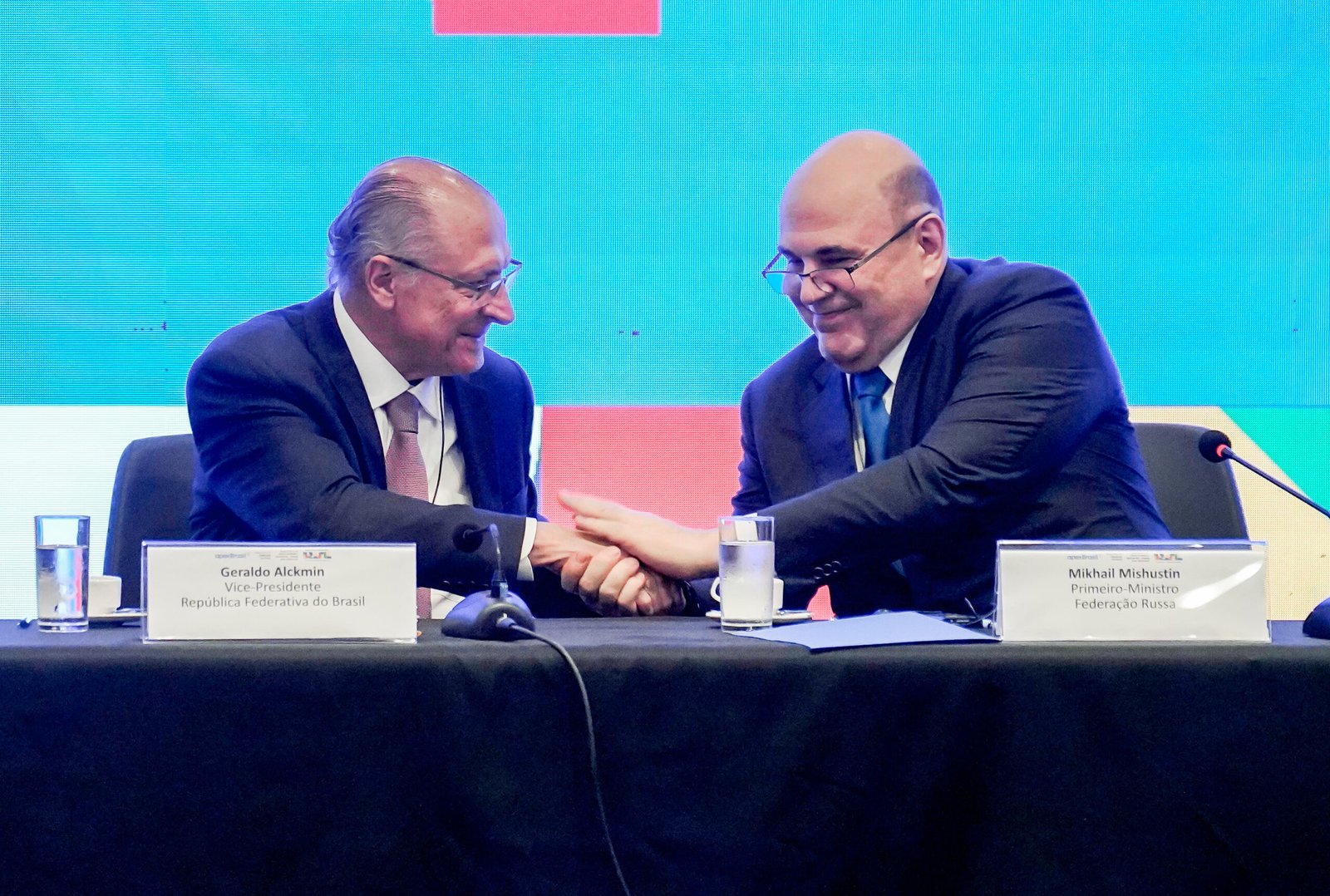
The 8th Meeting of the Brazilian-Russian High Level Cooperation Commission, held this Thursday (5), at the Itamaraty Palace, in Brasília, brought together high-ranking authorities from both countries. The meeting was marked by political, diplomatic and commercial content and by yet another Russian promise to support Brazil for a permanent place on the UN Security Council, but this if the body goes through a reform process. This is the third time the promise has been made since 2022, but Moscow has never taken any practical steps to make it a reality.
The new promise is contained in a joint statement announced at the end of the meeting. In it, Brazil and Russia reaffirmed the defense of multilateralism and the central role of the United Nations in global governance. The document highlights the commitment of both countries to observing the fundamental norms of international law and the principles of the UN Charter.
The meeting was attended by the Prime Minister of Russia, Mikhail Mishustin, received by the Vice President of the Republic and Minister of Development, Industry, Commerce and Services, Geraldo Alckmin, and by the Brazilian Chancellor, Mauro Vieira. In addition to Mishustin, the Russian delegation included ministers and high-ranking representatives of the Moscow government, reinforcing the strategic nature of the meeting.
When opening the meeting, Alckmin highlighted the partnership between the countries. “Solid partnerships do not only depend on the situation, but on well-understood structural interests”, said the vice-president, who also classified the Brazilian-Russian High Level Cooperation Commission (CAN) as a dense and stable mechanism.
The text of the joint declaration goes further by pointing out the need for structural changes in the international system. Brazil and Russia agreed that it is “imperative to advance the reform of the UN Security Council”, in order to make it more representative than the current configuration of the multipolar world, with the inclusion of developing countries from Latin America, Asia and Africa.
In this context, Russia formally reiterated its support for Brazil as a “strong and natural candidate” to occupy a permanent seat on a reformed Security Council — a position historically defended by Brazilian diplomacy, but which faces resistance among the current permanent members.
Despite not being quoted verbatim, the President of the United States, Donald Trump, was an implicit recipient of the diplomatic message. The republican has already criticized the UN, which he considers inefficient, and has defended the creation or strengthening of alternative instances of international coordination outside the multilateral system.
Although Brazil and Russia have avoided any direct mention of Washington, the emphasis on defending multilateralism, the central role of the United Nations and the need to strengthen and reform the Security Council sounds like an indirect criticism of this type of initiative. By reiterating their commitment to the UN Charter and multilateral governance, the two countries signal resistance to movements that seek to empty or bypass the organization at a time of questions coming from the White House.
The Russian Prime Minister’s visit to Brazil comes after a series of preparatory meetings and marks the formal resumption of the bilateral commission, which had been suspended since 2015 and was postponed when Russia invaded Ukraine in 2022.
Russia’s war against Ukraine, in fact, was not officially mentioned during the meeting. Despite this, Brazil and Russia reinforced their commitment to the principles of the United Nations Charter, including peaceful settlement of disputes and non-intervention. The joint statement emphasized the “importance of maintaining the status of Latin America and the Caribbean as a zone of peace”, in reference to the capture of Venezuelan dictator Nicolás Maduro by the United States, and “preserving peace and stability in the Arctic”, in reference to the US situation with Greenland.
SEE ALSO:
Russia pressures Brazil not to lose fertilizer market to China

Meeting with the Russian government in Brazil could sour Lula’s relationship with Trump

Bilateral trade and fertilizers at the center of the economic relationship
In the economic field, Prime Minister Mishustin stated that Brazil is today Russia’s main partner in Latin America. According to him, bilateral cooperation “is advancing steadily, with new mutually beneficial projects in several areas”, despite the adverse international scenario and the sanctions imposed on the Russian government by Western countries.
He also highlighted that bilateral trade is mainly supported by Brazilian exports of meat and coffee, while Russia accounts for around 25% of the fertilizers imported by Brazil. According to Mishustin, this relationship is strategic and “contributes to food security”, especially for Brazilian agribusiness, which is highly dependent on Russian inputs.
The report found that Russia is trying to pressure itself to remain the main supplier of the product to Brazil. But the matter was not publicly addressed by authorities present at the event.
Alckmin, in turn, expressed interest in expanding Russian investments in Brazil, especially in the chemical, fertilizer, energy, industrial equipment and infrastructure sectors. At the same time, he defended a greater presence of Brazilian companies in the Russian market in areas such as processed foods, medical devices, agricultural technology and industrial solutions.
