
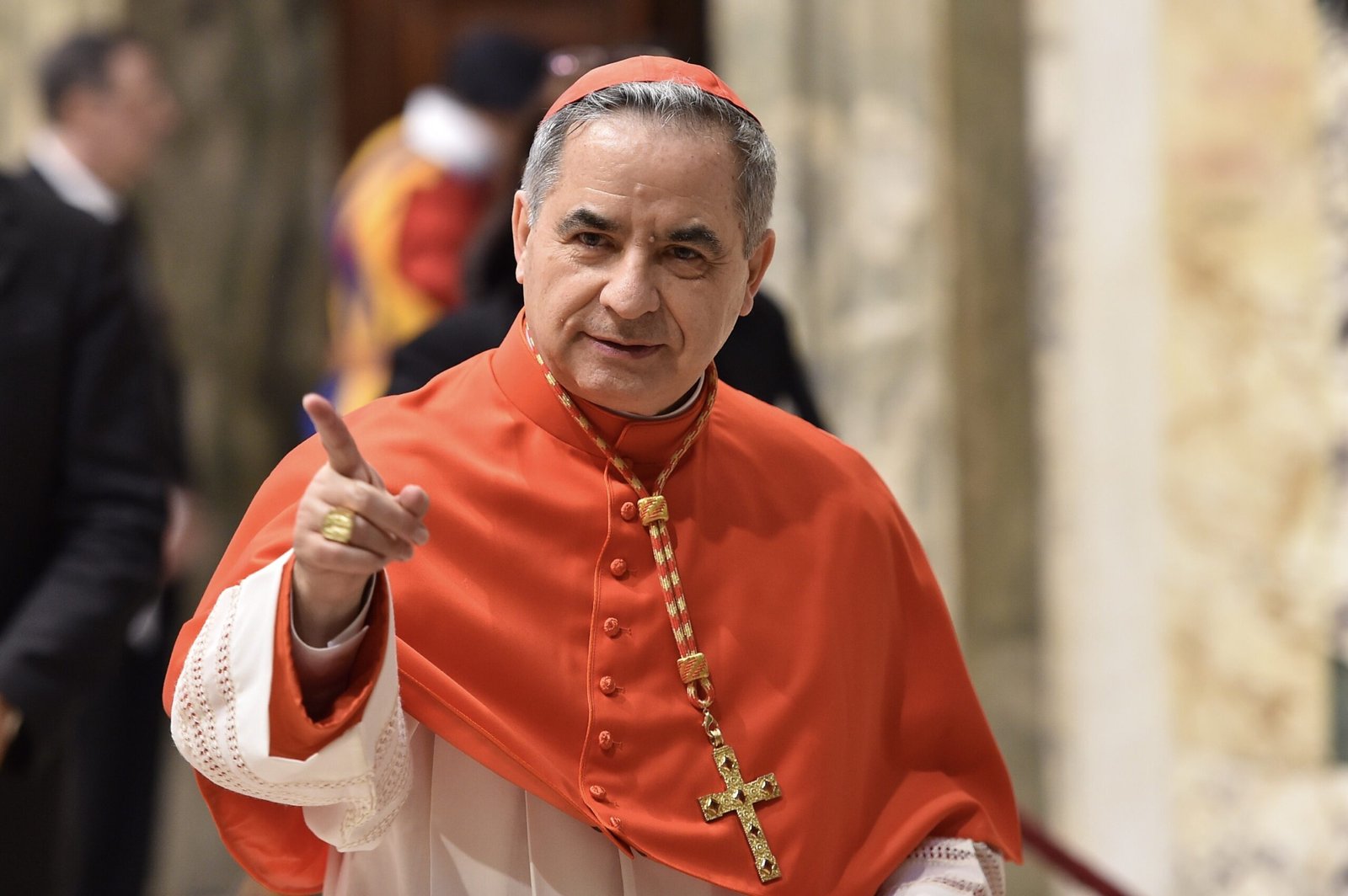
Cardinal Giovanni Angelo Becciu, on July 28, 2018 Andreas Solaro/AFP The appeals phase of the Vatican’s so-called “trial of the century” resumed this Tuesday (3), after two setbacks suffered by the pope’s prosecutors that could have major repercussions on the outcome of the troubled case. The case involves the former powerful Cardinal Angelo Becciu and eight other defendants, convicted of a series of financial crimes in 2023, after a broad trial that lasted two years. However, the Vatican’s Court of Cassation recently upheld a lower court’s decision to reject the prosecutors’ appeal in full. This means defendants can only hope to see their convictions and sentences reduced — if not overturned. At the center of the controversy is Diddi’s role in a set of WhatsApp conversations that cast doubt on the credibility of the entire trial. The messages, which document a years-long behind-the-scenes effort to target Becciu, suggest questionable conduct by Vatican police, Vatican prosecutors and Pope Francis himself. See the videos that are trending on g1 On the same day as the Cassation decision, the Vatican’s chief prosecutor, Alessandro Diddi, also withdrew months of challenges and abruptly resigned from the case, rather than face the possibility of being removed by court order. Several defense lawyers argued that the conversations showed that Diddi was not impartial in dealing with evidence and witnesses and that he was unfit to continue in office. Diddi dismissed the allegations as “unfounded” and complained bitterly to the cardinal Cassation judges. Even so, he declared himself impeded “to prevent insinuations and falsehoods about me from being exploited to harm and compromise the process of ascertaining the truth and affirming justice”. If the Cassation had ruled against Diddi and considered his role incompatible with the function, the entire process could have resulted in annulment or nullity. As it turned out, the appeal court found that Diddi’s acts as prosecutor were valid, even after his subsequent departure from the case. The Vatican could lose R$750 million from the sale of property in London; Italian Cardinal Dom Angelo Becciu is a defendant with 8 other people in the Vatican’s criminal court Montage g1 Property in London and more The original trial began in 2021, with the main focus on the Vatican’s investment of 350 million euros (around R$2 billion) in a property in London. Prosecutors alleged that Vatican intermediaries and monsignors defrauded the Holy See of tens of millions of euros in fees and commissions to acquire the property and then blackmailed it for 15 million euros (about R$92 million) to give up control of the property. The initial investigation generated two main developments involving Becciu, a once very influential cardinal, convicted of embezzlement and sentenced to five and a half years in prison. The court convicted eight other defendants of embezzlement, abuse of power, fraud and other charges, but acquitted them on several other counts. All defendants pleaded not guilty and appealed. Prosecutors also appealed, as the court largely rejected their main thesis of a grand conspiracy to defraud the Holy See and instead convicted the defendants on a smaller number of serious but secondary charges. Diddi saw the appeal as an opportunity to restate her initial case. When filing the appeal, he only attached his original request for convictions. But the appeals court rejected the request for lacking the “specificity” required by law in an appeal. It was an embarrassing procedural error that the Cassation, in a decision of January 9, refused to highlight. The pope’s role The appeal now continues with other defense arguments, and the next line of contention should focus on Francis’ role in the investigation. During the trial, defense lawyers argued that their clients could not get a fair trial in an absolute monarchy, where the pope holds supreme legislative, executive and judicial power — and that Francis used those powers during the investigation. At issue are four secret executive decrees signed by Francis in 2019 and 2020, in the early days of the investigation, that granted broad powers to Vatican prosecutors, including the unrestricted use of wiretapping and the right to deviate from existing laws. The decrees only came to light shortly before the trial and were never officially published. They did not present a justification or deadline for the surveillance, nor did they provide for supervision of the wiretaps by an independent judge, and were edited specifically for this investigation. Legal experts say that the secret and ad hoc nature of these rules violated a basic principle of the right to a fair trial, which requires “equality of arms” between defense and prosecution. In this case, the defense was completely unaware of the prosecution’s new investigative powers. Even Vatican legal officials have privately admitted that Francis’s failure to publish the decrees was deeply problematic. Diddi argued that Francis’ decrees offered unspecified “guarantees” to suspects, and the court initially rejected defense claims that they violated the defendants’ fundamental right to a fair trial. In a decision considered complex, the judges understood that there was no violation of the principle of legality, since Francisco had promulgated the norms. Under canon law, the pope can only be judged by God. But he also cannot enact laws that violate divine law, which could create a dilemma if the court concludes that Francis’ decrees violated defendants’ fundamental rights. The Vatican maintains that all those accused received a fair trial.
Source link
‘Trial of the century’ in the Vatican resumes after crisis with prosecutors, accused of ‘questionable conduct’
66
