
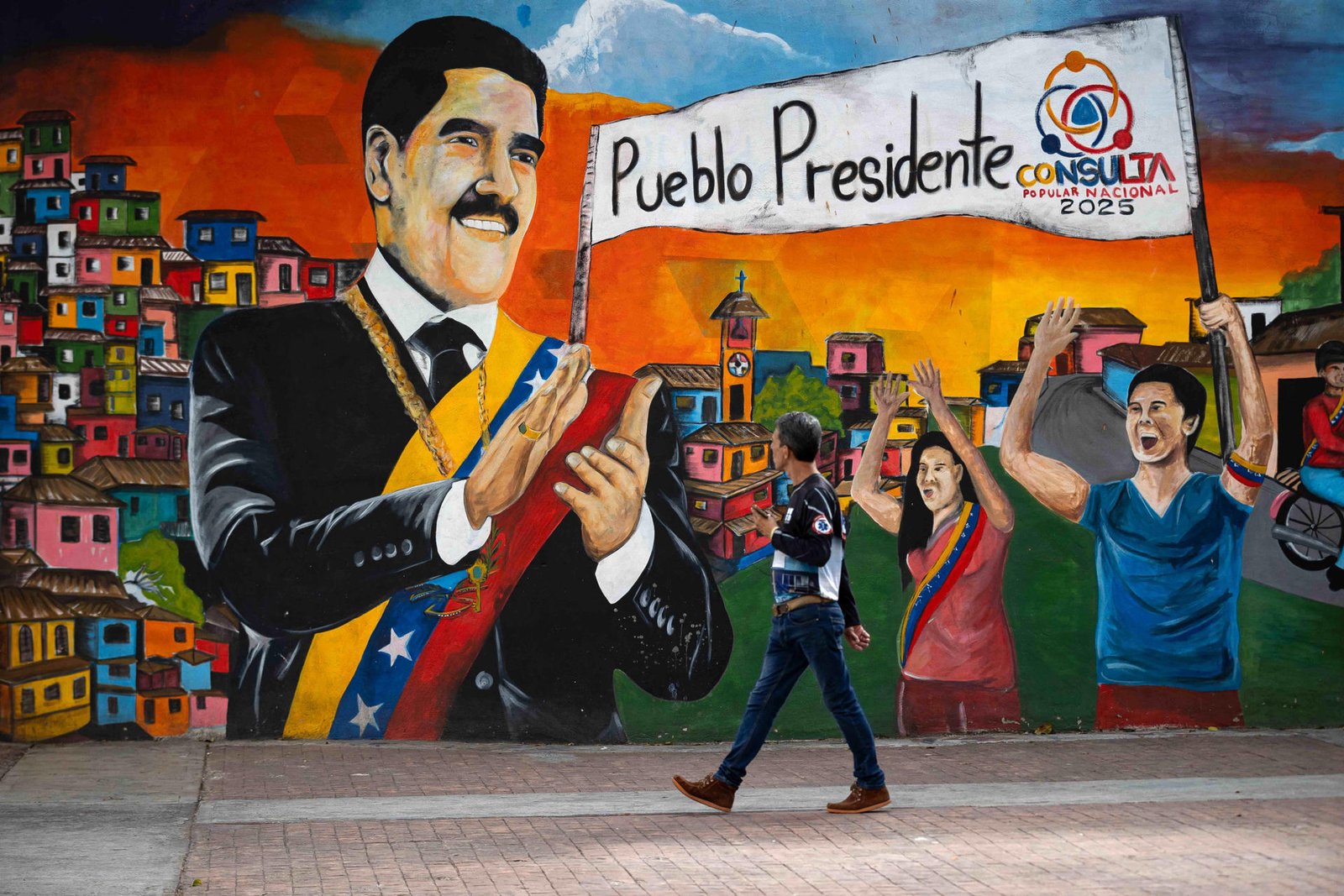
One month after the capture of dictator Nicolás Maduro, carried out on January 3 by United States military forces, Venezuela is still experiencing a period of uncertainty, marked by expectations of change and distrust regarding the country’s political future.
The operation that resulted in the arrest of Maduro and his wife, Cilia Flores, in Caracas, opened a new political stage, but did not yet produce an immediate break with the power structures built over more than two decades of Chavismo. After the dictator’s fall, the country came to be governed by Delcy Rodríguez, then deputy of the regime, who assumed command of the Executive under strong pressure from the United States. Since then, she has adopted measures in line with Washington’s demands, but has not yet presented a clear timeline for democratic opening or announced presidential elections.
A survey carried out by the Iceberg consultancy, released at the end of January, indicates that 50% of Venezuelans positively evaluate the United States intervention that resulted in Maduro’s capture. 35% say they prefer a new political party to take power in possible presidential elections, 32% would support a leadership linked to the opposition organized by María Corina Machado and 21% say they support Chavismo’s continuation in power. For 68% of Venezuelans, interim leader Delcy Rodríguez “represents the same” as Maduro. Only 34% of Venezuelans express a positive assessment of their performance.
The survey also revealed an increase in optimism in Venezuela after the fall of Maduro. According to the data, 53% of those interviewed believe that the country’s situation should improve in the next three months. Over a two-year horizon, 65% project an improvement, while only 8% predict a worsening of the crisis.
Slow changes
The main visible sign of change in the first month without Maduro in charge of Caracas was the beginning of the release of political prisoners.
Chavista authorities say that more than 600 detainees have already been released in the country. However, like other initiatives announced by the regime over recent years, the process has been marked by uncertainty and lack of transparency. Human rights organizations differ from the official figures. The NGO Foro Penal, which has been cataloging the number of political prisoners in Venezuela for years, claims to have verified just over 300 releases by the end of January and points out that there was no publication of official lists of freed political prisoners, which makes it difficult to confirm the data reported by Chavismo and keeps family members on permanent vigil in front of detention centers. There are also reports of prisoners released under restrictive conditions, such as periodic appearances before authorities, bans on speaking to the press or orders to leave the country.
Last Friday (30), Delcy Rodríguez announced that her regime intends to submit to the National Assembly, the Parliament of the country still controlled by Chavismo, a General Amnesty Law project, which would cover arrests for political reasons since 1999. According to the interim leader, the proposal will not include crimes such as homicide, drug trafficking, corruption or serious human rights violations. The announcement was made during a speech at the Supreme Court of Justice. The decision is seen as a sign of democratic openness.
In the same statement, Rodríguez reported the closure of the famous El Helicoide detention center, a place denounced by national and international organizations as the main torture center of the Chavista regime. Rodríguez said that the site will be transformed into a “social and community complex”, but did not present deadlines or independent inspection mechanisms for implementing the measure.
US pressure accelerates changes in the oil sector
While the political transition remains undefined, the fastest changes in the first month without dictator Maduro in power occurred in the oil sector. Under direct pressure from the United States, the National Assembly approved in January a reform of the Hydrocarbons Law that relaxes state control over the industry and expands the participation of private companies, including foreign ones, in Venezuela’s oil exploration and production.
The measure meets one of the main demands made by Washington after Maduro’s capture and occurs in parallel to the granting of licenses by the United States Department of the Treasury for the controlled export of Venezuelan oil. According to American authorities, the resources obtained from Venezuela’s oil sales will be deposited in externally supervised accounts and released gradually to finance basic services in the country, such as health, sanitation and the purchase of medicines.
At the end of January, the Venezuelan regime confirmed receipt of the first payment for the sale of oil authorized after Maduro’s capture. According to Delcy Rodríguez, Venezuela received US$300 million, out of a total of US$500 million foreseen in this first operation, an amount that Chavismo claims will be used to pay for public services and social programs.
Reopened skies and geopolitical realignment
Under the sights of the United States, the Chavista regime began to prioritize rapprochement with Washington and reevaluate the international axis that supported the dictatorship over recent years. In the energy sector, this change was evident in the licenses issued by the US Treasury Department for the controlled sale of Venezuelan oil. The authorizations establish clear limits and exclude operations with countries such as Russia, Iran, North Korea and Cuba, former strategic allies of Chavismo. The new model placed the United States at the center of decisions about oil exports and the destination of resources obtained from sales.
Regarding China, American officials stated that Beijing is not formally excluded from purchasing Venezuelan oil, but made it clear that there will be no special concessions or sales at subsidized prices, as occurred during the years of sanctions and parallel agreements signed by the Chavista regime. According to Washington, any Chinese purchases would have to follow market conditions and respect the new control mechanisms.
In turn, President Donald Trump’s government announced last week the reopening of Venezuela’s commercial airspace, closed since 2019, allowing companies – including American Airlines – to begin preparing to resume direct flights between the two countries after years of interruption.
This weekend, the head of the United States diplomatic mission, Laura Dogu, arrived in Caracas to begin the reopening of the American representation in the country. The diplomat’s arrival was marked by declarations that she and her team are “ready to work” for the return of dialogue between Washington and Caracas. Dogu and Delcy met this Monday (2). At the meeting, they talked about the three phases of the US State Department’s policy towards Venezuela: stabilization, economic recovery and reconciliation, and political transition.
