
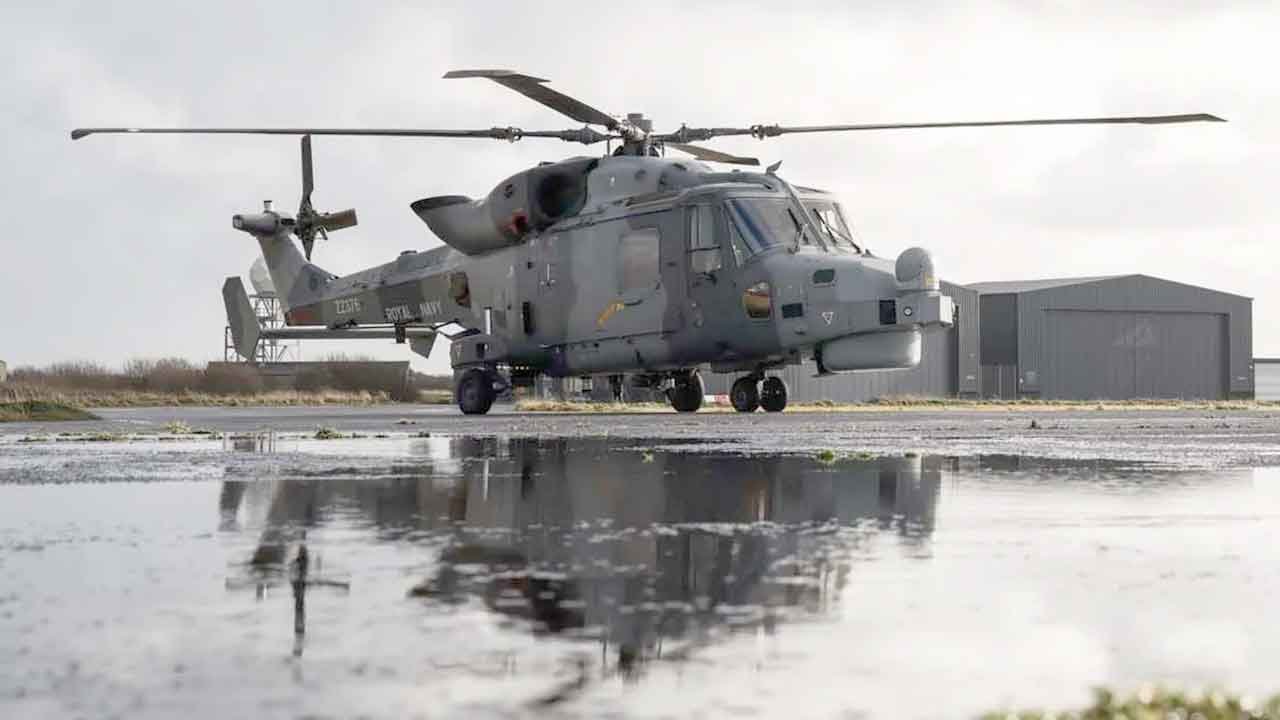
Royal Navy conducted an exercise for the first time in the UK in which a Wildcat helicopter used live data from multiple drones and ground sensors to detect and engage a moving target in flight.
The tests took place on January 31 from Predannack Airfield on the Lizard Peninsula in Cornwall and demonstrated the Wildcat’s ability to receive information from unmanned systems almost instantly, enabling it to operate beyond the line of sight.

During the Wildcat exercise with 815 Naval Air Squadron integrated data streams from two reconnaissance drones – Puma and Providence – along with information from ground sensors. All data traffic was transmitted over a decentralized mesh network, providing the crew with a real-time “beyond the horizon” view of targets.
Exercise, named Eagles Eyeshowed how manned aircraft can act as air command centers by coordinating and using data from multiple unmanned systems within a common network. The project involved specialists from the 700X Naval Air Squadron drone squadron, Wildcat crews from the 847 Naval Air Squadron, and industrial partners including MarWorks, TeleplanForsberg, General Dynamics, C3IA, UAV Aerosystems and Collins Aerospace.

According to the naval officer, the mesh network architecture allows information to be transmitted from any remote node directly to the aircraft and also allows crews to take control of unmanned systems when the tactical situation requires it.
Mesh networks are decentralized and “self-healing”, capable of automatically redirecting data when part of the network is disrupted. According to the Royal Navy, the concept reflects lessons learned from the war in Ukraine, where similar structures are being used to combine sensors, drones and means of destruction in real combat conditions.

Aboard the Wildcat, the crew directly operated the Puma drone – which has been in service with the 700X squadron for over six years – while also receiving a live video feed from the smaller and more discreet Providence system. The fusion of this information made it possible to precisely determine the target’s location before engaging it with Martlet missiles.
Royal Navy also announced that the lessons learned from the Eagles Eye exercise will be used in future exercises in Norway, where Wildcat helicopters will train together with the Royal Norwegian Navy. The goal is to use the integration of manned and unmanned systems against fast strike craft and other asymmetric threats in the fjords near Bergen.
Source and photos: Royal Navy. The content was prepared with the support of AI and verified by the editorial team.
