
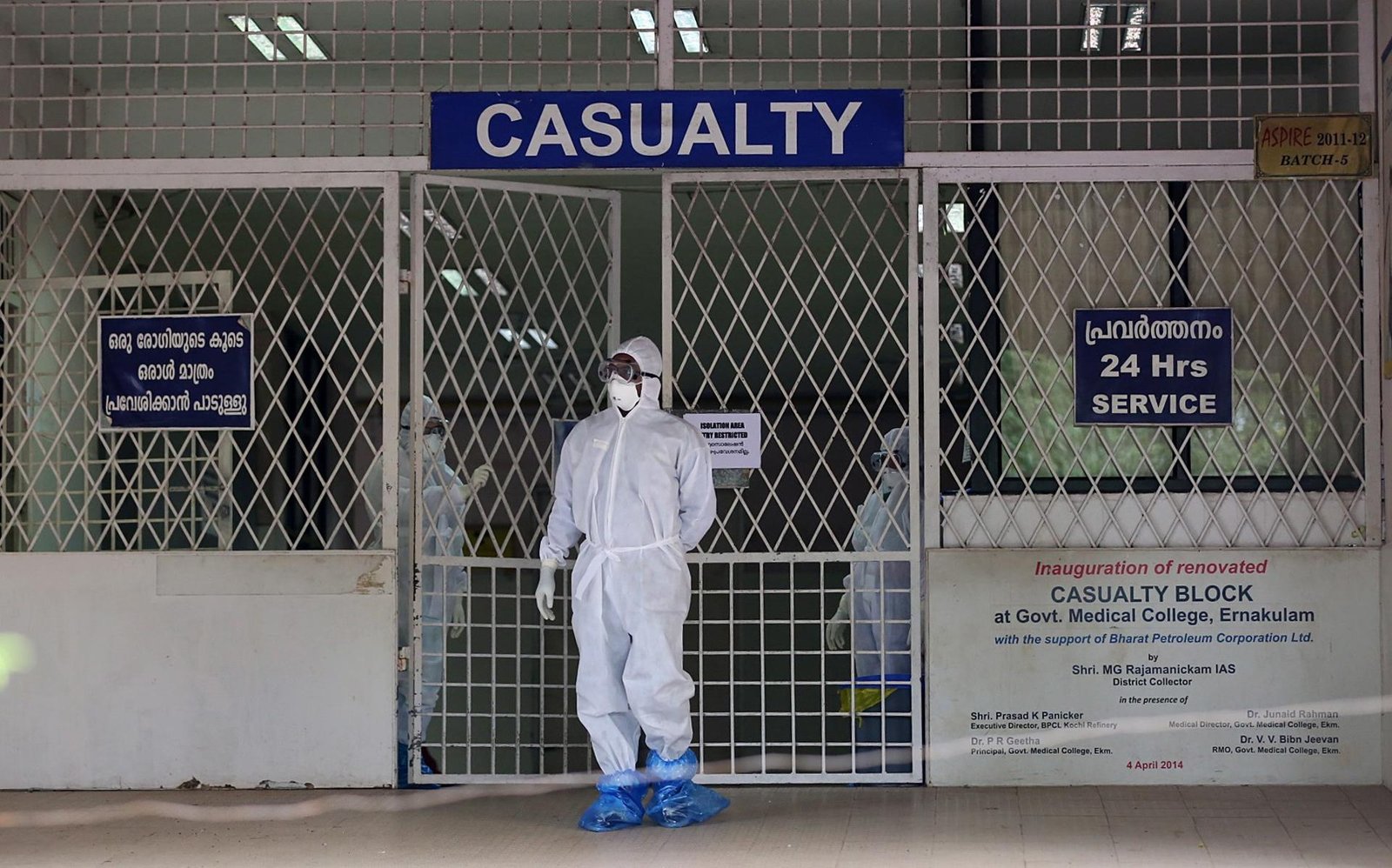
The World Health Organization (WHO) is monitoring the risk of expansion in India of the Nipah virus, a highly lethal pathogen for which there is no vaccine or specific antiviral treatment to date.
The issue resurfaced after the confirmation of two cases in the state of West Bengal and the declaration of an epidemiological alert by Indian authorities.
“India has the capacity to contain these outbreaks, as proven in past cases,” he said in response to the EFE Agency a spokesperson for the health agency, adding that the WHO has been in contact with local and national Indian authorities to carry out a risk assessment and provide technical support.
The WHO source added that, for now, there is no evidence of an increase in transmission of the virus between humans (other common routes of contagion are through animals, such as fruit bats or pigs, as well as through contaminated food).
Nipah virus infection causes everything from asymptomatic conditions to acute respiratory diseases and lethal encephalitis, with an estimated mortality rate of between 40% and 75%.
According to the WHO, the two confirmed cases are nurses (a man and a woman, both 25 years old) from a private hospital in the town of Barasat, about 20 kilometers north of Calcutta, who began showing symptoms in the first week of December and were isolated at the beginning of January.
India’s National Institute of Virology confirmed that these were cases of the Nipah virus on January 13, and they were reported to the WHO on Monday night (26), said the spokesperson for the United Nations health agency.
The confirmation of the two cases forced around 190 people to be placed in quarantine because they had been in contact with those infected.
Furthermore, the Indian Ministry of Health ordered the reinforcement of security in hospitals in the affected area, imposing the use of full personal protective equipment for medical staff due to fears of human-to-human transmission.
India recorded its first outbreaks of the Nipah virus in humans also in West Bengal (east of the country) in 2001 and 2007, when at least 50 deaths were recorded.
Since 2018, cases have been concentrated in the southern state of Kerala, where the most recent outbreak in July 2025 caused three infections and two deaths.
Fears of the virus spreading have spread across Asia, prompting territories such as Thailand, Nepal and Hong Kong to activate screening points at some of their airports, with measures such as temperature checks and health declaration forms.
