
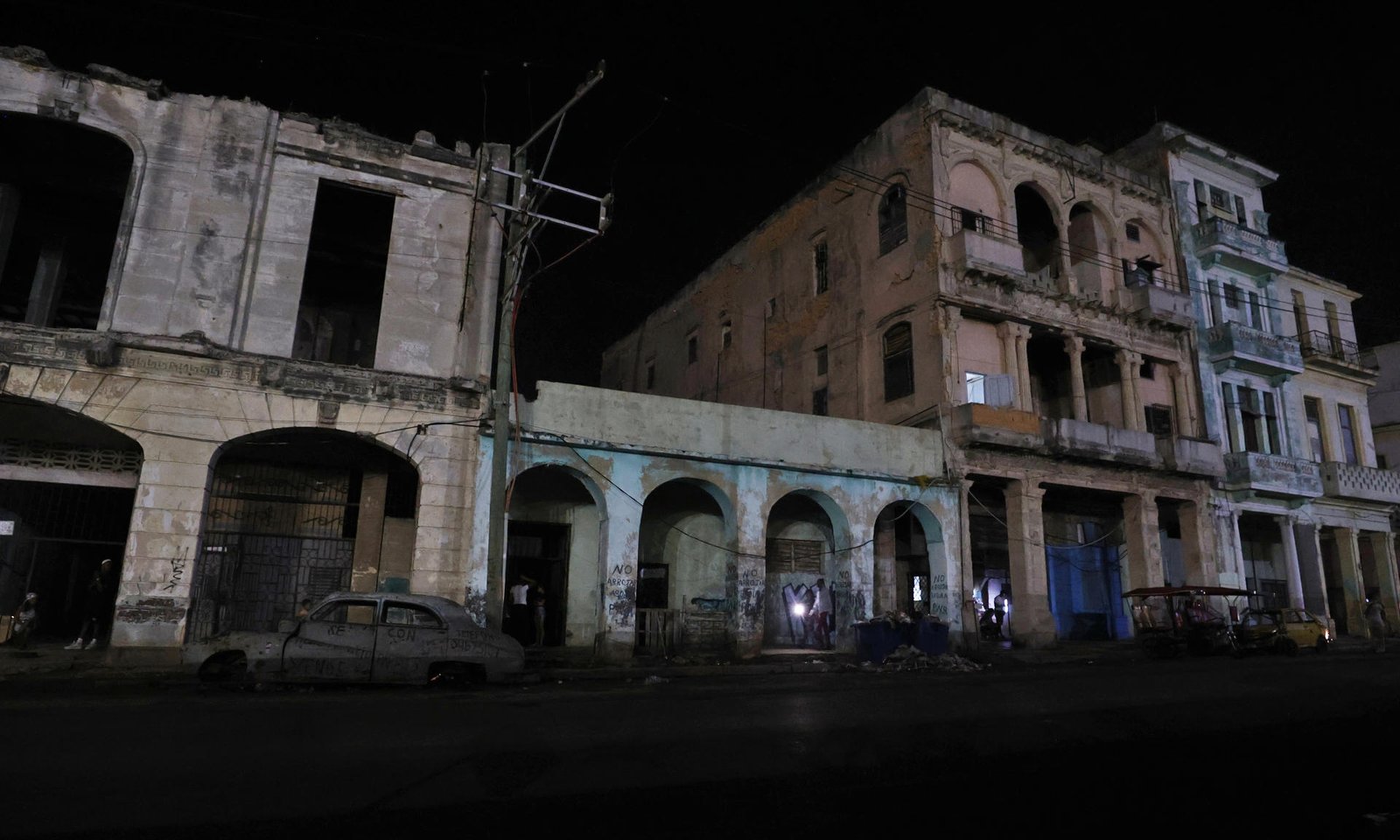
Cuba is expected to suffer a widespread blackout this Wednesday (21), with power cuts that could leave up to 62% of the national territory simultaneously without electricity at times of greatest demand, according to official estimates from the energy sector.
According to the Cuban Electric Union (UNE), state-owned by the communist regime, the expected generation capacity for the afternoon and evening peak is around 1,260 megawatts (MW), while maximum demand is expected to reach 3,230 MW, resulting in a deficit close to 2,000 MW. The level of impact repeats the worst rate ever recorded in the country, observed in December last year.
The energy crisis on the island has been going on since mid-2024 and is attributed to poor management by the communist regime and the scarcity of currency to purchase oil, in addition to constant breakdowns in thermoelectric plants that have been operating for decades without adequate modernization.
According to data released by UNE, eight of the country’s 16 thermoelectric units are currently out of operation due to technical or maintenance failures. In addition, 101 diesel-powered distributed generation plants remain idle due to lack of fuel, as well as two rented floating plants. Other engines are inoperative due to lack of lubricants.
According to information from the agency EFEthe energy crisis in Cuba is being worsened by the cut in Venezuelan oil supplies, following the fall of former dictator Nicolás Maduro, on January 3. The interruption of oil shipments to the communist island, by order of the USA, eliminated one of the main sources of supply for the Cuban electrical system.
The Cuban regime, in turn, attributes the crisis to sanctions imposed by the United States, which, according to Havana, cause “energy asphyxiation”.
