
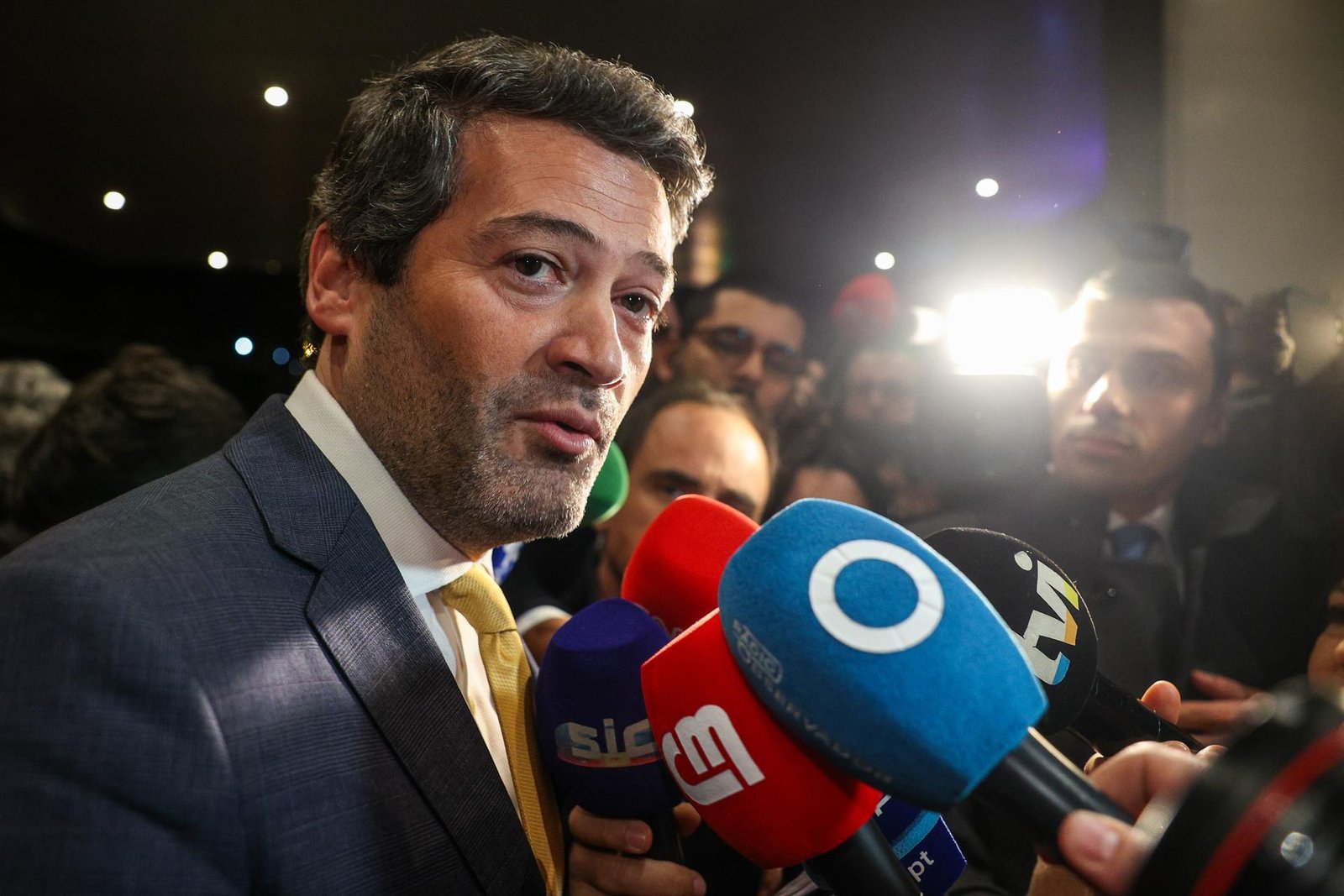
Former socialist minister António José Seguro and conservative candidate André Ventura were the two candidates with the most votes in this Sunday’s elections (18) for the presidency of Portugal. The two will compete in February, reported the Efe agency. It is the first time in 40 years that the dispute has gone to the second round.
With 95% of the votes counted, Seguro had a lead of 30.62%, followed by Ventura, with 24.26%. In third place, with 15.49%, came the liberal João Cotrim de Figueiredo, just ahead of the retired admiral Henrique Gouveia e Melo (12.25%) and the conservative political commentator and former minister Luís Marques Mendes (11.97%). None of the other six candidates had more than 2% of the votes.
SEE ALSO:

More than 11 million Portuguese citizens – of which more than 1.7 million live abroad – were eligible to vote to elect the successor to Marcelo Rebelo de Sousa, who will leave his post after two five-year terms and could no longer be re-elected.
The president of Portugal has the role of arbitrator and monitor of political life and has no executive prerogatives. He can, however, veto laws, dissolve Parliament and call elections.
Possible victory of the “authentic right”
André Ventura is at the center of the possible victory of the right. Using the motto “Save Portugal”, he joined the public safety agenda and specifically warns immigrants. “If you commit a crime here, you go to prison for several years or even decades. Once you serve your sentence, you won’t spend another second in this country,” he said.
Founded in 2019, the Chega party went from a single deputy to a group of 60 representatives in the last legislative elections, in May last year — and consolidated itself as the second largest political force in the country, behind only the Social Democratic Party (PSD), which leads the current government coalition.
Classified as “ultra-right” by sectors of Portuguese public opinion, the party rejects the label and defines itself as “authentic right-wing”. In its program, Chega emphasizes the defense of “national values” and criticism of the political elites that have ruled the country for decades.
In Portugal, the president has a role that can be considered symbolic — without direct interference to govern. The president basically acts as a referee. Still, the February election will have real political weight and, according to analysts, could go down in history as a turning point in Portuguese life.
