
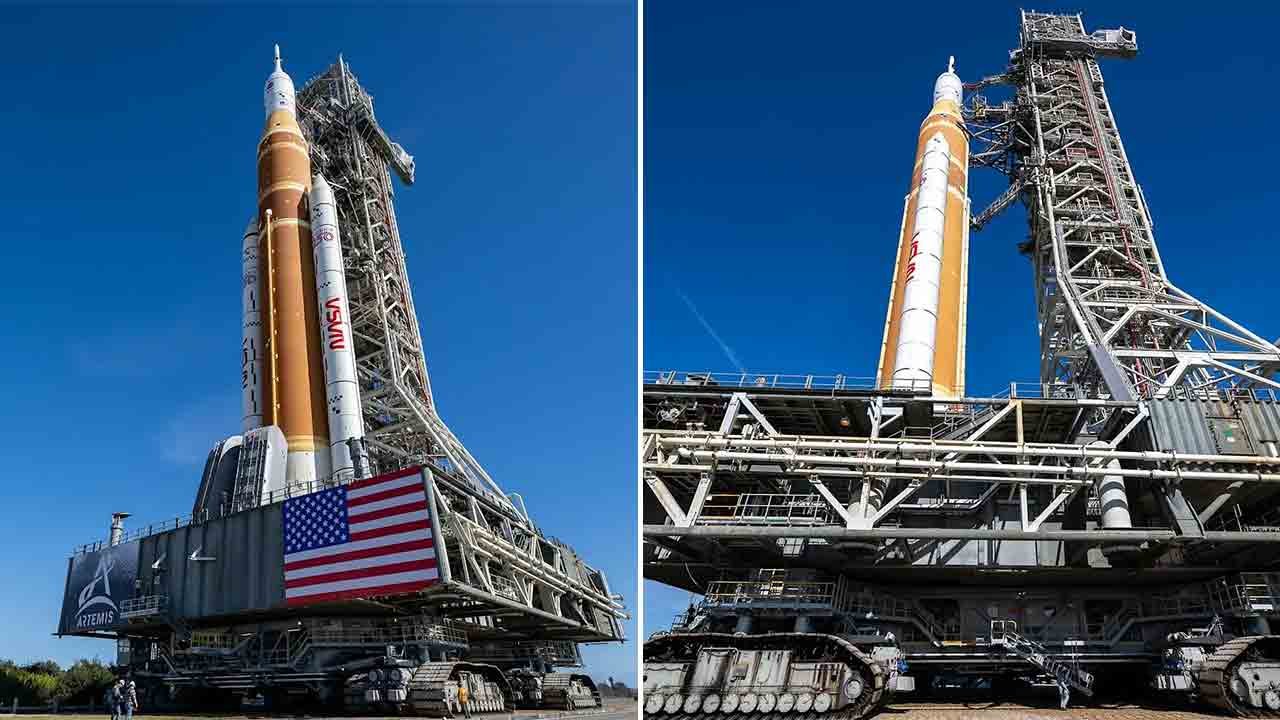
Space Launch System (SLS) rocket and Orion Artemis II, consisting of the spacecraft, reached the 39B launch pad of the Kennedy Space Center in Florida on Saturday, January 17, 2026, at 18:42 local time.
This move marked the completion of a journey from the Vehicle Assembly Building (VAB) that took approximately 12 hours.
The transport was carried out by crawler-transporter 2, which started the approximately 6.4-kilometer (4-mile) route hours ago and traveled at a maximum speed of just 1.3 km/h. The equipment slowly moved the stacked rocket and spacecraft into the launch complex.
After exiting the VAB gates, the system made a planned pause so crews could reposition the crew access arm — a structure that allows astronauts and technical personnel to access the Orion spacecraft on launch day.

In the coming days, engineers and technicians will prepare Artemis II for the “wet dress rehearsal,” a critical phase that tests charging of cryogenic propellants, countdown procedures, and safe evacuation of fuels. This test is planned to be carried out by February 2 at the latest.
NASAdoes not exclude that additional testing may be needed to ensure all systems are fully validated. If necessary, the rocket and spacecraft may return to the VAB for adjustments before the final launch date.
+ Czech Republic announced that it will send warplanes to support Ukraine against Russian drones

The Artemis II test flight will carry NASA astronauts Reid Wiseman, Victor Glover and Christina Koch, as well as Canadian Space Agency astronaut Jeremy Hansen, for a mission that will last approximately 10 days around the Moon and then return to Earth.
The mission represents the next step of the Artemis program towards new crewed operations on the lunar surface and establishing a sustainable presence on Earth’s natural satellite, while future crewed Mars It also paves the way for their duties.
Source and images: NASA. This content was created with the help of artificial intelligence and reviewed by the editorial team.
